When Ford unveiled the 2000 Taurus at the New York Auto Show, the key highlights were enhanced safety features and a significant redesign. Now that the 2000 Taurus (and its mechanically similar counterpart, the 2000 Sable) is available, here’s an in-depth look at what it offers.
The 2000 Taurus comes in LX, SE, and SE station wagon models. The prices range from $18,245 for the LX to $21,445 for the SE Comfort model.
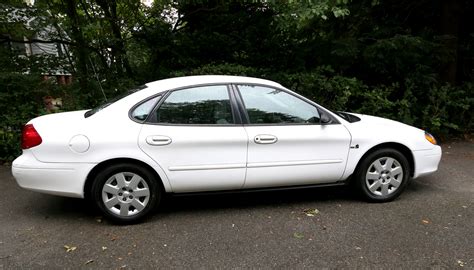
2000 Ford Taurus Sedan
Redesign and Styling
In terms of the redesign, the roof and door panels remain the same, but the nose is more upright and less round. Large, clear-glass headlights and a bigger grille give the front a stronger presence, while around back the trunk is taller, the taillights are bigger and the back window is rectangular. Inside, things have been changed significantly, as well.
Across the board, from drivability to styling to function, this Taurus is a notable improvement. It has a little more headroom in front but 1.9 inches more in back. The trunk is 1.2 cubic feet bigger and it is easier to get things in and out. It now contains an emergency release so it can be opened from inside.
Read also: Investigating White Ball UFOs
Big map pockets are again in the door panels. An adjustable cupholder has been created for the center console. Even when it is not being used as a cupholder, its rectangular shape makes it a good storage space for cell phones, etc. As before, the availability of a station wagon is great because so few are offered in this mid-size class.
Engine and Performance
Our test car, an SE model with the Duratec 24-valve, DOHC, 3.0-liter V6 engine, has 200 horsepower, an increase of 15. The base engine, also a 3.0-liter V6, gets an increase of eight horsepower to 153. The Duratec engine is clearly superior to the older engine.
It is more energetic and refined, although in terms of overall smoothness it still falls a tad short of some of the best engines in this segment. Nice additions include the availability of an all-speed traction control system ($175). Anti-lock brakes are optional on the LX and standard on the SE.
Ride and Handling
To improve the ride and handling, Ford retuned the suspension and changed the front-end alignment for added directional stability. Handling seems to be about as before, while ride harshness has been reduced. Despite changes to improve steering feel, I think the Taurus, as well as the Sable, doesn’t steer as nicely as the smaller Focus.
Safety Features
While the most obvious part of the story is the redesign, the comprehensive way that safety has been addressed is significant. The previous Taurus had received a five star ranking in crash tests, and the steps the company has taken to improve on that score is noteworthy.
Read also: Fox Guide
Fortunately, during my test drive I did not have a chance to test the new system, but it contains a number of features that give it a considerable advantage. For example, the “brain” of the safety system is a computer with sensors that tell it whether the front-seat passengers are wearing seatbelts, how close the driver’s seat is to the steering wheel and how severe the accident is.
Dual-stage airbags open at two levels of force, depending on the severity of the accident. Ford’s press material explains that in a crash, the computer activates devices in the seatbelt retractors that take the slack out of the belts. In severe crashes, a metal bar tucked into the spool of the seatbelt retractor releases small amounts of belt webbing to reduce the risk of injuries to the occupant’s chest.
Optional side airbags are shaped to protect both the head and chest in a side impact. For those who use child safety seats, there are three anchors for attaching tethers to keep the seats in place even better.
Ford said it expects this new safety system to reduce airbag deployments and cut down on airbag-related injuries. Working hand-in-hand with the new safety system is an adjustable pedal option ($120). The pedals can be moved up to three inches so that shorter drivers need not have the steering wheel in their face in order to reach the pedals.
Pricing and Options
The base price of our test car was $21,445. Options included floor mats, center console, traction control, adjustable pedals, side-impact airbags and leather upholstery. The sticker price was $23,185.
Read also: Socorro UFO Incident
Warranty
Three years or 36,000 miles.
Pros and Cons
Point: The 2000 Taurus has greater appeal because it looks better, drives better and has an impressive gathering of standard safety equipment, all for a price that is well under $19,000 for the LX.
Counterpoint: While changes have been made to the steering, I think it still feels artificially heavy.
Common Problems and Recalls
Here's a summary of some common problems and recalls associated with the 2000 Ford Taurus:
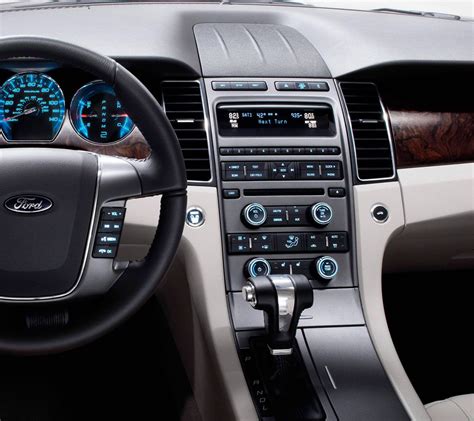
Interior of a 2000 Ford Taurus
Front Coil Springs
On certain passenger vehicles originally sold in or currently registered in specific states, the front coil springs could fracture due to corrosion associated with salt used on the roadways during the winter. A fractured spring could move past the spring seat and contact a front tire. If this occurs, the tire may rupture resulting in a rapid air loss, which could result in a crash.
Dealers will install protective spring shields. In addition, Ford is extending the warranty coverage of the front coil springs in all other states, for fracture only, up to 10 years of service or 150,000 miles, whichever occurs first. If the vehicle has already accumulated more than 150,000 miles, this coverage will last until July 31, 2005. If either front coil spring fractures, dealers will replace both front springs at no charge to the owner.
An interim notice was sent to owners on August 2, 2004. Parts are now available for the 2000-2001 MY vehicles and owners were sent a letter on January 10, 2005, advising them to bring in their vehicles for repair. Parts are expected to be available for the 1999 MY vehicles by the end of February 2005 and owners of these vehicles will be notified then. FORD RECALL NO.
Stop Lamp Switch
Certain passenger vehicles are being recalled to correct a problem with a malfunctioning stop lamp switch and/or associated wiring. This malfunctioning could render the stop lamps inoperable or cause them to stay on all the time. In addition, if the switch and/or associated wiring fail in the open position, the brake lights will not actuate and the driver will not be able to shift the vehicle out of "Park." If they fail in the closed position, the brake lights will remain on, which will not allow the speed control to be activated. This could also cause the battery to discharge. This could cause confusion to a following driver, which could lead to a crash.
Dealers will remove the stop lamp switch and associated wiring assembly and install a newly designed stop lamp switch and wire assembly. Owner notification is expected to begin on April 5, 2004. FORD RECALL NO.
Adjustable Pedals
Certain passenger vehicles equipped with adjustable pedals are being recalled in order to adjust the brake and accelerator pedals to a minimum of 50 mm of lateral separation. Owners will be instructed as to the proper way to set the position of the pedals and to take their vehicles to a dealer to have the spacing between the brake and accelerator pedals measured. If the spacing is found to be less than 50 mm, the dealer will adjust the pedals to increase the distance between them to greater than 50 mm. Owner notification began October 28, 2002.
Wiper Motor
A switch located in the plastic cover of the wiper motor gear case could malfunction and overheat, potentially resulting in loss of intermittent wiper function, loss of wiper park function, complete loss of wiper function, or ignition of the plastic cover material. Switch malfunction is most likely to occur when the intermittent setting of the wipers is being used, or when snow or ice obstructs the blades from returning to the "parked" position at the bottom of the windshield.
Dealers will inspect the date code on the wiper motor. Motors built with the suspect time frame will have the wiper motor gear case cover replaced. Owner notification began August 20, 2001.
Headlamp Switch Knob
Dealers will replace the headlamp switch knob. Owner notification began April 9, 2001.
Brake Lamp Switch
Dealers will replace the brake lamp switch and wipe down the adjustable pedal assembly to remove excess grease. Owner notification began March 22, 2001.
Center High Mounted Stop Lamps (CHMSL)
With the ignition switch in the start or run positions and the hazard warning lights operating, the CHMSL can illuminate (at reduced intensity) even though the service brakes have not been applied. This does not meet the requirements of FMVSS NO. Under the requirements of the standard, the CHMSL shall be activated only upon application of the service brakes.
Dealers will install a jumper/resistor assembly at the spoiler that provides an electrical resistor to ground and corrects the CHMSL and brake-shift interlock conditions. Owner notification began March 19, 2001.
Safety Certification Labels
The "Vehicle Capacity Weight" and "Designated Seating Capacity" information was not printed on the safety certification labels affixed to these vehicles. On affected Sable sedan vehicles, the "vehicles capacity weight" (and also the luggage load) information printed on this label is incorrect - Sable wagon luggage load was incorrectly used for the Sable sedan. These vehicles do not comply with the label requirements of FMVSS NO.
Owners will be provided with a supplemental label with the correct information, along with instructions for affixing the label adjacent to the vehicle certification label. Owner notification began October 20, 2000.
Long-Term Reliability
Some owners have reported positive experiences with the 2000 Ford Taurus, noting its overall solid, safe, and reliable nature. One owner mentioned reaching 193,000 miles without needing an alignment and suggested that with proper maintenance, the car could reach 300,000 miles. Regular oil changes every 4,000 miles and transmission servicing every 50,000 miles were recommended.
The AX4N transaxle is preferred over the AX4S for its durability. The car offers decent room up front and ample space in the back seat and trunk. Heating and A/C systems are considered superior, and the ABS works effectively.
Common Issues After 100,000 Miles
- Several dashboard bulbs may fail.
- A front brake caliper may seize.
- The passenger side power mirror may lose power.
- The coolant reservoir may break.
- The transmission may require rebuilding, particularly the 1-2 clutch.
NO HEAT: Ford Taurus Common Issues
Fuel Economy
Owners have reported getting 28 mpg on the highway and about 19 mpg in the city.
Final Thoughts
The 2000 Ford Taurus offers a blend of improved safety features, a notable redesign, and reliable performance. While it has some common issues, particularly as it ages, regular maintenance and addressing recalls can help ensure a positive ownership experience.
| Model | Engine | Horsepower | Starting Price |
|---|---|---|---|
| LX | 3.0-liter V6 | 153 hp | $18,245 |
| SE | 3.0-liter V6 (Duratec) | 200 hp | $21,445 |
| SE Station Wagon | 3.0-liter V6 (Duratec) | 200 hp | $21,445 |