Astrology is a collection of belief systems asserting a relationship between astronomical phenomena and events in the human world, or descriptions of personality. Despite its historical prevalence, astrology has been widely rejected by the scientific community due to its lack of explanatory power and verifiable evidence.
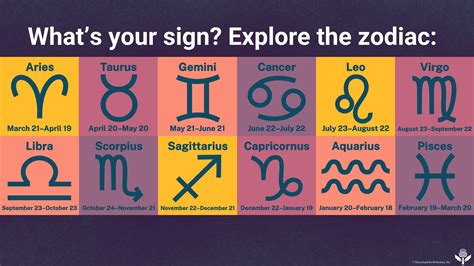
Zodiac Signs
Rejection by the Scientific Community
Astrology has been rejected by the scientific community as having no explanatory power for describing the universe. Those who continue to have faith in astrology have been characterised as doing so "in spite of the fact that there is no verified scientific basis for their beliefs, and indeed that there is strong evidence to the contrary".
Where astrology has made falsifiable predictions, it has been falsified. The most famous test was headed by Shawn Carlson and included a committee of scientists and a committee of astrologers. It led to the conclusion that natal astrology performed no better than chance.
The Role of Falsifiability
Science and non-science are often distinguished by the criterion of falsifiability. The criterion was first proposed by philosopher of science Karl Popper. To Popper, science does not rely on induction; instead, scientific investigations are inherently attempts to falsify existing theories through novel tests.
Read also: Learn about Rick Levine and his contributions to astrology.
Therefore, any test of a scientific theory must prohibit certain results that falsify the theory, and expect other specific results consistent with the theory. In contrast to scientific disciplines, astrology does not respond to falsification through experiment. While an astronomer could correct for failure, an astrologer could not. An astrologer could only explain away failure but could not revise the astrological hypothesis in a meaningful way.
Philosopher Paul Thagard believed that astrology can not be regarded as falsified in this sense until it has been replaced with a successor. Progress is defined here as explaining new phenomena and solving existing problems, yet astrology has failed to progress having only changed little in nearly 2000 years. To Thagard, astrologers are acting as though engaged in normal science believing that the foundations of astrology were well established despite the "many unsolved problems", and in the face of better alternative theories (Psychology).
Historical Context and Evolution
The foundations of the theoretical structure used in astrology originate with the Babylonians, although widespread usage did not occur until the start of the Hellenistic period after Alexander the Great swept through Greece. It was not known to the Babylonians that the constellations are not on a celestial sphere and are very far apart. The appearance of them being close is illusory. The exact demarcation of what a constellation is is cultural and varied between civilisations.
Early Western astrology operated under the Ancient Greek concepts of the Macrocosm and microcosm, and thus medical astrology related what happened to the planets and other objects in the sky to medical operations. During the Islamic Golden Age, astronomy was funded so that the astronomical parameters, such as the eccentricity of the sun's orbit, required for the Ptolemaic model could be calculated to sufficient accuracy and precision.
The clear rejection of astrology in works of astronomy started in 1679, with the yearly publication La Connoissance des temps. Unlike the West, in Iran, the rejection of heliocentrism continued up towards the start of the 20th century, in part motivated by a fear that this would undermine the widespread belief in astrology and Islamic cosmology in Iran. The first work, Falak al-sa'ada by Ictizad al-Saltana, aimed at undermining this belief in astrology and "old astronomy" in Iran was published in 1861.
Read also: The Secrets of Astrology and Numerology
The History Of Astrology In 6 Minutes
Testing Astrology: Quantitative Analysis
Across several centuries of testing, the predictions of astrology have never been more accurate than that expected by chance alone. One approach used in testing astrology quantitatively is through blind experiment.
A meta-analysis was conducted, pooling 40 studies consisting of 700 astrologers and over 1,000 birth charts. Ten of the tests, which had a total of 300 participating, involved the astrologers picking the correct chart interpretation out of a number of others that were not the astrologically correct chart interpretation (usually three to five others). In 10 studies, participants picked horoscopes that they felt were accurate descriptions, with one being the "correct" answer.
Quantitative sociologist David Voas examined the census data for more than 20 million individuals in England and Wales to see if star signs corresponded to marriage arrangements.
The Gauquelin Effect
Geoffrey Dean has suggested that the effect may be caused by self-reporting of birth dates by parents rather than any issue with the study by Gauquelin. The suggestion is that a small subset of the parents may have had changed birth times to be consistent with better astrological charts for a related profession. The sample group was taken from a time when belief in astrology was more common. Gauquelin had failed to find the Mars effect in more recent populations, where a nurse or doctor recorded the birth information.
Theoretical Flaws in Astrology
Beyond the scientific tests astrology has failed, proposals for astrology face a number of other obstacles due to the many theoretical flaws in astrology including lack of consistency, lack of ability to predict missing planets, lack of connection of the zodiac to the constellations in Western astrology, and lack of any plausible mechanism.
Read also: Leo Celebrities and Their Charts
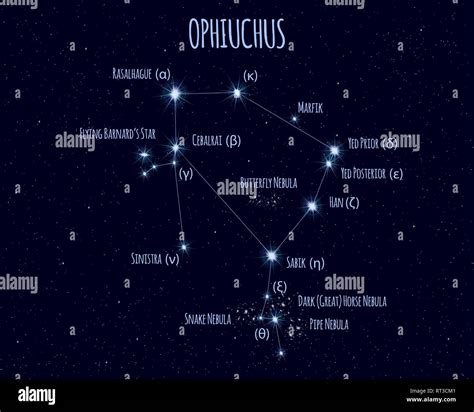
Constellation Ophiuchus
Georges Charpak and Henri Broch dealt with claims from Western astrology in the book Debunked! ESP, Telekinesis, and other Pseudoscience. They pointed out that astrologers have only a small knowledge of astronomy and that they often do not take into account basic features such as the precession of the equinoxes. They commented on the example of Elizabeth Teissier who claimed that "the sun ends up in the same place in the sky on the same date each year" as the basis for claims that two people with the same birthday but a number of years apart should be under the same planetary influence.
Charpak and Broch noted that "there is a difference of about twenty-two thousand miles between Earth's location on any specific date in two successive years" and that thus they should not be under the same influence according to astrology. Edward W. James, commented that attaching significance to the constellation on the celestial sphere the sun is in at sunset was done on the basis of human factors-namely, that astrologers did not want to wake up early, and the exact time of noon was hard to know.
Some astrologers make claims that the position of all the planets must be taken into account, but astrologers were unable to predict the existence of Neptune based on mistakes in horoscopes. Should astrologers remove it from the list of luminars and confess that it did not actually bring any improvement? If they decide to keep it, what about the growing list of other recently discovered similar bodies (Sedna, Quaoar.
Lack of a Physical Mechanism
Astrology has been criticised for failing to provide a physical mechanism that links the movements of celestial bodies to their purported effects on human behaviour. In a lecture in 2001, Stephen Hawking stated "The reason most scientists don't believe in astrology is because it is not consistent with our theories that have been tested by experiment."
In 1975, amid increasing popular interest in astrology, The Humanist magazine presented a rebuttal of astrology in a statement put together by Bart J. Bok, Lawrence E. Jerome, and Paul Kurtz. The statement, entitled "Objections to Astrology", was signed by 186 astronomers, physicists and leading scientists of the day. They said that there is no scientific foundation for the tenets of astrology and warned the public against accepting astrological advice without question. We can see how infinitesimally small are the gravitational and other effects produced by the distant planets and the far more distant stars.
Astronomer Carl Sagan declined to sign the statement. Sagan said he took this stance not because he thought astrology had any validity, but because he thought that the tone of the statement was authoritarian, and that dismissing astrology because there was no mechanism (while "certainly a relevant point") was not in itself convincing. In a letter published in a follow-up edition of The Humanist, Sagan confirmed that he would have been willing to sign such a statement had it described and refuted the principal tenets of astrological belief.
Proposed Causal Agents and Their Rejection
Many astrologers claim that astrology is scientific. If one were to attempt to try to explain it scientifically, there are only four fundamental forces (conventionally), limiting the choice of possible natural mechanisms. Some astrologers have proposed conventional causal agents such as electromagnetism and gravity.
The strength of these forces drops off with distance. Scientists reject these proposed mechanisms as implausible since, for example, the magnetic field, when measured from Earth, of a large but distant planet such as Jupiter is far smaller than that produced by ordinary household appliances. Astronomer Phil Plait noted that in terms of magnitude, the Sun is the only object with an electromagnetic field of note, but astrology isn't based just off the Sun alone.
Psychological Factors and Cognitive Biases
Psychological studies have not found any robust relationship between astrological signs and life outcomes. From the literature, astrology believers often tend to selectively remember those predictions that turned out to be true and do not remember those that turned out false.
The Barnum effect is the tendency for an individual to give a high accuracy rating to a description of their personality that supposedly tailored specifically for them, but is, in fact, vague and general enough to apply to a wide range of people. In 1949 Bertram Forer conducted a personality test on students in his classroom. Each student was given a supposedly individual assessment but actually all students received the same assessment. The personality descriptions were taken from a book on astrology.
By a process known as self-attribution, it has been shown in numerous studies that individuals with knowledge of astrology tend to describe their personalities in terms of traits compatible with their sun signs. The effect is heightened when the individuals were aware that the personality description was being used to discuss astrology.
Criticisms from Various Perspectives
In 1953, sociologist Theodor W. Adorno conducted a study of the astrology column of a Los Angeles newspaper as part of a project that examined mass culture in capitalist society. Adorno believed that popular astrology, as a device, invariably led to statements that encouraged conformity-and that astrologers who went against conformity with statements that discouraged performance at work etc.
False balance is where a false, unaccepted or spurious viewpoint is included alongside a well reasoned one in media reports and TV appearances and as a result the false balance implies "there were two equal sides to a story when clearly there were not".
The Catholic Church's View
In the view of the Catholic Church, astrology is not only worthless - it is indeed sinful and dangerous because it tries to “circumvent” and usurp God who alone determines our fate. Aside from this, astrology is also anti-science and worthless as a means of understanding the universe and ourselves.
Astrology is not a science, and consulting astrologers is a sin.
Questions and Concerns
There are numerous questions that highlight the issues with astrology:
- There are four such fundamental forces in the universe: Gravity, Electromagnetism, Strong Nuclear Force and Weak Nuclear Force. These fours forces function by sending out carrier particles that contain carry information between particles and tell them how to behave. Which of these forces govern astrology and why hasn’t it been detected and tested?
- Where were the astrologers on Sept. 10, 2001? Didn’t they have an inkling of what was about to befall America? How about the COVID-19 Pandemic? Marine barracks attack in Beirut? There are millions of horrific things happening every day around the world. Where is the proof that astrologists had been aware of any of them?
- Are we really expected to believe that all 2,977 deaths at the 9/11 World Trade Center attack all had the same astrological reading? It’s a reasonable assumption that the dead presented all 12 zodiac signs.
- If astrology can offer us such profound and arcane knowledge, why are predictions worded so arbitrarily, vaguely and clumsily?
- Astrology can’t be very important if one doesn’t need academic training to make an assessment or reading. And if one doesn’t need academic training to understand it, why do professionals make so many errors? Why can’t they explain themselves better?
- Why aren’t there any non-for-profit astrological organizations offering free readings to the poor? Surely astrologists think what they offer is very valuable and can help the underprivileged. So why aren’t they running around poor neighborhoods helping people?
- If astrology has any validity as a science, why don’t they all agree as to their methodology and assessments and predictions? Physicists all can come to the same conclusion when analyzing gravity, inertia and time dilation.
- If astrology is accurate, how come governments, businesses, weather agencies and stock markets don’t employ astrologers?
- Astrologists can’t point out any new research in the past 3,000 years. A science with the scientific research is a misnamed endeavor.
- There’s a basic logical disconnect in astrology theory. If my horoscope says that I will have a very bad day due to having a conflict with another individual, it seems that it would follow that the other people with whom I’m fighting would similarly have the same proscription in his horoscopic prediction.
- If astrology is accurate, why aren’t astrologers rich? They can easily profit from this science in the same way that their clients employ them. But, perhaps, astrologers are “forbidden” to use their gifts for their own selfish gain.
- Why are astrologists and other scam-artist charlatans indistinguishable in their methodologies?
- If astrology is an accurate science, why isn’t there a grassroots movement among astrologers to rehabilitate the field’s reputation and show how “scientific” it is?
- If astrology is a legitimate science, why is it that astrologers often also claim to be psychics, mediums, palmists, runemasters, witches, satanists, crystal healers, scryers and so on? That’s a bit odd by anyone’s standard. Legitimate surgeons who have completed 16 years of study and training in a legitimate medical school don’t also become so-called “psychic healers” pretending to cure incurable diseases by using sleight-of-hand.