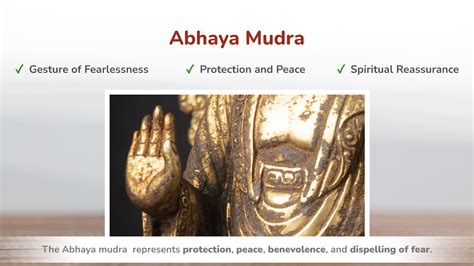
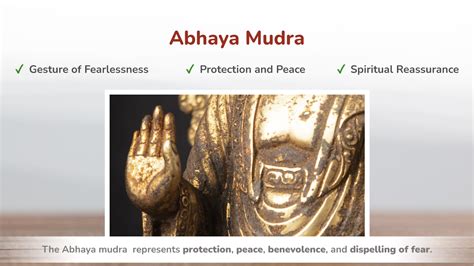
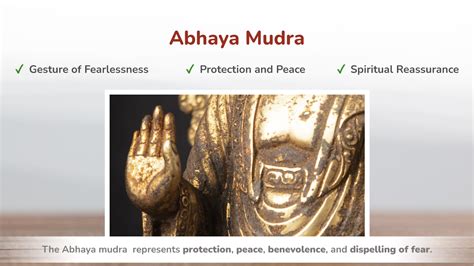
Abhaya Mudra, one of Buddhist iconography's most significant hand gestures, holds profound meaning and symbolism. This ancient gesture, often depicted in Buddha statues, represents protection, peace, and the dispelling of fear. The Abhaya Mudra is a symbolic gesture made with the hand that has a profound spiritual and cultural significance, especially in traditions such as Buddhism, Hinduism, and Jainism.
The word “Abhaya” comes from Sanskrit and means “without fear” or “courage,” while “Mudra” translates to “gesture” or “seal.” Therefore, Abhaya Mudra is interpreted as the gesture of the absence of fear or protection.
Historical Origins and Evolution
The Abhaya Mudra is believed to have originated in ancient India and is one of the earliest mudras used in Buddhist practice. Its first known depiction dates back to the Gandhara period (1st-3rd century CE), where Buddhist art flourished, blending Hellenistic and Indian influences. It dates back even to before the birth of yoga, to ancient times when religions like Hinduism, Buddhism, and Jainism were born.
Historically, Abhaya Mudra was used by the Buddha himself. According to Buddhist tradition, the Buddha performed this gesture after enlightenment to calm a raging elephant set upon him by a jealous rival. In ancient times, the Abhaya mudra was used as a gesture of friendship and a display of goodwill. People greeted each other with the gesture where the right hand is open, empty, and facing the other person.
It meant that the person was unarmed and came with gifts of peace, protection, stability, security, and friendship. Since antiquity, it was also a gesture asserting power, as with the magna manus of the Roman Emperors who legislated and gave peace at the same time.
Read also: Natural Remedies: Mudra and Yoga
The evolution of the Abhaya Mudra in different parts of India has indeed been influenced by notable historical events and figures. The teachings and life of Gautama Buddha, who often depicted the Abhaya Mudra, have had a profound impact on the development of the gesture. As Buddhism spread throughout India and beyond, the depiction of the Abhaya Mudra became associated with the compassionate and fearless nature of the Buddha.
During the Gupta Empire (4th to 6th century CE), the Abhaya Mudra gained popularity in sculptural and artistic representations. The Gupta period's patronage of Buddhism and Hinduism led to the widespread depiction of deities and enlightened beings with the Abhaya Mudra.
The Chola Dynasty (9th to 13th century CE) in South India played a crucial role in the evolution of the Abhaya Mudra. The dynasty's rulers, known for their patronage of the arts, commissioned numerous sculptures and temples. The Chola kings and queens were often depicted in statues and reliefs with the Abhaya Mudra, symbolizing their benevolence and divine protection.
The Mughal Empire (16th to 19th century CE) brought Islamic influence to India. During this period, the Abhaya Mudra found its way into Mughal art and architecture. Mughal emperors, such as Akbar the Great, commissioned paintings and architectural works that incorporated the Abhaya Mudra, reflecting a fusion of Islamic and Indian artistic traditions.
These examples highlight how historical events and influential figures have shaped the evolution and prominence of the Abhaya Mudra across different regions of India.
Read also: Mudras for Weight Loss
Description and Variations
The Abhaya Mudra is straightforward in its execution but profound in its depiction. Here is a detailed description of the hand position:
- Right Hand: Raised to shoulder height, palm facing outward, fingers together and extended upward.
- Left Hand: Resting at the side or lap, often in Dhyana Mudra (meditation gesture) when seated.
Variations of Abhaya Mudra can be found in different cultures and artistic styles.
Significance in Buddhist Practice and Meditation
Abhaya Mudra plays a crucial role in Buddhist practice and meditation. It reminds practitioners of the Buddha's teachings on fearlessness and compassion. Practitioners often visualize this mudra during meditation to cultivate inner peace and security.
The Abhaya Mudra is prevalent across various Buddhist traditions, each interpreting its significance within their cultural and doctrinal frameworks. In Theravada Buddhism, primarily practiced in Sri Lanka, Thailand, and Myanmar, this mudra is commonly seen in standing or walking Buddha statues, emphasizing the Buddha's role as a protector.
In Mahayana Buddhism, prevalent in China, Japan, and Korea, Abhaya Mudra is often combined with other mudras, reflecting a more elaborate iconographic tradition.
Read also: Insomnia Relief with Mudra
Mudra to Overcome Fear: Abhaya Mudra Explained
The Spiritual and Symbolic Meaning
The Abhaya Mudra, known as the gesture of protection and absence of fear, is much more than just a simple hand movement. This ancestral gesture embodies profound spiritual teachings that invite connection with courage, inner peace, and divine trust.
Its meanings:
- A symbol of courage and protection: The Abhaya Mudra symbolizes the ability to face fear and overcome adversity. With the palm open forward, it is associated with a symbolic barrier against negative and harmful energies, reminding that the one who practices it is protected and safe.
- A bridge between the divine and the human: This mudra is also used as a gesture of blessing in Buddhist, Hindu, Jain, and yogic cultures. As the hands are considered carriers of spiritual energy, the Abhaya Mudra conveys blessings and healing energy to others.
- An artistic and spiritual legacy: In the Buddhist art of Gandhara, the Abhaya Mudra holds a special place. It is mentioned in the scriptures and represented in statues of Buddha, such as in the figure of the fifth Dhyani Buddha, Amoghasiddhi, who is famous for displaying this gesture as a symbol of courage and compassion.
- Peace as a universal essence: This sublime mudra, practiced by yogis and spiritual masters, fosters spiritual strength and compassion. On the spiritual path, its meaning goes beyond the absence of fear: it invites the extension of deep peace and harmony to the world.
How to Practice the Abhaya Mudra
Abhaya mudra is a sacred hand gesture symbolizing fearlessness and protection. Formed by raising the right hand palm-outward at shoulder level, it reassures and mitigates fear. This yoga mudra practice channelizes the flow of energy (prana) throughout the body.
Follow these steps to practice the Abhaya Mudra:
- Get into a comfortable position: Sit in sukhasana, padmasana, or any other meditative posture. Use a cushion if you need it for more comfort. If you have health issues that make it difficult to sit on the floor, practice this mudra lying down, sitting in a chair, or even standing.
- Connect with the present moment: Close your eyes and use your breath to clear your mind of past thoughts and energies. Focus on the present moment, allowing your mind to settle into a state of calm.
- Place your left hand: Relax your left hand and place its palm in the center of your pelvic region, facing up. This position is key to stabilizing your energy.
- Perform the Abhaya Mudra with your right hand: Raise your right hand to shoulder height. Keep your palm open and facing forward. Relax the muscles of the palm and ensure the posture is comfortable.
- Feel the changes: Stay in this position and observe how the mudra impacts your energy body, your thoughts, emotions, and your mental state. Let this practice foster in you courage, calmness, and protection.
- Initial duration: Practice the mudra for 5-10 minutes at first, adjusting according to your comfort level and needs. As you progress, gradually increase the time to 15-30 minutes for greater benefits.
- Finish the practice gently: Slowly lower your right hand and relax it. Release your left hand from the pelvic area and let it rest. Open your eyes and breathe naturally, feeling the effects of the practice.
Benefits of Abhaya Mudra
Embrace fearlessness and inner strength with Abhaya Mudra. This practice cultivates emotional stability, helping overcome anxiety and depression by activating the parasympathetic nervous system. It boosts confidence and deepens spiritual connection, promoting trust and intuition through the Ajna Chakra.
Regular practice of this powerful mudra cultivates a sense of fearlessness, protection, and inner strength. Focus on deep and slow breaths while holding the mudra encourages emotional stability and helps manage and overcome negative emotions. Therefore, therapists can include Abhaya Mudra in therapeutic yoga sequences for students with anxiety and depression while activating the parasympathetic nervous system.
The practice of this mudra is believed to activate the Ajna Chakra (Third Eye Chakra), which is associated with intuition and spiritual insights, and the Anahata Chakra (Heart Chakra), which is associated with emotional balance and harmony.
Mudras are easy to perform. This mudra brings gentle stretch in the fingers and is believed to reduce pain in the hands and fingers, promoting healing. It further helps improve joint flexibility and mobility and reduces inflammation by improving blood circulation in the hands and fingers. Hence Abhaya Mudra can provide some relief from the symptoms of osteoporosis. However, it is not a substitute for medical treatment.
Classification of the Abhaya Mudra
The Abhaya Mudra, one of the most emblematic gestures in the spiritual and cultural realm, can be classified from different perspectives according to its function, symbolism, and context. Below, we explore its main categories:
| Classification | Description |
|---|---|
| For its spiritual function | The Abhaya Mudra is classified as a mudra of protection and bravery, as it is designed to dispel fear and provide emotional, mental, and spiritual security. In personal practice, it helps cultivate a sense of inner calm while also being a gesture of protection towards others. |
| For its symbolism | This mudra primarily symbolizes absence of fear and universal peace. With the palm open and facing forward, it is interpreted as a protective shield that blocks negative energies. Additionally, it acts as a gesture of benevolence, conveying trust, serenity, and security. |
| For its religious and cultural context | In Buddhism, the Abhaya Mudra is closely associated with the teachings of the Buddha, symbolizing his ability to provide divine protection and eliminate fear in practitioners. In Hinduism and Jainism, it is also used as a gesture of blessing, emphasizing the spiritual connection and non-violence (ahimsa). |
| For its purpose in yoga | In the practice of yoga, the Abhaya Mudra is classified as a spiritual energy mudra, as it promotes the strengthening of inner, mental, and emotional strength. It is also used as a mudra of meditation and mindfulness, helping practitioners connect with the present moment and achieve a state of calm. |
| For its overall classification in the mudras | This gesture belongs to the Hasta Mudras or hand mudras, used in yoga and spiritual practices to channel energy and convey a symbolic meaning. Within this category, the Abhaya Mudra is identified as a symbolic purpose mudra, standing out for its ability to convey universal messages of courage, peace, and protection. |
Abhaya Mudra in Art and Modern Culture
Abhaya Mudra is a common motif in Buddhist art, found in sculptures, paintings, and reliefs. Famous examples include the Sarnath Buddha statue in India and the massive Buddha at Gal Vihara in Sri Lanka. These masterpieces showcase the mudra's aesthetic appeal and spiritual significance.
When identifying Abhaya Mudra in art, look for the distinctive raised right hand with the palm facing outward. Stories that illustrate its power: According to ancient texts, when an overflowing lake threatened to flood a village, the Buddha used the Abhaya Mudra to block the river and protect the community. This account reflects the strength of this gesture when practiced with sincerity and purpose.
In contemporary times, Abhaya Mudra continues to resonate with people worldwide. It is embraced not only by Buddhists but also by individuals seeking calm and confidence in their daily lives. The gesture's universal message of fearlessness and reassurance transcends religious boundaries, making it relevant in various contexts, from yoga and mindfulness practices to modern art and design.
Abhaya Mudra's presence in modern culture is evident in its depiction in contemporary artworks, tattoos, and even fashion.
With its profound symbolism and rich history, Abhaya Mudra remains a powerful gesture of protection, fearlessness, and peace. Whether depicted in ancient sculptures or embraced in modern practices, this mudra inspires and comforts those who encounter it.