The air conditioning unit is an integral part of any home & takes up a major chunk of your must-have home appliances budget. Making the right choice is crucial as your home’s cooling, comfort & energy consumption are directly dependent on it. As HVAC technology advances, homeowners now have more options than ever before when it comes to keeping their homes cool and comfortable. This guide covers all types of air conditioners that you need to know about to make the right choice for your next cooling or heating appliance!
Understanding the different types of air conditioners is crucial when selecting the best cooling solution for your home. Each type has its advantages and considerations, depending on budget, space, energy efficiency, and personal preferences. There is no definitive answer: your best air conditioning system will depend on your unique circumstances, budget, and climate.
There are eight main types of air conditioning equipment out there in the market. Each type of air conditioner is designed for a certain space & fulfills a certain purpose.
- Central Air Conditioner
- Ductless Mini-Split
- Window Air Conditioner
- Portable Air Conditioner
- Floor-Mounted Air Conditioner
- Smart Air Conditioner
- Geothermal Air Conditioning System
- Hybrid / Dual Fuel Air Conditioner
Air Conditioner - How To Select The Proper Size Unit
1. Central Air Conditioner
If you have a large home & wish to cool multiple rooms at once, then this type of air conditioning is best suited for you. A central air conditioning unit uses a split system that regulates air through ducts installed in your home. The split aspect implies that the system is a combination of two main units. The outdoor unit packs in the condenser and compressor. While the indoor unit comprises the evaporator coils & air handler. Like any typical air conditioner, central air conditioning also uses refrigerant to remove heat from the indoor air. Most central AC systems and mini-split systems typically last 15 to 20 years, although some can last even longer with proper care.
A central air conditioning unit is considered more expensive compared to all previous types mentioned but, it is also considered more effective. On average, they range from $1,500 - $4,000. Moreover, these air conditioners tend to last longer than portable & window air conditioners.
Read also: Detailed Review of Arccos Golf
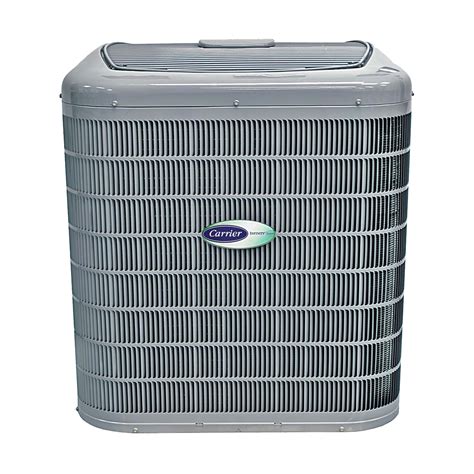
The central unit has lengthy ductwork that requires professional maintenance.
2. Ductless Mini-Split Air Conditioner
If you want better efficiency, or you want to do away with a lot of ducting, or you simply just want a portion of your home to be cooled, then opting for ductless mini-split air conditioners is a great choice. Such a type of air conditioner is a combination of an outdoor unit comprising a compressor & a condenser that comes along with one or more indoor units. These indoor units are mounted on a wall and equipped with air blowers. Since these indoor units are small and compact, each room usually gets its own unit installed that can either be used for heating or cooling purposes.
A ductless air conditioner or a mini-split AC is considered cost effective if you’re only cooling a room or two. If you opt to cool your entire home on a single ductless system, you’ll have to keep it on at all times adding to your energy costs with low effectiveness.
3. Window Air Conditioner
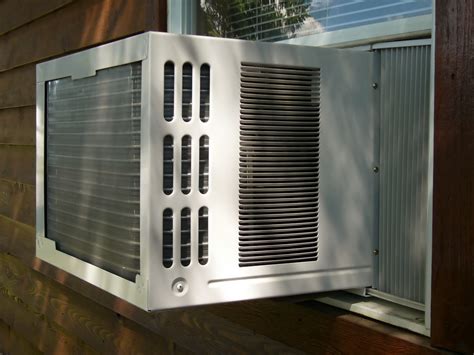
Since window air conditioners come in different sizes, they would be suitable if you’re looking to cool a single room or a small area. If you go for a large window air conditioner, you can even cool a small home, considering it is a single-story or one open space. A window air conditioner is a single unit with all of its components enclosed inside. It ejects heat out of its outdoor side and blows cool air into the room on the indoor side. As the name suggests, it is installed in a window or by making a hole in the wall. Such air conditioners have a filter that slides out so that it can be cleaned regularly for full AC efficiency.
The cheapest options out there are window air conditioners & portable air conditioners. Keep into account that such types of air conditioners are only able to cool a single room at a time.
Read also: Apps for Oura Ring Users
4. Portable Air Conditioner
Portable air conditioners are similar to window air conditioners. They are also placed in a single unit with all its components enclosed inside, but the difference is that it is a free-standing unit and therefore can be moved from room to room. You can opt for a portable air conditioner if you want temporary space cooling, or wherever it’s not practical to install a window or split air conditioner. They are very handy, and smaller versions can even be used for kennels or bathrooms. Portable ACs can be single- hose that takes in air from inside a room and expel it outdoors.
The cheapest options out there are window air conditioners & portable air conditioners. Keep into account that such types of air conditioners are only able to cool a single room at a time. For instance, if you want to cool your apartment, you can go with portable units.
5. Floor-Mounted Air Conditioner
Floor-mounted air conditioners are designed for convenience if you prefer a mini-split but lack the required space for a wall mounted unit. The indoor unit of floor-mounted AC rests on the floor, and the outer unit can be installed without major site preparation or any ductwork. Floor mounted systems cool/heat the room quicker than any other mounting system as the fan blows the air directly at your level. On the contrary, units that are mounted high up on the wall can often face difficulties cooling the room uniformly and efficiently. Floor units need free space around them to function efficiently and circulate the air adequately.
6. Smart Air Conditioner
Smart air conditioners are a type of mini-split, window, or portable air conditioner that are IoT enabled. Depending on the manufacturer, these air conditioners come with numerous functionalities. Some of these include weekly scheduling, geofencing, comfy mode, temperature range control, and numerous other features. Smart AC controllers are also available in the market, providing all the functionalities of a smart AC to any conventional ducted unit.
Smart ACs, depending on the type (window, mini-split, or portable) are slightly pricier than their conventional counterparts. However, they result in energy-saving and thus are not as pricy to run.
Read also: What is S3-Compatible Storage?
Smart thermostats are great for improving energy savings. They allow you to program specific temperature settings based on your daily schedule, and some can even learn your preferences over time.
7. Geothermal Air Conditioning System
Geothermal heating & cooling is considered a relatively new method, it works by utilizing the insulating properties of the earth. This system has piping that consists of a loop that circulates water between your home, a heat pump & the ground.
Geothermal heating & cooling is regarded as the most expensive option out there; however, they tend to pay for themselves over time with energy-saving. The efficiency & effectiveness of geothermal units are unmatched compared to the rest of the types of ACs available out there.
8. Hybrid / Dual Fuel Air Conditioner
A hybrid system is one that combines a gas furnace with an electric air-source heat pump to deliver a cost-effective & efficient performance in terms of heating & cooling. Depending on the temperature outdoors, the system automatically switches between burning fossil fuels and using electricity. During the summer season, the heat pump works as it functions, pulling hot air from inside your home and throwing it outdoors. During the winter, this process is reversed, and heat is distributed throughout your home.
Additional Types of Air Conditioning Systems
This inclusion in the list stems from their ability to effectively cool indoor spaces. They need less electricity than other types of air conditioners. However, on the downside, they utilize a lot of water and need to be regularly filled. Additionally, they increase the rooms humidity levels. Unlike conventional AC systems with ducts and refrigeration cycles, evaporative coolers operate by taking in warm, dry air, which is then passed through the water-saturated pads ,and cool humid air is pushed into the room.
Key Considerations When Choosing an Air Conditioner
Ensure purchasing an energy-efficient air conditioning system, as it can help decrease your utility bills. Check for energy efficiency ratings such as Seasonal Energy Efficiency Ratio ratings (SEER) before buying your unit. The SEER rating of a unit is the cooling output divided by the total electric energy input during the same period. Another rating system is Energy Efficiency Ratio (EER).
Always buy an air conditioner that is best suited for your home’s space.
British Thermal Units (BTUs) measures an air conditioner’s cooling or heating capacity. Common BTU capacities range from 6,000 to 12,000, which are suitable for a common-sized living room. This specification is applicable to any type of air conditioner that you want to purchase.
Thermostat Compatibility with HVAC Systems
Your thermostat is the command center for your heating and cooling system. It controls when your furnace or air conditioner turns on, how long it runs, and the temperature your home maintains. So, how can you tell if your thermostat is compatible with your HVAC system? Before you head out to buy a new thermostat, take a moment to assess your current system. Not all thermostats work with all HVAC systems.
Types of Systems:
- Single-Stage Systems: These systems either run at full capacity or turn off completely.
- Two-Stage or Multi-Stage Systems: If you have a multi-stage system, your HVAC unit can operate at different speeds, providing more efficiency and comfort.
- Dual Fuel Systems: A dual fuel system uses both a heat pump and a gas furnace.
Thermostats work with different voltage systems, so it’s important to know which one you have. Low voltage systems are the most common for residential HVAC units.
Another way to determine thermostat compatibility is by looking at the wiring on your current thermostat. When you remove the thermostat faceplate, you’ll see a series of wires that connect it to your HVAC system.
- C Wire: Many modern thermostats, especially smart thermostats, require a “C” wire, also known as a common wire, for continuous power.
- Wire Setups: Thermostats can have a variety of wire setups, depending on how complex your HVAC system is. The more wires you see, the more advanced your system might be.
- Wi-Fi Connectivity: Most smart thermostats connect to your home’s Wi-Fi, allowing you to control your HVAC system from your phone. However, you’ll need to check if your Wi-Fi signal is strong enough in the location where your thermostat is installed.
- Compatibility With Older Systems: If you have an older HVAC unit, not all smart thermostats may work.
Even if you don’t plan on upgrading your thermostat, you might already be dealing with compatibility issues without realizing it.
- System Short Cycling: This is when your HVAC system turns on and off in short bursts without completing a full heating or cooling cycle.
While some thermostats are easy to install yourself, others, especially programmable thermostats, and smart models, may require professional installation.
Making sure your thermostat is compatible with your HVAC system will save you from unnecessary stress and keep your home comfortable year-round.
So, is your thermostat compatible with your HVAC system? Determining the answer to this question can be a bit of a puzzle.
Electrical Considerations for Air Conditioners
Ordering an air conditioner without checking your home’s power is like buying shoes by “vibes” instead of size-sometimes it works, often it doesn’t. This friendly, practical guide shows you exactly how to match an AC’s plug type, voltage, breaker, and wiring to your setup, so you avoid nuisance trips, overheated receptacles, and returns.
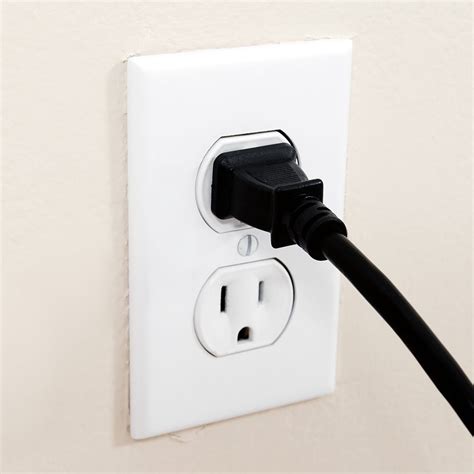
Think of plug patterns as “keys” that encode both amperage and (often) voltage. If the key doesn’t match the lock, the answer is a new, correct receptacle/circuit, not an adapter. Adapters are a no-go for ACs.
Air conditioners draw sustained current and have a motor inrush. Most manufacturers specify a dedicated branch circuit so the breaker protects only that load. Sharing the circuit with lamps, microwaves, or vacuums invites nuisance trips and overheated connections.
- No adapters. They defeat safety interlocks and can overheat.
- No extension cords. AC cords are sized and listed as shipped; extension cords add resistance and risk.
- No shared circuits. Expect the electrical path to change from plug-in to hardwired.
Match voltage, plug pattern, breaker size, and dedicated status before you order.
CoolBot and Air Conditioner Compatibility
CoolBot is a device that allows you to use a standard air conditioner to create a walk-in cooler. Here's what you need to know about air conditioner compatibility with CoolBot:
- CoolBot is COMPATIBLE with Window and wall mounted Mini-Split Air Conditioners.
- Air Conditioners MUST have a Digital Display and Automatic Restart.
- CoolBot is NOT COMPATIBLE with Portable A/Cs*, Central A/Cs, RV A/Cs, Roof-mount A/Cs, PTACs or Cassette type Mini-Splits.
- DO NOT select an A/C based on the square footage rating printed on the box.
- Please allow 2 feet of clearance around outside A/C vents for proper ventilation.
- Please DO NOT purchase REFURBISHED A/Cs. Buy only new A/Cs and ensure they are from a reputable seller.
A/C Sizing Chart
Here is the budget-wise ranking of AC system types.
| Desired Temperature Range | Room Size | Air Conditioner Size (BTUs) |
|---|---|---|
| 34°F - 37°F (1°C - 2.9°C) | 4' x 4' | 8K BTU |
| 6' x 6' | 12K BTU | |
| 6' x 8' | 15K BTU | |
| 8' x 8' | 18K BTU | |
| 38°F - 49°F (3°C - 9.9°C) | 4' x 4' | 6K BTU |
| 6' x 6' | 8K BTU | |
| 6' x 8' | 10K BTU | |
| 8' x 8' | 12K BTU | |
| 50°F - 60°F (10°C - 16°C) | 4' x 4' | 5K BTU |
| 6' x 6' | 5K BTU | |
| 6' x 8' | 5K BTU | |
| 8' x 8' | 7K BTU |
A/C Recommendations
Here are some recommendations for compatible air conditioner brands:
- Window A/C: LG is the preferred brand. Other compatible brands include Frigidaire, Haier, Arctic King, Danby, and GE.
- Mini Split A/C: LG (except HSV models), Fujitsu, Mitsubishi, and Mr Cool (24K model) are the preferred brands.
- Portable A/C: If you MUST use a portable A/C unit, only a WHYNTER portable A/C unit is recommended. It MUST be a DUAL HOSE unit and will ONLY work for 53°F - 60°F.
By using solar panels to generate electricity, these systems can help homeowners reduce their reliance on fossil fuels and save energy.
Regular maintenance can help extend the life of your HVAC system.
tags: #compatible #air #conditioner