Maria Grazia Chiuri has always been captivated by romance, whether it is romantic love or classical literary romance, as defined by a deep, overwhelming yearning that you feel in your core.
At Valentino, and now at Dior, her exquisite gowns evoke stories of grand devotion and desire - a motif she took into the magical and queer realm for her Spring 2021 Haute Couture collection film.
The collection, like most over the year, was presented virtually due to the ongoing pandemic. Luckily for us, Chiuri has used this opportunity to craft a tale inspired by the traditional tarot’s 22 Major Arcana card suite.
In 1910, poet and occultist Arthur Edward Waite collaborated with artist Pamela Colman Smith to design the Rider-Waite tarot, the most widely-used deck among practitioners. Smith’s images were based on Waite’s mystical schematics, and her renditions of cards such as the High Priestess, Death, and The Lovers have become imbued with today’s pop culture witchy fascination.
Chiuri again worked with director Matteo Garrone on a short film to contextualize the collection. “We decided to film a story about this girl who goes inside a castle. It’s a labyrinth which represents an interior trip. When she meets each of (the tarot) figures, she has to reach a decision about her life,” she told Vogue. “And on the other hand, she meets aspects of her own personality and learns not to be scared of the future.”
Read also: Dior Zodiac Bags: A Closer Look
Waite intended for the Major Arcana to represent that journey. His tarot begins with card 0, The Fool, who is pictured jovially playing an instrument dangerously near a precipice. It is meant to symbolize the beginning of a new path, and how each chapter of our lives are filled with danger and joy. The Fool reminds us to begin our journeys with open eyes - a moment hauntingly brought to life as the girl (played by Agnese Claisse) with tender pink hair enters the castle.
She’s not alone. Inside, she meets the personifications of the Fool, Justice, the Moon, and more. The Devil is symbolized by horned temptresses who block her path, signifying the card’s traditional meaning of self-destruction and maladaptive habits. This girl is an androgynous version of the pink-haired girl; she has a dark pixie cut and wears an exquisitely-tailored suit as she joins the Star and Temperance through the labyrinth. The two versions of the girl meet in the bath and begin caressing and kissing one another, becoming the Lovers.
Though the implication is that the two girls are the same person, it can’t help but be contextualized through queer culture. The stylistic interpretations of feminine and masculine coding are so pronounced, but they brought together by shared inquisitiveness, a shared journey, and ultimately, shared loved and passion. It’s a story that demands more representation in high fashion. Like the Fool, maybe this is just a first step into a wider world.
The spring 2021 collection film begins with a young woman sitting for a tarot reading in a classic Dior Bar Jacket. She draws the High Priestess card, which guides her on a voyage of the mind through the arabesque halls of a Moorish Revival palazzo. There, she encounters characters drawn from the deck, brought to life via majestic Dior couture outfits.
From Justice and the Fool, to more esoteric, misunderstood cards like the Devil and Death, the protagonist of the fashion film embarks on a journey of self-discovery and self-acceptance, clad in otherworldly couture.
Read also: Heartbreak and the Three of Swords
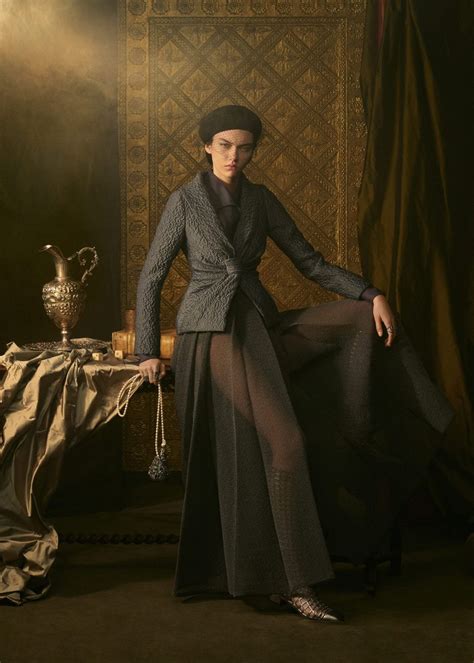
Let's delve into the meaning of each card as it appears in Maria Grazia Chiuri's tarot spread:
The High Priestess
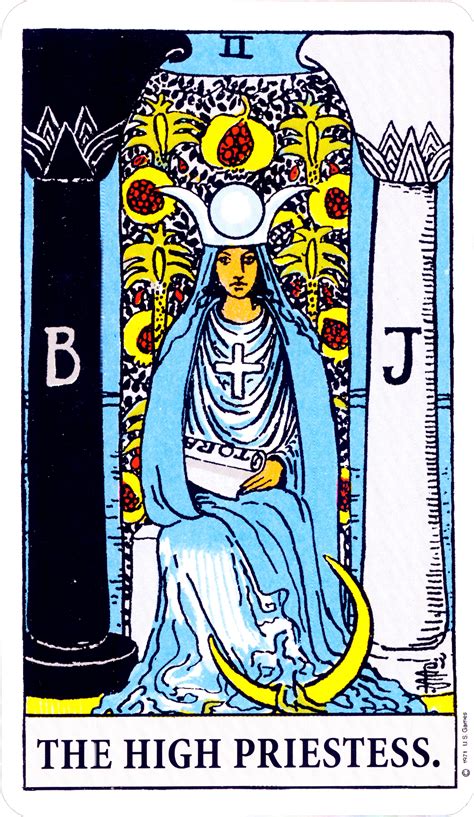
Pulling this card symbolizes the all-knowing and the divine feminine. The High Priestess unlocks mysteries, hidden talents, and life's lessons, and in doing so, allows one to look within. All about intuition and self-discovery, this figure is the final stage in the coming-of-age story of the tarot deck's Major Arcana cards, the 22 big archetypal characters in the deck. She points to uncovering one's own secrets and tapping into intuition. And with that sense of maturity comes trust in oneself.
This character symbolizes one's force of guidance coming from within, where one's internal voice (read: your gut feeling) is trusted above all other distractions and external forces, even ego. The card's moon symbols represent the culmination of femininity and womanhood. This figure is all goddesses in one embodiment; she holds a book, which is understood to be the Torah, Bible, Quran, or the Book of Life in her hands.
Chiuri, it seems, opted to include a key in her rendering, a nonreligious take on unlocking one's potential and divinity. Chiuri dresses her High Priestess in a regal robe and crown worthy of an all-knowing goddess who has come into her own. The film's protagonist pulls the card, thus beginning her journey to a more evolved understanding of self-by trusting her intuition and exploring her feminine power.
Justice
The first figure Dior's protagonist comes across is herself-not a shock considering the meaning behind the High Priestess card. But she's not as ladylike, romantic, and decorated as she seems to us. She spots herself down a hall, dressed in a more masculine presentation with a perfectly tailored suit and cropped hair-but more on that later.
Read also: The Meaning of Tarot Suits
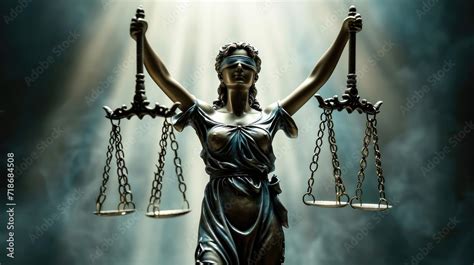
She's then greeted by Justice, who represents balance, choice, and cause and effect. This card reminds us that every action has a reaction, and not always an equal and opposite one. Justice indicates that the fairest decision will be made-this is the Libra card, after all. Justice (and Libra) seeks morality and accountability, and urges us (or those around us) to take responsibility. This card points to self-preservation, codes of ethics, and judgment; often, those grappling with right or wrong, or fair and unfair, know the answer deep inside.
The Justice card also signifies karma; it typically speaks to the solid moral code of whoever pulls it. Deep down you know: All the good you put into the world comes back to you. The high-neck, draped silk gown Chiuri chose for this character is fairly conservative and simple-for a reason. Justice and Libra are ruled by Venus; there is a consciousness of how one appears to others, and this card and sign place value in one’s worth and actions, in addition to what one wears.
This card asks to be taken seriously; she’s not swayed by outer beauty when it comes to making a decision, even someone as the stunning lead character of the film, wearing Look 1 from the collection. In the film, Justice challenges the protagonist to make a decision, to choose-right or wrong-so she can weigh her choices.
The Fool
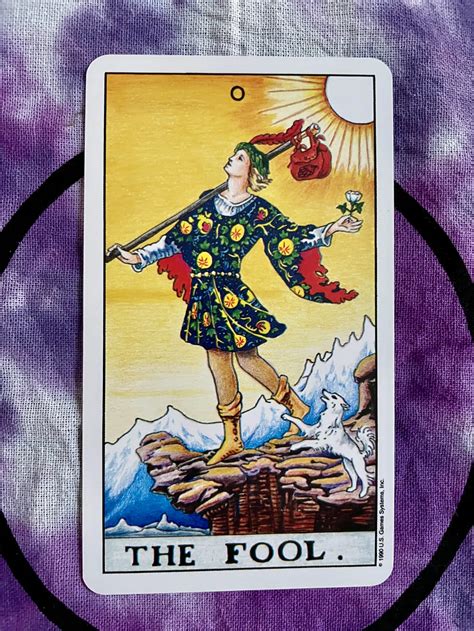
The film's leading character is in the middle of making a decision at the throne of Justice before she's distracted by the Fool. That's just what this character symbolizes-a wanted (or unwanted) distraction. The Fool has a childlike innocence and symbolizes naiveté and making folly choices without an internal check-in or thoughtful consideration. As the fool in Chiuri's narrative interrupts key decision-making, so does this spirit in life.
Drawing this card forces one to ask: How much are you going to balance your inner child with your intuition? The Major Arcana cards are numbered 0 to 21, and this card is 0 in the deck. Its numerology marks it as a spirit; it exists before the archetypes in the deck take on human or divine form. The Fool is dressed as a sort of court jester or child, styled in Chiuri's most playful, multicolored mini with bell sleeves.
The tarot deck is understood to be the Fool's journey from spirit to human to a divine being; it's, therefore, understandable why Dior's Fool tries to distract the lead character before guiding her to the next stop on her journey. This card speaks more to the subconscious than the conscious mind. In relation to the Fool, the High Priestess encourages making one's own choices and trusting yourself, despite silly distractions.
The Hanged Man
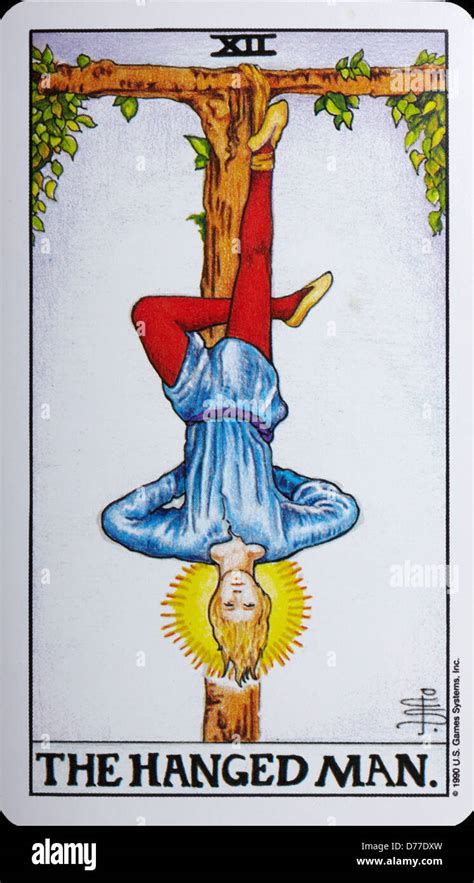
The Hanged Man, or Woman in our case, also represents intuition and the unknown. This archetype is a revealer of secrets, similar to the High Priestess, but uncovers mysteries by looking at things from a different perspective or from a different angle, rather than being all-knowing. This card represents surrender since the character depicted on the card has surrendered physically.
This card is a step closer to enlightenment; it's not constrained by time, where the Hanged Man is suspended. This card represents metamorphosis and being willing to let go without yet seeing the fruits of your labor. The Hanged Man in Dior's film points the protagonist to a door that's actually opening on its side, something one isn't anticipating but can be noticed if you look at things from another angle. The door opening on its side is that other way of looking at things, and our character continues on her journey and walks through it.
Temperance
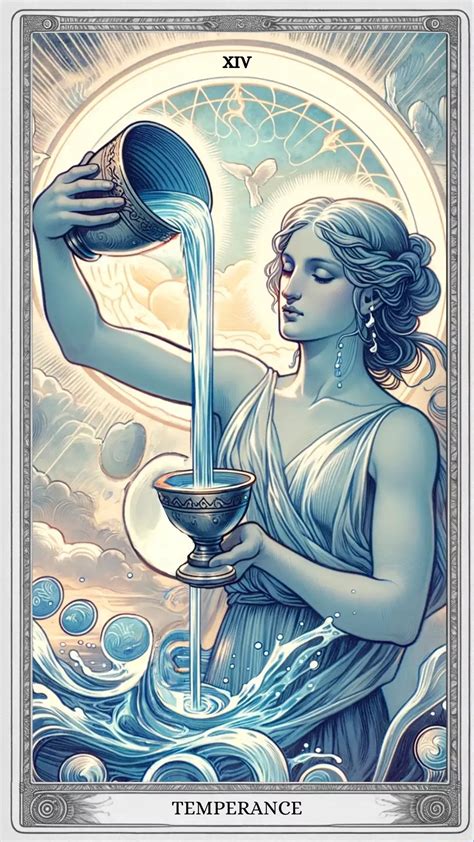
The horizontal door opens to reveal Temperance. Temperance represents higher learning, moderation, emotional control, and philosophy. This card aligns with Sagittarius and is male, female, or neither-just like Sagittarius is either man, horse, or both. This card represents alchemy and the integration of the Holy Spirit, the mind, and the body, hence the triangle on the heart of this character in the deck.
The two jugs in her hands represent the super and the subconscious minds; the water flows between them, suggesting union, fluidity, and infinity, while releasing duality. This card represents the balance of extremes and harmony in contrast, like the feminine and masculine. This is particularly apropos given that the more conventionally feminine and masculine sides of our protagonist seem to currently be on different journeys in Dior's film, and are about to converge again.
Note the boats and distant lands in the background of this card; this symbolizes voyages, but not without testing the waters before jumping into the deep end. It’s a spiritual card, signifying enlightenment. The journey it encourages the lead character in Dior's film to take guides her one step closer on her tour through the tarot deck, and through Chiuri's suite of couture looks.
The Star

Temperance guides Dior's lead to the Star, who is showcasing the wonders of the universe and the astrological map. The Star is magical, but not in a practical way like the Magician who is pictured in the deck at a table with all the resources he (or she) would need to create and make his (or her) own reality. The Star shows us the magical components of life; it’s the embodiment of freedom (and the positive twist on the Death card) so it's apropos that while one side of Dior's protagonist is interacting with the Star, the other is in the Devil's lair-but more on that later.
This card says to us: "Look at all of the magic, mystery, and joys of life." In the 22 Major Arcana cards, which all uncover life lessons, the Star is a glimmer of hope. It represents healing and is a blessing when it's drawn. The Star is the Aquarius card, the water bearer and the ruler of astrology, the stars, and higher faith. With that in mind, it's no surprise that the Star in Dior's film is showing off all the astrological map has in store.
Depicted on the card, like Temperance, the Star holds two water jugs. Rather than overlooking a landscape, this character is kneeling at the water. The water symbolism of both cards interplays nicely with the fluid transition of this woman's journey, which eventually ends in the water as well. The Moon, like the Star, also holds or controls water in her own right, so it's no surprise that both would lead these two-or is it one?-characters to water.
The Devil
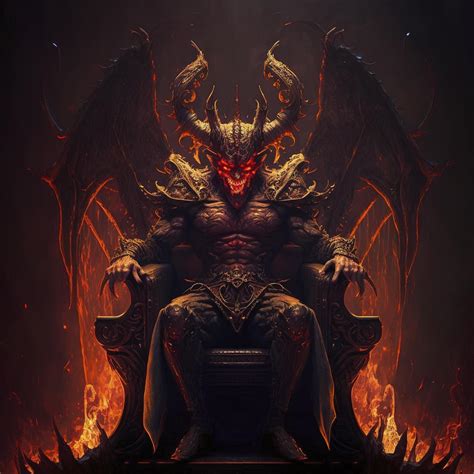
While one protagonist is greeted by The Star, the rosy-haired lead of the film finds herself in The Devil's lair. The Devil represents the shadow aspects of ourselves-and you can’t run away from your shadow, evidenced by the lead's inability to escape. The Devil asks us to examine our fears, our shadows, our darkness, and look them in the eye. This card speaks to all indulgence, decadence, and temptation that lures you in; it's the symbol of sex, eroticism, tantra, lust, seduction, and passion in the deck.
This card is about embracing aspects of yourself and your sexuality; it's no surprise that this character is clad in a flesh-toned, lingerie-esque gown for for goddess. This scene in Chiuri and Garrone's film is a positive spin on The Devil. In drawing The Devil, she attempts to run away and then gives in, embracing her shadow and feeling free. The card in the deck features a devil holding two characters prisoner in shackles at its feet who yearn to be set free.
Freedom comes in the understanding that your dark side isn’t dangerous, it’s intimate. When you look the devil in the eye, you earn freedom from the parts of yourself that surrendered to the toxicity of its grasp. This take on the card encourages embracing your darkness and integrating your animalistic side-hence the devil's horns and winged embrace-into a new, evolved version of yourself.
The Moon

Upon awakening from her time with The Devil, Dior's muse is greeted by The Moon, who leads her to Death. The Moon card represents silence, nighttime, being in darkness, and magnetism. The card depicts The Moon bringing in the high tide. Water and fluidity are astrological parallels with emotion, deep sentiment, and feeling. This is the Cancer card, and the high tide brings up a heightened sense of emotion.
In the film, The Moon brings our character to water, and also, to Death. The moon represents illusions, and times when things aren't what they seem. We’ve been under the illusion that there are two lead characters in this fashion film, when in fact (it seems) that they’re two sides of the same being. Maria Grazia's choice of a luminescent blush fabric and crescent shaped-curves in the neckline and bodice are likely no mistake either; opalescence and the illusion of grandeur and presence (with a waxing and waning train as the fabric moves with the wearer) are in line with what we'd expect The Moon to dress up in.
Death
This, Maria Grazia tells BAZAAR via an exclusive video, is her favorite card, given its reminder that “after an end, there is always a new beginning.” Death in the film does just that, stripping the protagonist of her gown, and starting her anew. This card encourages you to shed your outer layers and return to yourself; it represents an ending-be it of a life, the ego, or a dynamic. It can also represent moving on.
While most assume this card has a negative connotation, and it can, it's usually about the death of a chapter and rebirth. Getting naked and shedding the ego to move into a new stage is the beauty of the Death card. The grandeur of the ballgown Dior's version of Death wears, paired with a crystal-encrusted executioner's mask could represent the gravity and magnitude of this event. Death represents a pivotal spiritual moment, and the vastness and drama of the gown its accessories represent the scale of that shift.
The Lovers
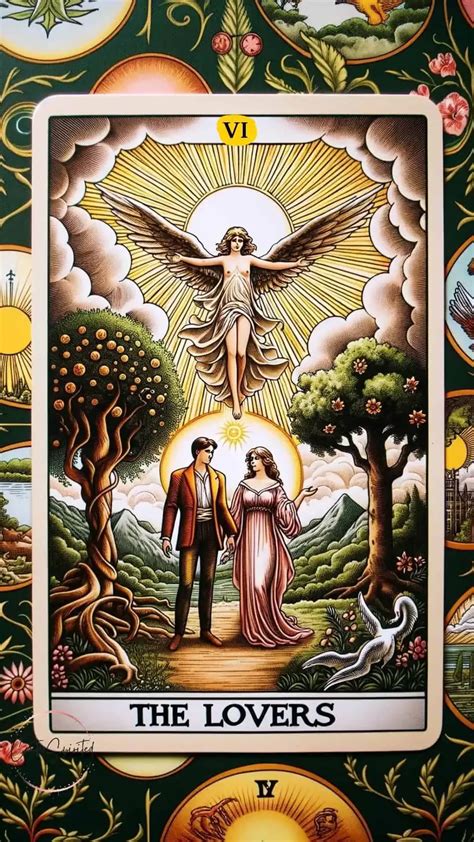
The Lovers card doesn't make an obvious appearance in Dior's collection or in its corresponding film, but it was clearly on Maria Grazia's mind when she designed both. The lead character of the film walks into Chiuri and Garrone's world and sees herself, dressed in a tailored suit with a cropped haircut. This could represent a female's masculine inner counterpart given that The Lovers is a Gemini card, and the two figures in it are said to be mirrors of one another in addition to lovers.
They’re a symbol of the integration of feminine and masculine, and a merging of two people, or two facets of self. The Lovers represents a divine union and divine marriage, either with another or with oneself. In this Dior coming of age story, a woman on her journey to a High Priestess, The Lovers card is yet another symbol of her growing up and coming into one's own.
The Making of the Dior Autumn-Winter 2022-2023 Haute Couture Collection
This week, I wanted to share my thoughts on Dior’s breathtaking Spring 2021 haute couture collection, Le Château du Tarot. Conjured up by Maria Grazia Chiuri and Matteo Garrone, the collaborative film merges dreams, mysticism and spirituality with reality, taking the occult symbols of the Visconti-Sforza Tarot to the next level.
The cards really come to life. Ethereal fabrics are heightened with gold thread and embroidered motifs… it’s all beautifully feminine yet empowered with meaning and symbolism - a true ode to the world of tarot, exalting excellence and know-how, sitting at the crossroads of enchantment and audacity. I. Love.
And what a joy to see a historic fashion house such as Dior shine a light on the tarot and build positive perceptions of this divine deck of cards. But only fitting… Monsieur Dior had an appetite for the mystical. He consulted his clairvoyant Delahaye on any big decision and collected talismans which he would carry with him to bring good fortune.
From a piece of ‘touch’ wood in his pocket, to a sprig of lily-of-the-valley year-around, Dior’s superstitions have left lasting traces at the couture house and we couldn’t be happier. According to legend, Monsieur Christian Dior was a very superstitious man, so much so that he loved the number 8 because he believed it was lucky, or that he used to sew lily of the valley branches into the new clothes of each fashion show to be sure of the success of his creations.
In times of uncertainty, just like those that Monsieur Dior experienced during the war, any reference to auspicious magic conveys security. I don’t believe that the Tarot is divinatory, but simply that the encounter with the Major and Minor Arcana helps one to analyze one’s thoughts and allows one to make choices. The designer turns the mysterious and fascinating divination cards, so full of meaning and symbolism, into complex, opulent and beautiful clothes.
A girl asks an old lady to read her tarot cards. "What do you want to know?" asks the fortune teller. "Who am I?", replies the girl. The origin of the house of Christian Dior has an unlikely provenance: a seaside-dwelling mystic.
As brand folklore tells it, a young Monsieur Dior stumbled upon a palm reader when he was a young boy growing up in Northern France who told him he would amass great success by surrounding himself with, and working for, women. This lead Christian on an eventual path to fashion, and instilled in the designer a lifelong obsession with astrology and mysticism.
That interest culminated in almost daily visits from clairvoyants, including the elusive fortune teller Madame Delahaye, whom Dior considered one of his greatest influences. Legend tells that Mme. Delahaye even warned M. It comes as no surprise then that Dior’s eventual predecessor, current creative director Maria Grazia Chiuri, has continually referenced astrology and the zodiac in her collections for the brand.
In 2017, Grazia Chiuri embroidered classic New Look silhouettes with intricate constellations, and has, over the last four years, reworked the classic Saddle and Dior Book Tote bags with references to the zodiac. Perhaps most memorable was her couture Fall/Winter 2020 collection, which was inspired by the Tarot.
This desire to marry mysticism and fashion continues with the launch of ‘Lucky Dior’, a new capsule collection of ready-to-wear clothing and accessories. Recurring favourites from the Dior archive feature in the collection, including the aforementioned Dior Book Tote (now in a chic latte-hue with zodiac embroidery), the Dway slide, and silk pyjama sets.
M. Dior’s famous ‘lucky star’-a recurring motif for the brand-is reworked into metallic eyelets on handbags, or used as a statement charm on feminine gold jewellery including bracelets and Dior Tribales earrings. True astrology fans will know we’ve just entered Leo season, which, for Aquarian Maria Grazia Chiuri means “firing on all creative cylinders”.
tags: #dior #tarot #collection