This article explores the song "Shri Chakra Raja Simhasaneshwari," a composition praising the mother Goddess. It is a Ragamalika composed by Agastya with lyrics in Sanskrit and Tamil.
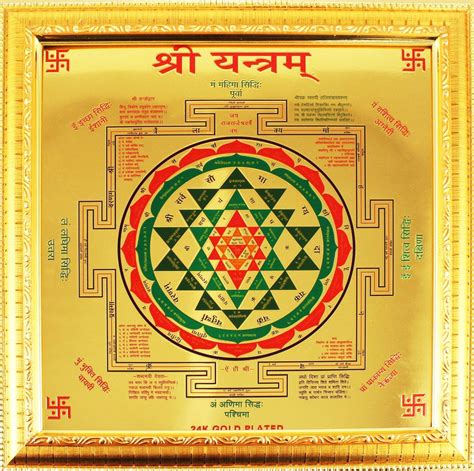
Shri Yantra
The story, perhaps apocryphal, is that Agastya was initiated into the Srividya tradition (Devi worship) by the deity Vishnu appearing in the form of Hayagriva. The practice of Sri Chakra involves the worship of the deity in the form of a diagram (nine inter-locking triangles) that represents both Shiva and Shakthi, the yin and yang of human nature.
Shri Chakra Raaja Simhaasaneshwari is a majestic composition by the divine sage Agasthiyar in praise of goddess Lalithambigai (Parvathi). Maharishi Agastya was a Vedic sage and was considered to be one of the Saptharishis (seven sages). He is the twin brother of Vashista Muni and excelled in all spheres of life.
Aagastya Muni was multi-faceted and he excelled in all spheres of life. He was a great Tamil scholar and is considered as the ‘Father of the Tamil Language.’ He is the compiler of the first Tamil Grammar Book known as ‘Agatthiyam.’ He and his wife Lopamudra, (the princess of Vidharbha), are the celebrated authors of several hymns in Rig Veda. He excelled in music.
Read also: The Significance of Lakshmi Stotram
It is believed that he won the great musician Ravana, the Lord of Lanka in a competition, by melting the mountain with his sweet music. He founded the martial art form Silambam. He practiced the ancient science of healing using Varmam, points to cure several diseases. He also possessed yogic powers and wielded them to protect the sages.
According to the ‘Lalithopaakhyaana’ (the revered story of Sri Lalitha Tripurasundari), Sage Agastya secured the Devi’s grace to compose this song. This is a magnificent song rendered in Carnatic style. The lyric is the unique amalgamation of Sanskrit and Tamil. The first stanza is written in Sanskrit, while the following three verses are composed in lucid Tamil. The four mellifluous ragas embellishing this composition make it an adorable Raga Maalika. It is set to the Aadhi thala, a rhythmic cycle of eight beats. It is usually sung in Madhyama Shruthi.
Lyrics and Meaning
‘Shri Chakra Raja Simhaasaneshwari, Sri Lalithaambigaiyey, Bhuvaneshwari,’ the audience is able to picturize the Devi seated majestically on Her Shri Chakra throne. Shri chakra is also known as Shri Yantra, it consists of nine interlocking triangles that surround a central point. She is portrayed as the supreme Empress of the world and the embodiment of Agamas (Scriptures), Vedas and all art forms. She is venerated as Janani, the mother of all movables and immovables. She is revered as Narayani (Lord Narayana’s sister).
Pallavi
Our mother Lalitha, Parvati who is the goddess of the universe, and consort of Lord Eswar, sits on the throne of Sri Chakra.
Anupallavi
O Parvati, you are the personification of Agamas, Vedas, and Arts. O NaaraayaNi you are the mother of moving and non-moving things. You are the beautiful consort of the king of dance, who wears serpent bracelets and the goddess of knowledge and the goddess who is the king of kings.
Read also: Science of Chakras
Charanam 1
The Devi is lauded as Nataraja Manohari, the one who has captivated Nataraja (Lord Shiva), who adorns his wrists with Snakes. She is idolized as Gnyana Vidyeshwari, the epitome of wisdom and knowledge and is worshipped as Raajarajeshwari, the empress, who is the ruler of all rulers. This verse is composed in the Raga, Senchurutti. This famed raga is mostly adopted for folk music. This Raga has a pleading tone to it. It exudes the Bhakti Rasa (devotion).
Oh Kameshwari of Kanchi, please bless me with stability, so that I can sing and dance about you in various ways. We sing while dancing, please consider your devotees as flowers at your feet and see the entire world within me. In the second verse, the composer Agastya conveys to Devi that the devotees eulogize Her by dancing and by singing Her praises. They also bedeck themselves with flowers from Her Lotus feet. Kanchi Kameshwari, the presiding Goddess in Kanchipuram who fulfils all the wishes of her devotees, has granted the poet the power to visualize the entire world, with single-minded steadfastness (Ekaagratha). This verse is composed in the Raga Punnagavarali. This raga is associated to Karuna Rasa (compassion).
This raga is believed to mesmerize serpents and so the snake charmers play this raga in their Magudi (a musical instrument) to allure snakes. The song, ‘Naadharmudi Mel Irukkum' is a renowned song set in this raga.
Charanam 2
O devi, though I was wandering without an aim in this world, you made me holy. You placed me in the good company of great noble souls. You have removed the horrible fate from the previous births which were following me like a shadow. Oh Goddess Bhavani, you are the goddess of lotus who is always good.
In the next stanza, the composer declares that prior to him being blessed by the Goddess, he was aimlessly roaming around. But it was Her grace that had transformed him to a noble man. He has also been fortunate to be in the company of great elderly scholars. The Goddess has vanquished the sins of his previous births, which were relentlessly pursuing him like a shadow. He extols the Devi to be Nityakalyani (the eternal bestower of auspiciousness), Bhavani, the giver of life, the source of creative energy and Padmeshwari (one who resides in a lotus). This verse is composed in Nadhanamakriya. This raga has a meditative mood and also a certain sense of yearning. It is also a Nishadantya raga. Bhadrachalam Ramadas has composed the song, ‘Ye Theerugananu' in this raga .
Read also: Anatomy of the Sacral Chakra
Charanam 3
O mother, you put me in the fire of sorrow which purifies, which made me pure ultimately and gave me meaning to my birth by removing the sins of previous births. You made me drink love and made me see your dances. Oh Goddess of the universe, you are my only support.
The poet concludes the composition by expressing that, the Devi has put him through several trials and tribulations which has purged him of his sins. This can be likened to the manner in which Gold is smelted in the furnace for purification. The Devi has eliminated the persistent Maya (illusion), and has made him realize the true purpose of his birth. She has showered him with abundant love and has empowered him to witness her miracles. He realizes that mother Akhilandeshwari, (the ruler of the universe), is his only refuge, and he totally surrenders himself at Her lotus feet.
This verse is composed in the raga Sindhubhairavi. It is a Hindustani raga (Bhairavi), it was popularized by Tansen, the great musician of king Akbar’s court. This raga seeps with Bhakti and Karunya Rasa. The listeners derive peace and serenity, and is believed to sooth the nervous system. This composition invokes the grace of all the forms of the divine Devi. It was Maharajapuram Santhanam, who has popularized this composition. This song is a treasure trove for the rasikas (connoisseurs) and transports them to a sublime transcendental state.
Raga Summary
| Verse | Raga | Rasa (Emotion) |
|---|---|---|
| Charanam 1 | Senchurutti | Bhakti (Devotion) |
| Charanam 2 | Punnagavarali | Karuna (Compassion) |
| Charanam 3 | Nadhanamakriya | Meditative, Yearning |
| Charanam 4 | Sindhubhairavi | Bhakti, Karunya (Compassion) |
Tips for Practice
Practice Consistently: Expertise cannot be built in a day or two, the same way your musical ability too. Practicing constantly and consistently is the only real way to ensure your plans succeed. Keep on them when you have your music schedule and set your weekly and monthly music goals. Build on each session’s progress. Review your notes. All these things will ripe one day and you will get your success fruit eventually.
Yamuna is a resident of Coimbatore and is pursuing Hindustani vocal music under the tutelage of Shri Kedar Karatji. She also teaches bhajans and conducts English Grammar classes for school children.