Dreams continue to be sources of mystery and fascination, eluding universal explanations, blurring reality and fiction and mixing the two in curious ways. We are closer now than we have ever been before to having comprehensive explanations of all sleep-related phenomena, ontological and phenomenological accounts that are backed by neuroscientific sleep research. Yet, the problems posed by the narrative quality of dreams resist some universal explanation, which is the promise of current trends in neuroscientific research.
Most mornings they slip free of your grasp before you even pick up your toothbrush to brush your teeth. Just try to define them. They arrive in packages of image and emotion that deftly defy simple description. They are weightless but weighty. And don’t expect the dictionary to be of much help; on top of everything else, dreams seem to elude definition.
The word’s roots reach deep into history and wide into possibility. Perhaps the reason so many people are afraid of their dreams, is the root itself has scary beginnings. The Sanskrit root druh means to seek harm or to injure, which makes the dream seem like an inevitable nightmare. The Proto-Germanic origin is drachmas, meaning deception, illusion, or phantasm. Science tells us a dream is mere mentation or a series of random neurochemical creations: They’re all in your head; just your imagination. In the Bible they’re prophecy-or possibly heresy.
Eminent scientist and professor of psychology and neuroscience, Matthew Walker, recently published ground-breaking work on the question of sleep’s necessity, titled Why We Sleep: Unlocking the Power of Sleep and Dreams (2017). This book summarizes much of the recent neuroscientific work on sleep and dreaming, punctuating research findings with creative and critical insights.
Freud’s theory of dream interpretation influenced studies on dreaming since the 1900s. The biggest criticism leveled against his work takes issues with his methodology, which is unverifiable. However, methodology has been the biggest challenge for scientists in studying dreams, as the dream report is always subjective and is reliant on the dreamer.
Read also: Interpreting Blood Dreams
Psychiatrist Soudabeh Givrad reviews the theoretical and scientific work on dreams, and how psychoanalysis and behaviorism were the two dominant influences in this field of research starting from the twentieth century. The reason why large sample-size studies never took place in the twentieth century can be attributed to these two movements, as “Psychoanalytic perspectives put a higher emphasis on the meaning and significance of dreams and what they represented in each individual’s life, whereas behaviorism questioned the existence of such mental experiences as dreams”.
After Freud’s theory that dreams provide insights into our subconscious desires and play the role of wish-fulfilment, the significant discoveries were in relation to REM sleep in 1953 by Kleitman and Aserinsky. Different relations were posited between REM sleep and dreaming, followed by new postulations about dreams and their functions in “modulating mood and emotions”. Memory related hypotheses mainly centered around dreams and their role in consolidating memory, problem-solving, and memory reactivation.
Several developmentally oriented theories of dreaming also exist, such as the role of dreaming in cognitive stimulation and creativity. An interesting theory called AND or the affective network dysfunction theory suggests that dreams play a role in the extinction of fear memories. This theory attempts to understand nightmares and other negative sleep phenomena.
Decoding Dreams: Scientific Approaches
One of the experiments that addresses questions about the form and content of dreams was conducted by Dr. Yukiyasu Kamitani and his team in 2013. The experiment consisted of three individuals who had consented to having their dreams monitored through an MRI scanner, which gathered numerous reports or snapshots of brain activity in REM sleep from each of the participants.
Twenty core content categories were identified in the dream reports, such that the rough content of the dream could be identified from these distilled image patterns, in a way that, “Using the template data from the MRI images, they could tell if you were dreaming of a man or a woman, a dog or a bed, flowers or a knife”. These scientists were essentially decoding dreams before the participants could tell them what they were dreaming about themselves, based on the hundreds of reports that they had obtained through MRI scans.
Read also: Hippo Dream Interpretation
Having moved from the question of form, as to whether the dream could be determined as emotional, sensorial, or kinetic, to the question of content categories, these scientists had “essentially cracked the code of an individual’s dream for the very first time and, in doing so, led us to an ethically uncomfortable place”.
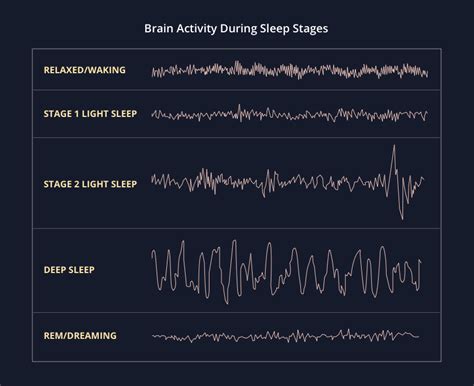
Brain activity during sleep can be monitored using neuroimaging techniques like fMRI.
Walker discusses the positive implications of this research for PTSD patients, if we arrive at a greater knowledge of the construction of dream mechanisms and the neural pathways involved in disrupting a good night’s sleep. The questions he raises in this context are in relation to what it means to hold a dreamer responsible for their dreams, if we arrive at such a place in the near future.
Walker’s concerns with neuroscience’s ability to “crack the code of an individual’s dream," and how this has led us to an ethically uncomfortable place is a concern that merits attention. Walker mentions the possibility that in the near future, we might be at a juncture “where we can accurately “read out” and thus take ownership of a process that few people have volitional control over-the dream”.
Beyond the literal accountability of dreaming and its contents or even the problems this would pose for mapping truth in accounts of convicted prisoners or the ethical quandaries of powerful organizations using these methods to extract information, the fact that the narrative of a dream is still an elusive property that belongs only to the dreamer is perhaps beneficial. It invites dream research to take note of the narrative as a form of knowledge in itself, which includes the self-narration and the account of the dreamer with their emphasis on what is important and what is irrelevant.
Read also: Psychological Interpretations: Cockroach Dreams
Though the focus of scientific research is geared towards understanding the neural underpinnings of dream activity, perhaps the usefulness of dream-reports needs to be approached from a different direction. Narrative approaches of consolidating dream-reports to map recurring patterns in cultural contexts, symbolic repetitions, and thematic analysis can be useful in understanding dreams within their multiple contexts.
Lucid Dreaming
In the psychology subfield of oneirology, a lucid dream is a type of dream wherein the dreamer realizes that they are dreaming during their dream. The capacity to have and sustain lucid dreams is a trainable cognitive skill. During a lucid dream, the dreamer may gain some amount of volitional control over the dream characters, narrative, or environment, although this control of dream content is not the salient feature of lucid dreaming.
An important distinction is that lucid dreaming is a distinct type of dream from other types of dreams such as prelucid dreams and vivid dreams, although prelucid dreams are a precursor to lucid dreams, and lucid dreams are often accompanied with enhanced dream vividness.
In formal psychology, lucid dreaming has been studied and reported for many years. Prominent figures from ancient to modern times have been fascinated by lucid dreams and have sought ways to better understand their causes and purpose. The practice of lucid dreaming is central to both the ancient Indian Hindu practice of Yoga nidra and the Tibetan Buddhist practice of dream Yoga. Early references to the phenomenon are also found in ancient Greek writing.
Subsequently, Stephen LaBerge studied the prevalence among lucid dreams of the ability to control the dream scenario, and found that while dream control and dream awareness are correlated, neither requires the other. LaBerge found dreams that exhibit one clearly without the capacity for the other.
An experienced lucid dreaming practitioner wields an increased ability of dream control and capacity to execute pre-intended actions. However, there are still aspects of lucid dream practice about employing lucidity productively that are yet to be honed. A proficient lucid dreamer is marked by a deliberate ability to accomplish intended actions in lucid dreams, along with knowledge of the best actions for given dream scenarios.
The proficient lucid dream practitioner's practice is well-planned, drawing upon a broad skill set facilitating flexible oneironautic exploration, which can include contemplative practices or athletic motor skill training. Expertise in lucid dream skill is accompanied by normalization of greater intensity of lucidity during lucid dreams.
In 1968, Celia Green analyzed the main characteristics of such dreams, reviewing previously published literature on the subject and incorporating new data from participants of her own. She concluded that lucid dreams were a category of experience quite distinct from ordinary dreams and said they were associated with rapid eye movement sleep (REM sleep).
In 1973, the National Institute of Mental Health reported that researchers at the University of California, San Francisco, were able to train sleeping subjects to recognize they were in REM dreaming and indicate this by pressing micro switches on their thumbs.
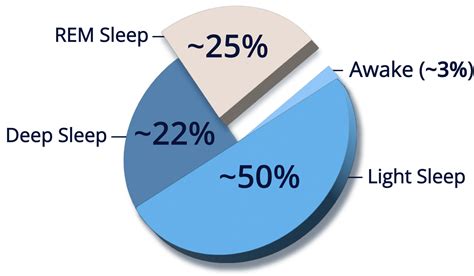
Schematic representation of Rapid Eye Movement (REM) sleep.
In 1975, Dr. Keith Hearne had the idea to exploit the nature of rapid eye movements (REM) to allow a dreamer to send a message directly from dreams to the waking world. Working with an experienced lucid dreamer (Alan Worsley), he eventually succeeded in recording (via the use of an electrooculogram or EOG) a pre-defined set of eye movements signaled from within Worsley's lucid dream. This occurred at around 8 am on the morning of April 12, 1975. Hearne's EOG experiment was formally recognized through publication in the journal for The Society for Psychical Research.
In 1980, Stephen LaBerge at Stanford University developed such techniques as part of his doctoral dissertation. In 1985, LaBerge performed a pilot study that showed that time perception while counting during a lucid dream is about the same as during waking life. Lucid dreamers counted out ten seconds while dreaming, signaling the start and the end of the count with a pre-arranged eye signal measured with electrooculogram recording. LaBerge's results were confirmed by German researchers D. Erlacher and M.
In a further study by Stephen LaBerge, four subjects were compared, either singing or counting while dreaming. Neuroscientist J. Allan Hobson has hypothesized what might be occurring in the brain while lucid. The first step to lucid dreaming is recognizing that one is dreaming. This recognition might occur in the dorsolateral prefrontal cortex, which is one of the few areas deactivated during REM sleep and where working memory occurs.
Once this area is activated and the recognition of dreaming occurs, the dreamer must be cautious to let the dream continue, but be conscious enough to remember that it is a dream.
Paul Tholey, a German Gestalt psychologist and a professor of psychology and sports science, originally studied dreams in order to resolve the question of whether one dreams in colour or black and white. In his phenomenological research, he outlined an epistemological frame using critical realism. Tholey instructed his subjects to continuously suspect waking life to be a dream, in order that such a habit would manifest itself during dreams. He called this technique for inducing lucid dreams the Reflexionstechnik (reflection technique).
Subjects learned to have such lucid dreams; they observed their dream content and reported it soon after awakening. Tholey could examine the cognitive abilities of dream figures. Nine trained lucid dreamers were directed to set other dream figures arithmetic and verbal tasks during lucid dreaming. Dream figures who agreed to perform the tasks proved more successful in verbal than in arithmetic tasks.
A study was conducted by Stephen LaBerge and other scientists to see if it were possible to attain the ability to lucid dream through a drug. In 2018, galantamine was given to 121 patients in a double-blind, placebo-controlled trial, the only one of its kind. Some participants found as much as a 42 percent increase in their ability to lucid dream, compared to self-reports from the past six months, and ten people experienced a lucid dream for the first time.
Teams of cognitive scientists have established real-time two-way communication with people undergoing a lucid dream. During dreaming, they were able to consciously communicate with experimenters via eye movements or facial muscle signals, were able to comprehend complex questions and use working memory.
Other researchers suggest that lucid dreaming is not a state of sleep, but of brief wakefulness, or "micro-awakening". Experiments by Stephen LaBerge used "perception of the outside world" as a criterion for wakefulness while studying lucid dreamers, and their sleep state was corroborated with physiological measurements. LaBerge's subjects experienced their lucid dream while in a state of REM, which critics felt may mean that the subjects are fully awake.
Philosopher Norman Malcolm was a proponent of dream skepticism. He has argued against the possibility of checking the accuracy of dream reports, pointing out that "the only criterion of the truth of a statement that someone has had a certain dream is, essentially, his saying so." Yet dream reports are not the only evidence that some inner drama is being played out during REM sleep.
In 2016, a meta-analytic study by David Saunders and colleagues on 34 lucid dreaming studies, taken from a period of 50 years, demonstrated that 55% of a pooled sample of 24,282 people claimed to have experienced lucid dreams at least once or more in their lifetime. Furthermore, for those that stated they did experience lucid dreams, approximately 23% reported to experience them on a regular basis, as often as once a month or more.
In a 2004 study on lucid dream frequency and personality, a moderate correlation between nightmare frequency and frequency of lucid dreaming was demonstrated. A 2015 study by Julian Mutz and Amir-Homayoun Javadi showed that people who had practiced meditation for a long time tended to have more lucid dreams. Mutz and Javadi found that during lucid dreaming, there is an increase in activity of the dorsolateral prefrontal cortex, the bilateral frontopolar prefrontal cortex, the precuneus, the inferior parietal lobules, and the supramarginal gyrus. All are brain functions related to higher cognitive functions, including working memory, planning, and self-consciousness.
The researchers also found that during a lucid dream, "levels of self-determination" were similar to those that people experienced during states of wakefulness.
Nightmares and Lucid Dreaming Therapy
It has been suggested that those who suffer from nightmares could benefit from the ability to be aware they are indeed dreaming. A pilot study performed in 2006 showed that lucid dreaming therapy treatment was successful in reducing nightmare frequency. This treatment consisted of exposure to the idea, mastery of the technique, and lucidity exercises.
Psychotherapists have applied lucid dreaming as a part of therapy. Studies have shown that, by inducing a lucid dream, recurrent nightmares can be alleviated. It is unclear whether this alleviation is due to lucidity or the ability to alter the dream itself. A 2006 study performed by Victor Spoormaker and Van den Bout evaluated the validity of lucid dreaming treatment (LDT) in chronic nightmare sufferers. LDT is composed of exposure, mastery and lucidity exercises. Results of lucid dreaming treatment revealed that the nightmare frequency of the treatment groups had decreased.
Holzinger, Klösch, and Saletu managed a psychotherapy study under the working name of 'Cognition during dreaming-a therapeutic intervention in nightmares', which included 40 subjects, men and women, 18-50 years old, whose life quality was significantly altered by nightmares. The test subjects were administered Gestalt group therapy, and 24 of them were also taught to enter the state of lucid dreaming by Holzinger. This was purposefully taught in order to change the course of their nightmares.
Many of us were introduced to lucid dreaming spontaneously when we found ourselves in the middle of a disturbing dream. Surprisingly, even though lucid nightmares are quite natural, we still do not know much about them. That’s because we usually wield lucidity as a tool, not an exploratory attitude. So we change the nature of the dream through conscious choice, making after-the-fact analysis difficult.
Banishing nightmares is an important skill because the practice develops our strength and courage in the dream. This is what Nietzsche called the “Sacred No.” The dream ego can stand up to a menacing force and refuse to go along with the narrative. We can choose to transform the monster into something less threatening. Or we can simply walk away, or wake up from the dream. This is how I first dealt with my lucid nightmares.
Clinical studies in the 1990s that explored lucidity as a nightmare treatment report positive results. In my later development of lucid dreaming, I began to question this assumption, especially after a new round of lucid nightmares came back. This is the dark side of lucidity, and it is not discussed much in public. Yet many dreamers I talk to in private admit that sometimes trying to “conquer” their dreams only leads to more trouble.
Take my word for it, these experiences are a normal part of the learning curve. This class of nightmares seems not to be merely reflections of fear, but to have an autonomous energy all its own. Dark experiences in lucid dreams can be found in some of the classic literature.
More recently, psychologist Scott Sparrow writes that at the height of his experimentation with lucid dreams, “all kinds of angry people began showing up in my dreams, and turning rather demonic to boot.” So here we have two experts, separated by a century and a half, noticing a correlation between controlling their lucid dreams and the appearance of “demons” and angry dream figures. This taboo against frightening lucid dreams and the private initiations that follow is why these dreams are under-reported in the literature.
In Western psycho-spirituality, having a negative experience is considered a moral failure. In other cultures, this is not the case. For instance, in Tibetan Buddhism, deities have both peaceful and wrathful natures. Actually, some Christian mystics have some pretty terrifying visions that sound a lot like lucid nightmares too, especially Teresa of Avila and Hildegaard of Bingen. And of course Dark Night of the Soul is a classic 16th century work by St John of the Cross that illustrates how delving into the unknown is an important part of psychological development and spiritual growth.
This is just to say that the usual Western way of dealing with frightening imagery is not to rever it, but to push it away, back into the shadows. Some may be turned off by my focus on the spiritual elements of lucid dreaming. I certainly don’t think you need to be religious to develop your lucid dreaming skills. I was raised as a humanist.
Creativity and Problem Solving in Dreams
In her book The Committee of Sleep, Deirdre Barrett describes how some experienced lucid dreamers have learned to remember specific practical goals such as artists looking for inspiration seeking a show of their own work once they become lucid or computer programmers looking for a screen with their desired code.
Exploring the World of Lucid Dreaming by Stephen LaBerge and Howard Rheingold (1990) discusses creativity within dreams and lucid dreams, including testimonials from a number of people who claim they have used the practice of lucid dreaming to help them solve a number of creative issues, from an aspiring parent thinking of potential baby names to a surgeon practicing surgical techniques.
Potential Risks of Lucid Dreaming
Though lucid dreaming can be beneficial to a number of aspects of life, some risks have been suggested. A very small percentage of people may experience sleep paralysis, which can sometimes be confused with lucid dreaming. Although from the outside, both seem to be quite similar, there are a few distinct differences that can help differentiate them.