One of the most exhilarating, expressive and inspiring forms of African American music-beloved by people of all religious persuasions despite its exclusive lyrical adherence to the tenets of Christian belief and storytelling-is gospel, whose predecessor is the spiritual. The earliest form of African American religious music, the spiritual, also called Negro spiritual, comprises two forms-folk and concert.
The spirituals, also known as Negro spirituals, African American spirituals, Black spirituals, or spiritual music, is a genre of Christian music that is associated with African Americans. This genre merged varied African cultural influences with the experiences of being held in bondage in slavery, at first during the transatlantic slave trade and for centuries afterwards, through the domestic slave trade. In the nineteenth century, the word "spirituals" referred to all these subcategories of folk songs.
While they were often rooted in biblical stories, they also described the extreme hardships endured by African Americans who were enslaved from the 17th century until the 1860s, the emancipation altering mainly the nature (but not continuation) of slavery for many. Many new derivative music genres such as the blues emerged from the spirituals songcraft. These songs were used to share coded messages, unite people, express feelings and emotions, and to keep their culture alive throughout the generations.

They eventually were performed in churches, schools, and concerts. Beyond their musical significance, spirituals played a crucial role in encouraging and uplifting African Americans throughout history.
Read also: The Pentacle: History and Meaning
Origins and Context
The tradition of spirituals began in the early 1700s among enslaved Africans in the American South, particularly on plantations where communal singing was both a survival strategy and a subtle form of resistance. This genre emerged from the blending of African musical traditions with Christian hymns introduced by missionaries and slaveholders. Spirituals first flourished in secret worship meetings, also known as “hush harbors,” where enslaved people gathered away from the eyes of overseers. Not only did African Americans have to mask their singing, they also had to worship in secret.
As Africans in America, the enslaved maintained their African way of life, including religious practices. Their religious rituals evolved around singing, dancing and other forms of bodily movement, which the European clergy criticized, describing them as “primitive,” “vulgar,” “pagan,” and contrary to the teachings of Christianity. To discourage and replace these “sinful” dances and “secular” musical events with sanctioned European religious activities in northern colonies, missionaries organized various proselytizing campaigns beginning in the 18th century.
Despite the conversion of some enslaved and free Blacks, the clergy’s initial effort largely was unsuccessful. The Great Revival Movement mounted a century later in the South, however, led to the conversion of the enslaved masses, who were attracted to the emotional aspect of the camp meetings associated with this movement. As Christians, the majority of enslaved and free Blacks did not relinquish their African religious beliefs nor cultural traditions. They resisted European cultural conformity by transforming Christian worship services into an African-styled ritual, evolving the Protestant repertoire into an African American tradition, and reinterpreting Biblical teaching through an African world view and their experiences as slaves.
The folk spiritual is a form of improvised music, spontaneously created by individuals and groups. The concert spiritual, also known as arranged spirituals, evolved in schools created to educate the enslaved after emancipation. The spiritual draws from African music and European psalms and hymns, and from African-derived secular sources, including work songs, field calls and protest songs. It was sung in both religious and secular settings, including as the enslaved worked the plantation fields.
The Invisible Church
The “invisible church” refers to the secret religious gatherings formed by enslaved African Americans when they were denied the freedom to worship openly or express their own spiritual practices. These hidden meetings took place in remote areas such as woods, cabins, or secluded clearings and allowed enslaved people to combine Christian teachings with African traditions in ways that were not permitted under the watchful eyes of enslavers. Within these gatherings, participants could pray, sing, and testify without fear of punishment, creating a spiritual community rooted in shared struggle and hope.
Read also: Understanding anemia spiritually
The musical practices that developed in the invisible church-especially call-and-response singing, ring shouts, and improvised spirituals-became essential foundations of African American sacred music. These songs carried layered meanings, offering both religious comfort and coded messages of resistance or escape.
Negro Spirituals: The Music That Helped Free Enslaved African Americans | ABJ Clip
Musical Features and Performance Style
Folk spirituals are spontaneously created and performed in a repetitive, improvised style. The most common song structures are the call-and-response (“Blow, Gabriel”) and repetitive choruses (“He Rose from the Dead”). The call-and-response is an alternating exchange between the soloist and the other singers. The soloist improvises a line to which the other singers respond, usually by repeating the same phrase. Group singing is performed with slight deviations from the melody line, rather than in unison or harmony. Song interpretation incorporates the interjections of moans, cries, hollers, etc., and changing vocal timbres. Singing is accompanied by handclapping and foot-stomping.
Syncopation, or ragged time, was a natural part of spiritual music.
Lyrics: Themes of Hope, Freedom, and Protest
The texts of folk spirituals drew from various sources, which the enslaved interpreted though the lens of their daily experience. Mixing native African words and African American dialect, songs might touch on biblical themes, the daily experiences of the enslaved, the desire for freedom and deliverance, protest, suffering and other topics. Biblical stories from the Old Testament and the book of Revelations from the New Testament, for example, provide thematic material for the majority of folk spirituals.
Read also: Light Blue: Calmness and Healing
In their songs, the enslaved recreated stories about the oppressed Hebrew people, the cruel Egyptians, the Red Sea, and the land of Canaan to reflect their oppression, their treatment by whites, and their desire for freedom respectively. The stories about Daniel, Jacob, Moses, Gabriel, Jesus, Jonah, Paul and Silas, Mary and Martha, among others gave the enslaved courage, strength, and determination to endure worldly hardship with the promise of a better life in Heaven.
Folk spirituals also provided a forum for slaves to protest their bondage and criticize their masters: Before I’d be a slave, I’ll be buried in my grave, and go home to my Lord and be free.
Some of the songs, such as “Steal Away,” “Deep River,” and “Go Down Moses,” used a double entendre to reference the desire for freedom. The coded text disguised the details for plans that assisted slaves in securing that freedom. The first line of text alerted slaves to the presence of the person who would lead them to freedom. The remaining texts warned that the journey would begin immediately upon receiving a signal that the path was clear. These and other texts were incomprehensible to whites who interpreted them as “unintelligible” and “meaningless.” For slaves, they held much meaning-a possible “ticket” to freedom.
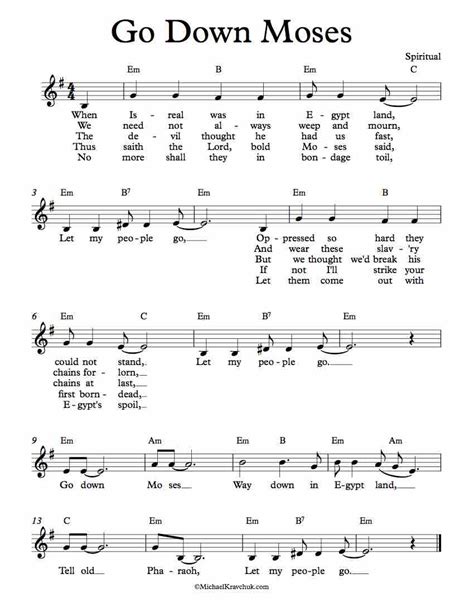
Musical Forms: Field Hollers, Work Songs, and Spirituals
The three primary musical forms produced by the enslaved during the eighteenth and nineteenth centuries were field hollers, work songs, and spirituals.
Field Hollers
Slaves were not allowed to talk to one another while working in the field. But singing, such as the work song or field holler, was permitted. The slaves therefore establishd a communication network that was unintelligible to their white overseers. These more-recent recordings suggest that field hollers were calls for water, food, or assistance. Sometimes field hollers let others know where the caller was working, or simply were cries of loneliness, sorrow, and occasionally, even joy.
Work Songs
Singing accompanied all kinds of work among the slaves. It helped alleviate the monotony of labor and keep the field hands energized by rhythmically synchronizing their movements. “Work songs” addressed various subjects, depending on the kind of work being performed.
Other work songs were sung by individuals who sang not for the purpose of synchronizing their movements, but for their own entertainment and expression. Work songs reflected the thoughts and moods of those who sang all day long, from “can’t-see-morning to can’t-see-night.”
Spirituals
The religious counterpart to the work song was the spiritual. The first reference to spirituals as a distinctive genre appeared early in the nineteenth century. Many scholars believe, however, that the spiritual originated in the late eighteenth century.
The Development of Spirituals
The conversion of the enslaved masses to Christianity in the early 19th century facilitated the development of the Negro spiritual as a distinct form of American religious music. Worshiping independently of whites in worship services led by Black preachers, the enslaved and freed Blacks spontaneously created songs using the African call-response and repetitive chorus structures. They also reinterpreted the European psalms and hymns in ways that had meaning to them as Africans in America.
They, for example, improvised on the melodies, changed the rhythms, sped up the tempo, added repeated refrains and choruses, and replaced texts with new ones that often combined English and African words and phrases. The final product was an improvised African-styled song. A white observer of this change, commented that the white hymn composers “Watts and Newton would never recognize their productions through the transformations they have undergone at the hands of their colored admirers.”
Unlike much of European religious music, the folk spirituals often were spirited, and they accompanied religious dancing (later known as “the shout”). These early folk spirituals melded the Christian belief system with native African culture and from it created something uniquely African American, and by extension, American. Initially passed down orally, spirituals of the enslaved have been central in the lives of African Americans for over three centuries, serving religious, cultural, social, political, and historical functions. By engaging in the singing of spirituals, the participant experienced a form of freedom. The folk spiritual later evolved into Concert Spirituals, Rural Gospel, Spiritual as Art Song, and Freedom Songs.
First African-American Hymnal
Richard Allen, founding bishop of the African Methodist Episcopal Church, published a hymnal for the congregation he established in 1794. Allen’s hymnal, A Collection of Spiritual Songs and Hymns Selected from Various Authors by Richard Allen, African Minister, was printed in 1801. It consists of fifty-four hymn texts (without tunes) drawn chiefly from the collections of Isaac Watts, Charles Wesley, John Wesley, and other writers favored by the Methodists of the period.
Allen’s Collection stands as the first anthology of hymns collected for use by a black congregation. It was also the first hymnal to employ wandering refrains-verses or short choruses attached at random to orthodox hymn stanzas.
The practice of wandering refrains is a form of improvisation. Since improvisation was also inherent in the spirituals, here is evidence that connects the musical tastes of blacks who were enslaved and those, such as Allen and his Philadelphia congregation, who were free.
Preservation and Collection of Spirituals
African-American spirituals have associations with plantation songs, slave songs, freedom songs, and songs of the Underground Railway, and were oral until the end of the US Civil War. Following the Civil War and emancipation, there has been "extensive collection and preservation of spirituals as folk song tradition".
The first collection of Negro spirituals was published in 1867, two years after the war had ended. Entitled Slave Songs of the United States, it was compiled by three northern abolitionists-Charles Pickard Ware (1840-1921), Lucy McKim Garrison (1842-1877), William Francis Allen (1830-1889) The 1867 compilation built on the entire collection of Charles P. Ware, who had mainly collected songs at Coffin's Point, St. Helena Island, South Carolina, home to the African-American Gullah people originally from West Africa. Most of the 1867 book consisted of songs gathered directly from African Americans.
By the 1830s at least, "plantation songs", "genuine slave songs", and "Negro melodies", had become extraordinarily popular. Eventually, "spurious imitations" for more "sentimental tastes" were created. The authors noted that "Long time ago", "Near the lake where drooped the willow", and "Way down in Raccoon Hollow" were borrowed from African-American songs.
There had been a renewed interest in these songs through the Port Royal Experiment (1861- ), where newly freed African American plantation workers successfully took over operation of Port Royal Island plantations in 1861, where they had formerly been enslaved. Northern abolitionist missionaries, educators and doctors came to oversee Port Royal's development.
In 1869, Colonel Thomas Wentworth Higginson, who commanded the first African-American regiment of the Civil War, the 1st South Carolina Volunteers-"recruited, trained, and stationed at Beaufort, South Carolina" from 1862 to 1863. Higginson admired the former slaves in his regiment saying, "It was their demeanor under arms that shamed the nation into recognizing them as men." He mingled with the soldiers and in published his 1869 memoir Army Life in a Black Regiment in which he included the lyrics of selected spirituals.
The Fisk Jubilee Singers
Starting in 1871, the Fisk Jubilee Singers began touring, creating more interest in the "spirituals as concert repertory". Reverend Alexander Reid had attended a Fisk Jubilee Singers' performance in 1871, and suggested they add several...
Because of the Fisk University Jubilee Singers, more and more people are becoming aware of the African American spirituals through their recordings and concerts. This ensemble is being directed by John W. Work, Jr., who is also the first African American to gather and publish spirituals.
From Spirituals to Gospel Music
The presence of spirituals at concerts gives way to the development of several works done by composers such as Henry T. Burleigh, who made piano-voice arrangements of spirituals during the early twentieth century. His arrangements were intended for solo classical singers. Afterward, a lot of composers have followed Burleigh’s footsteps.
In fact, during the 1920s and 1930s, classical artists such as Paul Robeson, Roland Hayes, and Marian Anderson have focused on spirituals in their repertoires. As of today, this tradition has continued, with classical artists such as Jessye Norman and Kathleen Battle performing spirituals in their recitals. While the presence of spirituals can be felt in concert halls, its popularity in the Black church has decreased during the twentieth century due to the increased popularity of Gospel music.
Although the lyrics of spirituals are still preserved in gospel songs, its musical forms have transformed dramatically since tunes are arranged and harmonies are added in such a way that it fits the new performance styles. Despite these changes, traditional spirituals have continued to survive in some congregations of the South that are far from modern influences, or simply want to preserve the older songs.
White Spirituals
There is also another version known as the “white spiritual” genre. Although it is less recognized than its counterpart, it includes camp-meeting spirituals, religious ballads, and folk hymns. White spirituals have similar origins with African American spirituals and also share the same musical elements and symbolism. It was in the 1930s when the white spiritual genre started to emerge.
During this time, George Pullen Jackson, who is a professional at Vanderbilt University, published the book White Spirituals. This book is just part of a series of studies that focuses on the existence of white spirituals. Black spirituals differ from white spirituals in a lot of ways. For instance, they make use of counter-rhythms, syncopation, and flatted notes. Black spirituals also stand out due to the striking vocal timbre of the singers that includes shouting and exclamations along with shrill falsetto tones.
Spirituals as Protest Songs
Spirituals were quite significant during the twentieth and early twenty-first centuries since they are usually used for protests. Gospel songs and spirituals also played a significant role during the Civil Rights Movement of the 1950s and 1960s, since it offered support to the civil rights activists. Most of the freedom songs during this time including “Eyes on the Prize” and “Oh, Freedom!” were mostly adapted from old spirituals.
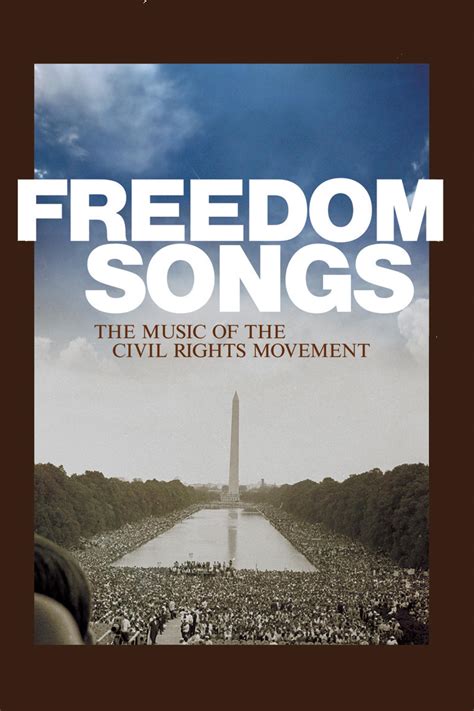
The torch song of the movement is “We Shall Overcome,” along with the spiritual “I’ll Be All Right.” combined with its gospel song “I’ll Overcome Someday.” These spirituals have made a great contribution to freedom songs. They have also helped highlight the fight for democracy in different countries all over the world including Russia, China, Eastern Europe, and South Africa. Today, some of the popular pop artists have continued to rely on the spirituals when it comes to creating protest songs.
Resources for Further Exploration
Here are some resources to further explore the history and significance of spiritual music:
- Black Studies Center: Combines resources for research and teaching in Black Studies, including Schomburg Studies on the Black Experience and International Index of Black Periodicals.
- RILM Abstracts of Music Literature: A bibliography on writings about music covering traditional music, popular music, jazz, classical music, and related subjects.
- "The Spirituals Project": Founded by Arthur C. Jones to preserve and revitalize the music and teachings of spirituals.
- American Folklife Center Collections at the Library of Congress: Preserves spiritual recordings created between 1933 and 1942.
Table: Key Figures in the History of Spiritual Music
| Figure | Contribution |
|---|---|
| Richard Allen | Published the first hymnal for a black congregation. |
| Fisk Jubilee Singers | Popularized spirituals as concert repertory. |
| Henry T. Burleigh | Made piano-voice arrangements of spirituals for solo classical singers. |
| Harriet Tubman | Used spirituals as coded messages to aid slaves in escaping to freedom. |