Hypersthene is a common, dark gemstone with earthy brown, gray, or green shades. Though the term “hypersthene” isn’t universally accepted, this stone is popular among crystal healers. The mineral may come from the Earth or travel here on meteorites!
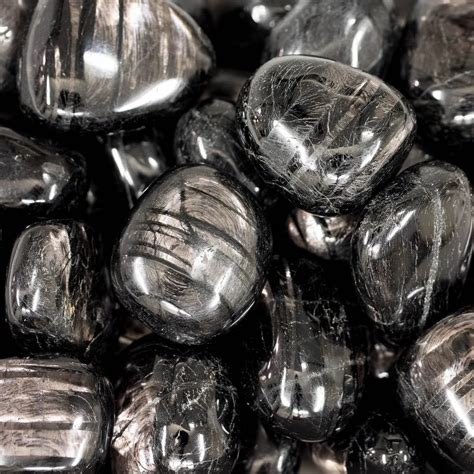
Many spiritual practitioners carry hypersthene for luck and protection. Hypersthene usually has a silver, coppery, or red sheen that appears almost iridescent and is actually a form of asterism - the optical effect of parallel inclusions reflecting a multi-rayed “star” of light on the stone’s surface.
Hypersthene also has a velvety look combined with its holographic shimmer, leading to the nickname “velvet labradorite.” While hypersthene and labradorite are completely different stones, they can be found in the same rocks. Sometimes stones are cut from a matrix of labradorite and hypersthene, creating one-of-a-kind specimens. Astrologically, hypersthene zodiac stones grace all three fire signs (Aries, Leo, and Sagittarius) along with the water signs Cancer and Pisces.
Science & Origin of Hypersthene
Hypersthene, also known as Ferrosilite or Spectrolite, is an iron magnesium silicate crystal and member of the Pyroxene group of minerals. Its crystal system is orthorhombic and can be found in the form of masses, grains, flakes, and small prismatic crystals. The color composition is usually a shade of green, black or brown with a flash of iridescence (also known as a “cat’s eye”). Hypersthene can usually be found within feldspar deposits around the world.
Important locations are spread throughout Canada, Australia, China, Germany, Japan, the United Kingdom, Norway, and the United States.
Read also: Understanding anemia spiritually
Hypersthene Specifications & Characteristics
The mineral hypersthene is an orthopyroxene with the formula (Mg,Fe)2Si2O6 or (Mg,Fe)SiO3. It’s composed of magnesium, iron, and silica. The mineral looks similar to hornblende.
Hypersthene forms a series with enstatite - (Mg)SiO3 - on one end and ferrosilite - (Fe)SiO3 - on the other, with hypersthene in the middle. However, many geologists don’t use the term “hypersthene” at all, but rather identify these minerals as either ferrosilite or enstatite. In fact, the International Mineralogical Association (IMA) discredited the term “hypersthene.” Instead, they may call it “enstatite” or “ferroan enstatite.”
You may know that bronzite is an iron-bearing enstatite variety. Both hypersthene and bronzite are in the pyroxene family, and bronze-colored hypersthene stones with a near-metallic luster may be categorized as bronzite.
Well-formed crystals of hypersthene (small and prismatic) are a rare occurrence, as the mineral usually occurs as foliated, stocky masses.
| Property | Description |
|---|---|
| Mohs hardness | 5-6 |
| Color | Brown, green, reddish-brown, orange-brown, red-orange, gray, grayish-black, green |
| Crystal structure | Orthorhombic |
| Luster | Vitreous (glassy) to pearly, sometimes metallic |
| Transparency | Transparent to opaque |
| Refractive index | 1.66-1.77 |
| Density | 3.3-3.9 |
| Cleavage | Perfect on [100] and [010] |
| Fracture | Uneven |
| Streak | Grayish-white or greenish |
| Luminescence | None |
| Pleochroism | Present and strong in blue-green and brownish-red |
The name comes from the Greek terms hyper for “above” and stonos for “strength” or “power.” The name most likely references hypersthene’s higher hardness compared to the amphibole mineral hornblende.
Read also: Light Blue: Calmness and Healing
Meaning & Energy
Hypersthene is a potent life talisman that promotes self-love & satisfaction, independence, strength, and endurance. One’s entire chakra column opens up and forces one to prioritize what's most valuable in their life. Instead of your mental state being concerned about what's next, Hypersthene redirects your concentration internally. This allows you to reflect, observe, and understand what it is your body (both physical and mental) truly needs.
For most people, their narrow mental capacity simply does not allow them to understand themselves. The mind is usually too distracted to see an issue or is being medicated in the form of a vice (drugs, alcohol, etc.). This cycle can continue for years or in some cases lifetimes.
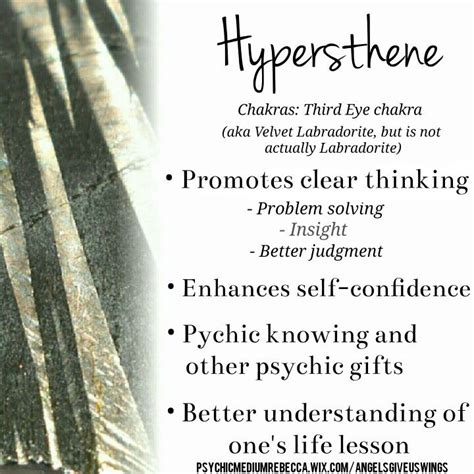
Better Yourself With Hypersthene
To avoid this lifetrap, we recommend constant meditation, exercise, and the desire to better yourself. Try working with numerous transformative stones (such as Labradorite, Covellite , Rhyolite, Orthoclase, Astrophyllite) in addition to Hypersthene to retrain the mind. Self-reflection can sound scary at times and sometimes it is. Only through time and energy can you not only make a difference on yourself, but also the loved ones around you.
Hypersthene is nicknamed the “Golden Luck Stone” and “Stone of Magic” in the spiritual community. The crystal symbolizes resilience, self-love, and fulfillment. It’s also believed to be a particularly powerful protective talisman.
There’s also some interesting folklore associated with hypersthene from indigenous North American legends. Among Squamish natives, the stone’s black hue and shimmering appearance were believed to originate when it was struck by lightning from a thunderbird.
Read also: Explained: Spiritual Blessings
Thunderbirds are mythological spirits inside birds that are believed to send lightning from their beaks and flap their wings to create thunder. Additionally, the Garibaldi Belt mountains where Squamish peoples found hypersthene stones were held as sacred. Geologically, many magnetic, iron-rich stones like hypersthene are found around these mountains.
Hypersthene is a powerful stone associated with the Earth Star and Root chakras. Its grounding properties make it an excellent tool for promoting mental balance, focus, and control. The stone helps with presence and centeredness, making it a great tool for achieving clarity and control. Hypersthene is also known for its mood stabilizing properties, which help you come powerfully into the present moment.
Its grounding properties make it an excellent tool for promoting mental balance, focus, and control. The stone helps with presence and centeredness, aiding in achieving clarity and control. Hypersthene is renowned for its mood stabilizing properties, assisting individuals in coming powerfully into the present moment.
Hypersthene’s energy promotes mental balance and focus, making it a useful tool for meditation and spiritual practices. Its mood stabilizing properties can also assist in emotional healing and bringing a sense of stability to the spiritual journey.
Hypersthene Healing Properties
Like all gemstones, hypersthene’s internal vibrations and coloring influences its powers as a healing stone. Hypersthene with predominantly brown hues joins other brown gemstones in offering benefits like grounding and increased motivation.
On the other hand, green hypersthene stones evoke the heart-healing and fortune-bringing benefits of green gems. Getting more specific, what is hypersthene used for in physical, emotional, and chakra healing?
Hypersthene Gemstone Unveiling the Shimmering Beauty and Metaphysical Power
Physical Healing
The purported physical benefits of hypersthene include treating:
- Anemia and other blood disorders
- Intestinal infections
- Pain in the shoulders, neck, and muscles overall
- Fatigue
Emotional Healing
Emotionally, hypersthene stone benefits are said to include boosting confidence while mitigating impulsivity and nurturing inner peace, especially when used during meditation.
Crystal healers recommend hypersthene crystals for providing protection from negativity. It’s also believed to bring emotional strength and help you shut out excess mental chatter to focus on getting done what you need to finish.
Chakra Healing
Chakra stones are used for opening a specific energy center (chakra) in the body to resolve the negative symptoms associated with that chakra being blocked. Hypersthene chakra stones can work on almost every chakra, but they’re particularly helpful for the root (or base) chakra.
The root chakra is your fundamental source for basic needs like stability, safety, and connection. When it’s blocked, feelings of uncertainty, anxiety, and detachment from others arise. Opening it with hypersthene replaces those feelings with grounding and comfort.
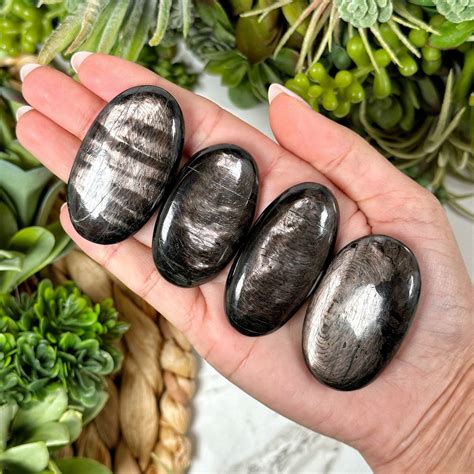
Hypersthene Gemstone Properties
When valuing hypersthene as a gemstone, the key categories to consider are its color, cut, transparency, and clarity.
Color
Hypersthene’s color most likely comes from its iron content, which usually makes up about 50 percent of the stone’s composition. The varying levels of iron and magnesium can lead to the different colors you’ll find hypersthene displaying. Green stones are usually dark and streaked with lines of gray and pale green. The silver, copper, or red schiller is the result of broad, flat inclusions of goethite or hematite. Richer, more saturated hues are more valuable, along with bright, velvety schiller.
Cut
Hypersthene crystals that are high enough quality to be faceted are rare, making them highly valuable. These are usually orange to brown hues. Most hypersthene stones become cabochons, though gem cutters may also create hypersthene beads, carvings, or tumbled stones.
Clarity & Transparency
Hypersthene isn’t transparent enough to receive a colored gemstone clarity grade, but its transparency is a factor in its value. Stones with greater translucence are more valuable than opaque stones.
Since clarity measures visible inclusions, it’s important to note that hypersthene may contain various inclusions. Some, like the hematite or goethite inclusions that cause its schiller, increase the value. Other inclusions, like growth tubes, may decrease the value.
Inclusions sneak into the stone during formation, which brings us to hypersthene’s formation process.
Hypersthene Formation & Sources
Hypersthene forms inside rocks when high pressure and temperature levels allow the iron, magnesium, and silica to merge together and harden into the stone. In geological environments, hypersthene is usually found inside igneous rocks like norite, though it may be found in metamorphic rocks.
Fascinatingly, hypersthene is also a space gemstone, found in iron and stony meteorites.
Mining Locations
Where can I find hypersthene? The best gem-quality specimens come from Canada, plus the US states of New Jersey and California. Additional hypersthene sources include:
- Australia
- Brazil
- France
- Germany
- Greenland
- India
- Iran
- Italy
- Japan
- Mexico
- UK
- Russia
- Sri Lanka
- Sweden
- Tanzania
- USA (Arizona)
Hypersthene Price & Value
Hypersthene prices range significantly based on the seller and type of item. Cabochons are very affordable, fetching only $0.10-$2.50 per carat. Jewelry has a broader price range, with many options falling in the pricier category. Pendants range from $20 to $200, though many options are under $60. Beaded bracelets and necklaces are $250 to $400. Hypersthene rings are usually $175 to $300.
Hypersthene Care and Maintenance
Hypersthene stones and jewelry require gentle care because the perfect cleavage means sharp blows could easily break the stone. We recommend getting jewelry with protective settings to help prevent breakage.
To clean hypersthene, simply wipe it carefully with a damp, clean, and soft cloth that’s lint-free. Then, allow the stone to air-dry. Store hypersthene separately from other gems to avoid scratches. Avoid wearing it during strenuous activities like exercise, gardening, or cleaning.
To cleanse Hypersthene, you can use various methods such as smudging with sage or palo santo, placing it under running water, or using sound vibrations from a singing bowl or bell. It is important to choose a cleansing method that resonates with you and your intentions.
tags: #hypersthene #spiritual #meaning