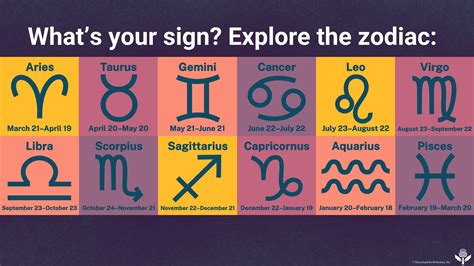
Astrology - the practice of observing the movements of celestial bodies and believing their positions can have an influence on human lives - has been around for about 5,000 years. From the Babylonians in ancient Mesopotamia who inscribed the stars in cuneiform texts and tried to interpret their sway, to today's popular horoscopes, astrology remains an important part of how many interact with the world and make decisions about their futures.
As many as 70 million Americans read their horoscopes daily. Well, that’s at least according to the American Federation of Astrologers. According to a study done twenty years ago by the Pew Forum on Religion & Public Life, 25 percent of Americans believed that the positions of the stars and the planets affect our daily lives. In 2012, the General Social Survey found that 34 percent of Americans surveyed consider astrology to be "very" or "sort of scientific" and also reported a decrease-from two-thirds to around one-half-in the fraction of people who consider astrology "not at all scientific."
Astrology is generally defined as the belief that astronomical phenomena, like the stars overhead when you were born or the fact that Mercury is in retrograde, have the power to influence the daily events in our lives and our personality traits. This is, of course, very different from the study of astronomy, which is the scientific study of celestial objects, space, and the physics of the universe.
A specific aspect of astrology-the forecasting of a person’s future or the offering of advice on daily activities via horoscopes-is particularly growing in popularity. Magazines like The Cut reported an increase of 150 percent more hits on horoscope pages in 2017 than in 2016. Clearly, lots of people are looking for ways to interpret the stars for advice. Astrology is founded on understanding the positions of the stars, which seems like a scientific enough pursuit in itself. But is there any science to back up whether astrology impacts our personality and our lives?
The answer, in short, is no. There is no scientific backing to the conclusions drawn by astrology.
Read also: Sagittarius Relationships
Given these observable effects, it makes sense that people throughout history have wondered if the planets' positions could also influence human life on Earth - whether the alignment of planets and stars affects who we are as people or what happens to us over the course of our lives. But, as Paul Byrne, an associate professor of Earth, Environmental, and Planetary Sciences at Washington University, explains, “there's just no way the motion of planets through the cosmos can affect us”.
Scientists have also long been using the scientific method to try to corroborate conclusions drawn by astrology to no avail. In the 1980s, American physicist Shawn Carlson conducted a study to test the validity of astrology. He tasked 30 astrologers with looking at astrological birth charts - which map the Sun, Moon, and planets at the time of a person's birth - of 116 people and seeing if they could match each person's birth chart to their correct personality profile.
The astrologers, who had never met the participants, were given three personality profiles to choose from for each birth chart. The test was "double-blind", meaning that neither the testers nor the astrologers knew the answers to any of the questions. A test similar to Carlson was recreated more recently in August 2024, where 152 astrologers were asked to match twelve people’s birth charts to questionnaires they’d answered about their personality and life. Once again, the astrologers got less than a third of the matches right and even agreed on their matches among themselves less than a third of the time too.
Astrology has been rejected by the scientific community as having no explanatory power for describing the universe. Where astrology has made falsifiable predictions, it has been falsified. The most famous test was headed by Shawn Carlson and included a committee of scientists and a committee of astrologers. It led to the conclusion that natal astrology performed no better than chance. The majority of professional astrologers rely on performing astrology-based personality tests and making relevant predictions about the remunerator's future.
Those who continue to have faith in astrology have been characterised as doing so "in spite of the fact that there is no verified scientific basis for their beliefs, and indeed that there is strong evidence to the contrary". Astrophysicist Neil deGrasse Tyson commented on astrological belief, saying that "part of knowing how to think is knowing how the laws of nature shape the world around us.
Read also: Spokesman Review horoscope
Science and non-science are often distinguished by the criterion of falsifiability. The criterion was first proposed by philosopher of science Karl Popper. To Popper, science does not rely on induction; instead, scientific investigations are inherently attempts to falsify existing theories through novel tests. Therefore, any test of a scientific theory must prohibit certain results that falsify the theory, and expect other specific results consistent with the theory. In contrast to scientific disciplines, astrology does not respond to falsification through experiment. While an astronomer could correct for failure, an astrologer could not. An astrologer could only explain away failure but could not revise the astrological hypothesis in a meaningful way.
Philosopher Paul Thagard believed that astrology can not be regarded as falsified in this sense until it has been replaced with a successor. Progress is defined here as explaining new phenomena and solving existing problems, yet astrology has failed to progress having only changed little in nearly 2000 years. To Thagard, astrologers are acting as though engaged in normal science believing that the foundations of astrology were well established despite the "many unsolved problems", and in the face of better alternative theories (Psychology).
For the philosopher Edward W., what if throughout astrological writings we meet little appreciation of coherence, blatant insensitivity to evidence, no sense of a hierarchy of reasons, slight command over the contextual force of critieria, stubborn unwillingness to pursue an argument where it leads, stark naivete concerning the efficacy of explanation and so on? In that case, I think, we are perfectly justified in rejecting astrology as irrational. ... Astrology simply fails to meet the multifarious demands of legitimate reasoning.- Edward W.
This poor reasoning includes appeals to ancient astrologers such as Kepler despite any relevance of topic or specific reasoning, and vague claims. The claim that evidence for astrology is that people born at roughly "the same place have a life pattern that is very similar" is vague, but also ignores that time is reference frame dependent and gives no definition of "same place" despite the planet's moving in the reference frame of the Solar System. Other comments by astrologers are based on severely erroneous interpretations of basic physics, such as the general belief by medieval astrologers that the geocentric Solar System corresponded to an atom.
Astrologers often do not make verifiable predictions, but instead make vague statements that are not falsifiable. Across several centuries of testing, the predictions of astrology have never been more accurate than that expected by chance alone.
Read also: Aquarius Monthly Forecast
One approach used in testing astrology quantitatively is through blind experiment. Geoffrey Dean has suggested that the effect may be caused by self-reporting of birth dates by parents rather than any issue with the study by Gauquelin. The suggestion is that a small subset of the parents may have had changed birth times to be consistent with better astrological charts for a related profession. The sample group was taken from a time when belief in astrology was more common.
A meta-analysis was conducted, pooling 40 studies consisting of 700 astrologers and over 1,000 birth charts. Ten of the tests, which had a total of 300 participating, involved the astrologers picking the correct chart interpretation out of a number of others that were not the astrologically correct chart interpretation (usually three to five others). In 10 studies, participants picked horoscopes that they felt were accurate descriptions, with one being the "correct" answer.
Beyond the scientific tests astrology has failed, proposals for astrology face a number of other obstacles due to the many theoretical flaws in astrology including lack of consistency, lack of ability to predict missing planets, lack of connection of the zodiac to the constellations in Western astrology, and lack of any plausible mechanism.
They pointed out that astrologers have only a small knowledge of astronomy and that they often do not take into account basic features such as the precession of the equinoxes. They commented on the example of Elizabeth Teissier who claimed that "the sun ends up in the same place in the sky on the same date each year" as the basis for claims that two people with the same birthday but a number of years apart should be under the same planetary influence. Charpak and Broch noted that "there is a difference of about twenty-two thousand miles between Earth's location on any specific date in two successive years" and that thus they should not be under the same influence according to astrology.
Some astrologers make claims that the position of all the planets must be taken into account, but astrologers were unable to predict the existence of Neptune based on mistakes in horoscopes. Should astrologers remove it from the list of luminars [Sun, Moon and the 8 planets other than earth] and confess that it did not actually bring any improvement? If they decide to keep it, what about the growing list of other recently discovered similar bodies (Sedna, Quaoar.
Astrology has been criticised for failing to provide a physical mechanism that links the movements of celestial bodies to their purported effects on human behaviour. In a lecture in 2001, Stephen Hawking stated "The reason most scientists don't believe in astrology is because it is not consistent with our theories that have been tested by experiment."
In 1975, amid increasing popular interest in astrology, The Humanist magazine presented a rebuttal of astrology in a statement put together by Bart J. Bok, Lawrence E. Jerome, and Paul Kurtz. The statement, entitled "Objections to Astrology", was signed by 186 astronomers, physicists and leading scientists of the day. They said that there is no scientific foundation for the tenets of astrology and warned the public against accepting astrological advice without question. We can see how infinitesimally small are the gravitational and other effects produced by the distant planets and the far more distant stars.
Many astrologers claim that astrology is scientific. If one were to attempt to try to explain it scientifically, there are only four fundamental forces (conventionally), limiting the choice of possible natural mechanisms. Some astrologers have proposed conventional causal agents such as electromagnetism and gravity. The strength of these forces drops off with distance. Scientists reject these proposed mechanisms as implausible since, for example, the magnetic field, when measured from Earth, of a large but distant planet such as Jupiter is far smaller than that produced by ordinary household appliances. Astronomer Phil Plait noted that in terms of magnitude, the Sun is the only object with an electromagnetic field of note, but astrology isn't based just off the Sun alone.
Carl Jung sought to invoke synchronicity, the claim that two events have some sort of acausal connection, to explain the lack of statistically significant results on astrology from a single study he conducted. Psychological studies have not found any robust relationship between astrological signs and life outcomes.
From the literature, astrology believers often tend to selectively remember those predictions that turned out to be true and do not remember those that turned out false. The Barnum effect is the tendency for an individual to give a high accuracy rating to a description of their personality that supposedly tailored specifically for them, but is, in fact, vague and general enough to apply to a wide range of people. In 1949 Bertram Forer conducted a personality test on students in his classroom. Each student was given a supposedly individual assessment but actually all students received the same assessment. The personality descriptions were taken from a book on astrology.
By a process known as self-attribution, it has been shown in numerous studies that individuals with knowledge of astrology tend to describe their personalities in terms of traits compatible with their sun signs. The effect is heightened when the individuals were aware that the personality description was being used to discuss astrology.
In 1953, sociologist Theodor W. Adorno conducted a study of the astrology column of a Los Angeles newspaper as part of a project that examined mass culture in capitalist society. Adorno believed that popular astrology, as a device, invariably led to statements that encouraged conformity-and that astrologers who went against conformity with statements that discouraged performance at work etc.
False balance is where a false, unaccepted or spurious viewpoint is included alongside a well reasoned one in media reports and TV appearances and as a result the false balance implies "there were two equal sides to a story when clearly there were not". During Wonders of the Solar System, a TV programme by the BBC, the physicist Brian Cox said: "Despite the fact that astrology is a load of rubbish, Jupiter can in fact have a profound influence on our planet. And it's through a force... gravity." This upset believers in astrology who complained that there was no astrologer to provide an alternative viewpoint.
Following the complaints of astrology believers, Cox gave the following statement to the BBC: "I apologise to the astrology community for not making myself clear.
Some of the reported belief levels are due to a confusion of astrology with astronomy (the scientific study of celestial objects). The closeness of the two words varies depending on the language. A plain description of astrology as an "occult influence of stars, planets etc. on human affairs" had no impact on the general public's assessment of whether astrology is scientific or not in a 1992 eurobarometer poll. This may partially be due to the implicit association amongst the general public, of any wording ending in "-ology" with a legitimate field of knowledge. In Eurobarometers 224 and 225 performed in 2004, a split poll was used to isolate confusion over wording. In half of the polls, the word "astrology" was used, while in the other the word "horoscope" was used.
Astrology thrived during early pursuits in science, and it was studied alongside astronomy, mathematics, and medicine. For thousands of years, astrologers were among the earliest practitioners to collect data and attempt to make predictions. Boxer refers to astrology as “the first data analysis enterprise.” In the Roman Empire, astrologers were essentially the “number crunchers" of their time. Many astronomers during the Renaissance era practiced both astronomy and astrology, which helped maintain detailed observations of the sky. There’s also an epistemological lesson to be learned from the discipline of celestial predictions: astrology is, says Boxer, a pure encapsulation of the ways we naturally react to data as pattern-matching creatures who are seduced by numbers. “All the issues that astrology had to deal with never went away,” says Boxer.
Despite its lack of scientific evidence, astrology has endured throughout the years. According to Paul Clements, a lecturer in arts and cultural policy at Goldsmiths University of London, astrology's lasting popularity is likely because it offers people tools to interpret their lives with and a way to construct aone’s sense of identity. Astrology is not scientific, says Clements, rather it is symbolic, creative, divinatory, and spiritual and more related to religion than science. The more anxious and insecure people feel the more they look to something that will help them to navigate the problems that life throws up. It gives people a support system to help them understand their unfolding lives. “It offers new ways of thinking about life and who we are,” says Clements.
Interestingly, research has shown that astrology can influence how people feel about themselves. In a 2006 study, scientists had several people read either positive or negative horoscope predictions about themselves and then gave them some tests and tasks to complete. People who read positive horoscope predictions about themselves interpreted ambiguous photographs more optimistically and performed better on both cognitive and creative tasks. Conversely, people who were given negative astrology readings performed worse.
The core premise of astrology is the belief that people are all intimately connected to the wider cosmos. “This view is fundamental to most worldviews, philosophies and religions, and only rejected by modern Western philosophy and science,” says Nicholas Campion, an astrology historian from the University of Wales Trinity Saint David.