The Libra project, inspired by Bitcoin, Ethereum, and other cryptocurrencies, aims to revolutionize internet payments through blockchain technology. These virtual tokens can be exchanged securely over the internet without the need for a trusted third party, such as a bank, to validate transactions. However, since its announcement in June 2019, Libra's digital currency guidelines have faced massive pressure, resulting in project changes and delays. This article delves into Libra support services, its potential impact, and the challenges it faces.
Understanding Libra and Its Mission
The Libra white paper begins with a mission statement focused on creating a robust ecosystem of financial products and services. According to research from the World Bank (2017), approximately 1.7 billion people around the world are unbanked, and two-thirds of them have a mobile phone. Libra coins will be created as users buy them with real money, exchanging their local currencies into Libra and depositing the amount in their Calibra wallet. Calibra will support peer-to-peer payments and QR codes for payments at small businesses.
The Libra Association and Its Members
Multiple players are involved in the Libra project. Early on in the design, it became clear that a protocol for moving money across the globe should not be controlled by any single entity. Hence, at each step of the design process, a crucial internal test was to make sure that the Libra protocol and incentives were such that members and non-members alike will be able to compete on the same terms. This is to encourage healthy competition in the downstream market for wallets, payments, and other financial services.
The Libra network is modeled after an open technology standard, akin to those used for ensuring that mobile phones can communicate across different carriers. Open technology standards encourage broad participation, provide shared infrastructure, and can benefit consumers by allowing firms and public organizations to develop a variety of products and services that are compatible with one another. These standards are particularly valuable for new entrants and small firms because they lower barriers to entry, avoid costly duplication of effort, and allow users to build on the same intellectual property.
The Libra Association has the resources and customer base that no start-up could even dream of. Together, these firms are not banks. Building the currency with blockchain technology will allow for decentralized governance, according to analysts. This non-profit partnership is expected to grow to about 100 by the time Libra is launched.
Read also: Libra Man: Love & Relationships
However, as a result of increased scrutiny, eight worldwide payment companies that were part of the Libra Association (Vodafone, Visa, MasterCard, PayPal, eBay, Stripe, Booking Holdings, and Mercado Pago), which intended to coordinate and provide a framework for governance over the Libra network and reserve, backed out of the project.
Libra vs. Traditional Cryptocurrencies
Although Libra will be operating on blockchain, it is different than other cryptocurrencies. By definition, cryptocurrencies operate on decentralized networks where the transactions are processed and validated by multiple “nodes” (ie computers) rather than by a single body (eg a referee) or a central institution (eg the Federal Reserve).
“Blockchains are described as either permissioned or permissionless in relation to the ability to participate as a validator node. In a ‘permissioned blockchain,’ access is granted to run a validator node. In a ‘permissionless blockchain’ anyone who meets the technical requirements can run a validator node.
Both bitcoin and Libra fall under the classification of “cryptocurrency” and are based on block chain technology. The value will be stable because it will be backed by an international basket of currencies and assets (it may fluctuate much like the value of the dollar fluctuates), unlike bitcoin, the supply of which will be capped and the value of which is speculative. This means that the currency will be backed by government regulated currency and securities. The supply will not be limited. You won’t need to kill the environment to mine more currency, you simply exchange currency for more Libra.
The founders have addressed the problem of volatility by pegging Libra’s value to a basket of major currencies. Moreover, in mid-April 2020, the Libra Association initiated a payment system licensing process with the Swiss Financial Markets Supervisory Authority (FINMA) and announced that plans are now to offer single-currency stablecoins (e.g., USD, EUR, and GBP) in addition to its Libra coins that are backed by multiple currencies.
Read also: Libra Full Moon: Spiritual Awakening
Regulatory Scrutiny and Challenges
Libra has drawn significant scrutiny from US government and regulatory agencies in multiple jurisdictions. In early July, US congresswoman Maxine Waters, a Democrat from California, called for a moratorium on Libra’s development. It is already being questioned by national and international authorities, with more obstacles likely appear as the project starts to operate worldwide. Financial authorities have responded more coherently.
These risks range from interference with sovereign monetary policy to facilitation of money laundering and the financing of terrorism. The authorities stated clearly and emphatically that an in-depth evaluation must be conducted and appropriate regulations must be in place before the Libra project can take off. To respond in timely fashion, official authorities limited the focus of their studies to a specific phenomenon-that of so-called stablecoins, or virtual tokens that feature a value stabilization mechanism. They focused on individual regulatory challenges, such as identity verification and oversight of the management of customer funds.
The final, and perhaps most difficult hurdle will be to get regulators on board with the whole idea. The UK and France have voiced concerns, as have US regulators. Given the regulatory barriers and possible technological bottlenecks, Libra might not launch in 2020. Several details are still to be decided or even explored. What will the exchange currency of Libra be? Will it trade for $1/Libra coin? What are some of the privacy protection measures for Libra and Calibra accounts? The list goes on.
In our view, implementation will take place progressively, and it would not be surprising if Libra was not accepted in some countries, at least in the short term. Libra is just preparing to begin its journey and will have many more eyes on it than Bitcoin.
Addressing Concerns and Building Trust
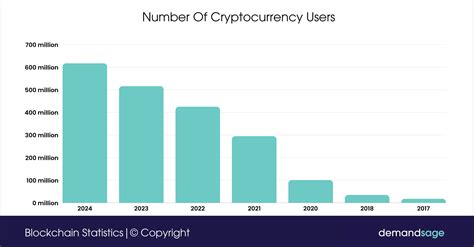
In light of these facts, Libra Association, the non-profit organization working to “spur the development of a robust ecosystem of financial products and services that allow people to use Libra,” has had to rework its approach to solve these trust issues that may otherwise hamper the adoption of the cryptocurrency. According to a survey by Jefferies, four out of five survey respondents indicated that they were “unlikely” or “very unlikely” to use Libra. It also has to deal with another problem - the lack of willingness to use cryptocurrencies.
Read also: Libra Ascendant: Traits, Love, and Life Path
According to a survey by the Foundation for Interwallet Operability (FIO), 70% of cryptocurrency holders never or rarely use them as a payment method. Other surveys also showed a similar trend. During the COVID-19 pandemic, one of the fears that has arisen from users of cryptocurrencies and Fintech apps as well as the regulatory bodies are the scams that could occur from an increase in online monetary transactions.
The possible ill-use of Libra, including terrorist financing, drug trade, and money laundering, prevent Libra from fulfilling its potential and vision as boundary-less, digital cash that is accessible across the globe without much bureaucratic documentation. Libra might need to integrate background checks for its users. Calibra wallets will need to comply with local and national laws and regulations to operate in certain countries.
Of course, money laundering and dark web transactions are also reasons given to stop Libra before it starts, but Libra’s David Marcus explained how Libra addresses this. Link to interview with him on Bloomberg and CNBC for more detail. In today’s world, much of the money laundering happens in cash. By making all Libra transactions digital, there will be a record of each one. While a single authority may not see all transactions, each transaction will be recorded. Moving currency into and out of Libra will be regulated. Anyone using Libra will have to provide some form of government issued ID.
The Potential Impact of Libra
A more open network for payments and financial services stands to enable broader consumer participation, particularly among the unbanked and underbanked, and ultimately get a significant number of firms to support technology that-if it were widely adopted-could lower costs and benefit even more people. Interoperability on the Libra network, combined with lower switching costs relative to current solutions, will allow consumers and businesses to easily choose products that best suit their needs. That is to say, consumers will have choices. A reduction in intermediaries would directly translate into lower transaction fees and higher transaction speed for the involved parties.
Social distancing as a preventive measure against the spread of COVID-19 has opened up a large opportunity for Fintech companies since digital money is a convenient way to make remote payments and it is considered as the safer payment option to avoid the risk of the online handling of potentially virus-infected physical currency. In our opinion, the pandemic has marked a before and after in the transactional payments industry, and from now on, people and regulators will be much more demanding regarding the conditions and quality of transactions. In just a few months, the pandemic has destabilized the world, putting in danger lives, businesses, projects, economies, and even the world’s financial system.
The Unbanked and the Monetary System
The skepticism is fully understandable. But Libra also represents a timely opportunity - and a critical wake-up call - to reflect on the monetary system as it is currently constructed. Why?
- The current system excludes 31% of the world’s adult population. Roughly 1.7 billion people are unbanked. In Ethiopia, Nigeria, and Pakistan, 60% or more of the adult population fall into this unserved cohort. And the unbanked aren’t the only ones being shortchanged.
- Payments, especially across borders, can be costly, inefficient, and slow. “For the end-user,” a US Federal Reserve paper noted, “the frictions include the predictability of settlement timing and costs, as well as the general opaqueness of correspondent banking networks.” To put it in plain language, customers often do not know and cannot find out how long a cross-border payment will take, how much it will cost, or which banks will be involved. International payments depend on correspondent banking, a system pioneered by Medici bankers in Renaissance Florence more than six centuries ago. And even this inefficient and outdated payment infrastructure is beyond the reach of many of the unbanked and underbanked. They have no choice but to rely on services with exorbitant and exploitative fees.
- The US dollar is the world’s reserve currency and the principal medium through which global trade is conducted. Why is that a problem? Because there is no governing framework to address the legitimate interests of dollar users outside the United States. For a more exhaustive exploration of how those who place their trust in a national currency as a store of value have been duped, through devaluations and high inflation, among other forms of financial repression, I recommend the masterful This Time Is Different: Eight Centuries of Financial Folly by Carmen M. Reinhart and Kenneth S.
The message is clear: As far as the monetary system is concerned, we do not live in the best of all possible worlds. Indeed, while the Libra Association is a private entity, Libra will be backed by a basket of fiat currencies. This, too, is not especially novel. Hélie d’Hautefort and I explained the rationale for such an approach and proposed a currency basket representing more than 80% of the world economy that was introduced in 2009.
Libra is expected to meet the highest regulatory standards and supervisory expectations. The appropriate response to Libra or the larger crypto phenomenon is not a binary yes or no. Rather, it’s to engage in a wide and deep debate on how to create technology-enabled monetary solutions that better serve humanity. This debate must consider and address governance, client protection, and systemic risk, among other factors. Such a discussion will be poorly served, however, by intellectual taboos and overreliance on “orthodox” theory.
Taking ideas for granted - including well-received ones about the underlying necessity of conducting monetary policy - can be problematic. Fixating solely on a necessary objective - say, combating money laundering - without accounting for the proportionality principle through a detailed cost-benefit analysis will not be helpful either. The point is not whether Libra is a solution or a counterproductive step backward. The genie is now out of the bottle.
As discussed in previous posts, financial authorities in China, Europe, and the United States have reacted to Libra by vowing to protect the stability of the monetary and financial system.
Competition and Market Dynamics
On the other hand, Visa had 340 million credit card holders and MasterCard had 261million , while Mercado Pago had 321 million active accounts and PayPal had 305 million (as of December 2019). To strengthen the power of this potential user, a study conducted by the financial consultancy deVere Group determined that the COVID-19 pandemic has fueled a 72% increase in the use of financial technology (Fintech) apps in Europe since mid-March, which has expanded the Fintech market beyond what was expected.
Apple has hinted that it is watching the crypto market and might launch its cryptocurrency next year. WeChat and Telegram already have their own cryptocurrency systems of “Pay” and “Gram,” respectively. In terms of transactions, Libra will compete with many of those in the partnership, like Visa, Mastercard, Paypal, Stripe, etc.
Despite the regulatory and consumer-trust barriers Libra is facing at the moment, it is changing the dynamics of competition, cross-border business formats, and payment systems. We will be watching and discussing Libra, as well as other cryptocurrencies, and their broader strategic implications more in 2020 and beyond.
A reduction in intermediaries would directly translate into lower transaction fees and higher transaction speed for the involved parties. Interoperability on the Libra network, combined with lower switching costs relative to current solutions, will allow consumers and businesses to easily choose products that best suit their needs. That is to say, consumers will have choices.
Libra's Privacy Considerations
What about my privacy? No. There is a separate subsidiary called Calibra that will be the consumer-facing entity managing the system. Basically, you need a Libra Wallet, as does anyone you are trying to pay. When you purchase Libra, a bank will have to hold the basket of currency/assets equal in value. (The NYT explains this part well.) The initial transfer is from a bank account or debit card. At a minimum, someone will need to be a user of Whats App or Messenger to create a “Wallet” to engage in transactions with Libra. I’m just not sure how one might “cash out” their Libra without a bank.
Anyone using Libra will have to provide some form of government issued ID. By making all Libra transactions digital, there will be a record of each one. While a single authority may not see all transactions, each transaction will be recorded.
The Future of Digital Payments
Demand for a new generation of internet-based services is out there. The wild success of mobile payment networks operated by technology companies in China is the most evident testimony, but so is the significant flow of private investment that has backed experimentation with distributed ledgers over the past ten years. The M-Pesa mobile phone-based payment system in Kenya is proof that technology can help increase financial inclusion in developing countries.
The central banking community has been discussing the possibility of issuing fiat money in token form for a few years now. This research has to be taken out of the sandbox and brought to the top of the agenda. Government-sanctioned cryptocurrency may or may not be the answer, but we can no longer afford not to know. This process offers a chance to renew the relationship between regulators and the private sector. Authorities have a long, successful history of cooperating with financial firms to tackle the challenges of innovation, but they now need to extend the dialogue to new participants, such as internet platforms and fintech startups. All sides have to bridge the knowledge and language gaps that still exist. For regulators, getting up to speed with new technologies, new players, and changing market demand will not simply solve the problem of digital payments-it will also provide tools to address the many related issues arising from the technology revolution, including the advance of artificial intelligence.