The warm, spicy, musky, and sensuous scent of Patchouli Essential Oil is commonly associated with the hippy generation and referred to as “ the scent of the sixties.” This oil is derived from the leaves of the highly-valued Patchouli plant, which belongs to a family of other well-known aromatic plants, including Lavender, Mint, and Sage. Patchouli is native to and extensively cultivated in tropical regions such as Brazil, Hawaii, and Asian regions like China, India, Malaysia, and Indonesia.
Although its use was widespread in the 1960s, it began to be used hundreds of years earlier; its high value inspired early European traders to exchange Patchouli for gold. One pound of Patchouli was worth one pound of gold. It was also believed that the Pharaoh Tutankhamun, better known as “King Tut,” was buried with 10 gallons of Patchouli Essential Oil inside his tomb.
Having been used to scent Indian fabrics such as fine silks and shawls to rid them of moths and other insects in the 1800s, Patchouli Oil is believed to have received its name from the Hindi word “pacholi,” meaning “to scent.” Another theory states that its name comes from the Ancient Tamil words “patchai” and “ellai,” meaning “green leaf.” The story goes that the scent of Patchouli Oil became the standard by which fabrics would be judged as being true “Oriental” fabrics.
There are 3 species of Patchouli, which are called Pogostemon Cablin, Pogostemon Heyneanus, and Pogostemon Hortensis. Patchouli Essential Oil is presently used for various purposes including perfumery, aromatherapy, cosmetic products, home cleaning products, and clothing detergents.
Patchouli has captivated people across cultures for centuries with its earthy, grounding scent and powerful spiritual properties. Known for its unmistakable aroma, patchouli has deep roots in natural wellness, meditation, and personal care.
Read also: Understanding anemia spiritually
Patchouli is derived from the leaves of the Pogostemon cablin plant, a member of the mint family, native to tropical regions of Asia. The leaves are harvested and dried, and their rich essential oils are extracted through a distillation process. In ancient times, patchouli was prized for its scent and its use in natural remedies to help with a variety of ailments.
Patchouli’s scent is more than just pleasing; it’s known for its ability to connect the body and mind to the earth, making it an ideal fragrance for grounding during meditation or yoga.
Cultivation and Extraction of Patchouli Oil
The Patchouli plant thrives in the hot, humid temperatures of tropical countries and can be found growing near rice paddies or in open fields. It is also commonly found growing near Coconut, Pine, Rubber, and Peanut trees. As long as the Patchouli plant receives adequate sunlight and water, it can grow on flat or sloped land.
When exposed to high levels of sunlight, the leaves grow thick and small but contain a high concentration of essential oils. Less exposure to sunlight results in leaves that are bigger but that yield a lower volume of essential oils. Sufficient water drainage is necessary, as high water levels can cause the roots to decompose.
The ideal soil for growing the Patchouli plant is soft, not tightly packed, and is rich in nutrients and organic matters. It should have a pH that is between 6 and 7. The area in which the Patchouli botanical grows should be free of all weeds and it should be maintained through fertilization and protection against insect infestations.
Read also: Light Blue: Calmness and Healing
Patchouli matures at the 6-7-month mark and can be harvested at this point. The seeds that are produced by the plant’s small, light pink, fragrant flowers, which bloom in late Autumn, can be further harvested to grow more Patchouli plants. Patchouli leaves can be harvested more than once a year. They are collected by hand, bundled together, and allowed to partially dry in the shade.
The young Patchouli leaves are steam distilled from the Pogosteman cablin species. The top 3 to 4 pairs of Patchouli plant leaves are said to yield essential oils with the strongest aroma. Patchouli Essential Oil is usually thick and ranges in color from light yellow to deep amber or brown. This is one of the factors that contribute to the oil’s improvement with increasing age.
There is a belief that steam distilling Patchouli leaves when they are still fresh and close to their harvesting area, rather than when they are dried, will yield the freshest, highest quality of the oil.
There are two types of Patchouli Essential Oil: Light and Dark. Although they are both extracted from the same species, that is the Pogosteman cablin species, the containers in which they are distilled determine their colors; if the oil is distilled in a stainless-steel vat, it remains thin in viscosity and deep amber, or light, in color. When the oil is distilled in a cast-iron vat, the oil is thick in viscosity and a deep brown, or dark, in color.
Patchouli Essential Oil’s active chemical components contribute to the therapeutic benefits that give it the reputation of being a grounding, soothing, and peace-inducing oil. These constituents make it ideal for use in cosmetics, aromatherapy, massage, and in-home cleansing products to purify the air as well as surfaces.
Read also: Explained: Spiritual Blessings
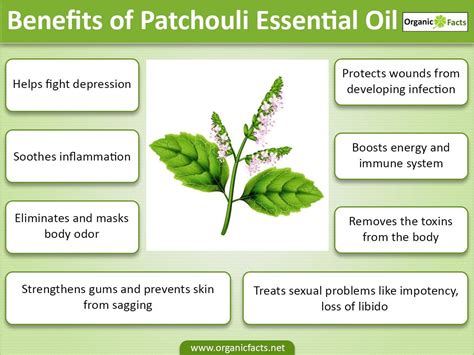
Used topically after dilution in a carrier oil or in a skincare product, Patchouli Essential Oil can deodorize body odors, soothe inflammation, fight water retention, break up cellulite, relieve constipation, promote weight loss, facilitate the faster healing of wounds by stimulating the growth of new skin, moisturize rough and chapped skin, and reduce the appearance of blemishes, cuts, bruises and scars.
It is known to fight infections that contribute to fevers, thereby reducing body temperatures. It can also relieve discomfort associated with digestive issues. By boosting circulation and thus increasing oxygen to the organs and cells, it helps the body retain a healthy-looking, youthful appearance. Patchouli Oil’s astringent properties help prevent the early onset of sagging skin and hair loss.
When diluted and used topically in cosmetic products, Patchouli Essential Oil provides skin with many benefits such as a complexion that looks vibrant and feels healthy and smooth. It is used to slow the look of aging by tightening and toning the skin, thereby reducing the appearance of wrinkles and blemishes. 1-2 drops of the oil can be mixed into a skincare product of personal preference and used to moisturize problem skin that is blemished or wrinkled.
Used as a massage balm, 1-2 drops of Patchouli Essential Oil can be diluted with a carrier oil such as Fractionated Coconut Oil before being applied to the body. It is beneficial for all skin types and can also be massaged into the face to relieve dryness or to balance oily and acne-prone skin. For the faster healing of scars, wounds, or blemishes caused by measles, pox, or acne, 5 drops of Patchouli Oil can be added to a face wash or a face cream to minimize the appearance of unwanted marks.
Used in aromatherapy, the mood-enhancing fragrance of Patchouli Essential Oil is inhaled and scent receptors in the brain’s emotional powerhouse process the smell as grounding and emotionally balancing, allowing the brain and body to relax with the calming down of emotions. Similarly, 1-2 drops smoothed onto a pillow may reduce insomnia and promote the faster onset of deeper sleep by reducing anxiety and improving sleep quality. Diffusing 3-4 drops of this anti-inflammatory oil can also reduce fevers and colds by eliminating infectious bacteria, thus reducing body temperature and the pain commonly associated with illness.
When diluted and applied topically to the hands, neck, stomach, or temples, Patchouli Essential Oil can offer a cooling sensation that will also reduce feverish body temperatures. Patchouli Essential Oil acts as a natural perfume and an air freshener that creates a relaxing atmosphere, especially for the bedroom. Its antiseptic and anti-fungal properties make it beneficial for use in natural cleaning products. A spray cleaner can be made by blending 10 drops of Patchouli Essential Oil with 10 drops of Orange Essential Oil and diluting the blend in a 16 oz. (470 ml) bottle of warm water.
Patchouli essential oil has been around since the beginning of time. But it wasn’t until the 60’s that it got the spotlight it deserved. A lot has changed since the 60’s, but patchouli is still a miracle-working essential oil.
Spiritual and Energetic Properties
In many spiritual traditions, patchouli is used to facilitate a reconnection to the earth. Often present during energy purification rituals, patchouli is used to eliminate negative energies. Very frequently used in meditative practices to promote mental clarity , patchouli helps you develop deep inner reflection. The scent of patchouli is considered balancing and harmonizing for the mind, body, and spirit.
Spiritual awakening is a personal journey that brings about feelings of peace, joy, and connection to the self . Everyone takes this journey at their own pace, sometimes leading to profound changes in our lives.
Patchouli is known for its calming and soothing properties. Its fragrance acts on the nervous system, reducing stress, anxiety, and tension . With its distinctive scent, patchouli stimulates your senses to awaken your sensory perception and experience a sense of deep peace. Patchouli also promotes mental clarity by freeing your mind from any external disturbances.
Patchouli is an excellent support for managing certain difficult situations by calming the restless mind. Its warm scent is a source of comfort that reduces feelings of anxiety. Its power is such that it is able to stimulate positive thoughts and encourage an optimistic state of mind . Wrap yourself in the rich and earthy scent of HOZHO products to find a soothing emotional balance.
Energy therapies believe that the human body is traversed by a subtle network of energies that influences our physical, emotional, mental, and spiritual well-being. To enjoy good energetic harmony and benefit from the spiritual benefits of patchouli, you can incorporate it into your daily life in a variety of ways.
Patchouli-based energy candles are an effective way to cleanse environments . By expelling negative energies, they rebalance your living space. You will be immersed in a soothing atmosphere in which positive energies naturally circulate.
Energizing patchouli home fragrances are perfect for instantly purifying your living space and boosting your mood . To revitalize your mind throughout the day, opt for our Protective Rain, infused with patchouli, cedarwood, and myrrh.
In many cultures, patchouli is used to connect with the Earth, elevate one's spirit, or purify it. This is particularly the case in India, Indonesia, China, and Japan. A sacred plant, it is valuable for anchoring spiritual energies and creating a solid foundation from which to develop your spiritual energy.
Associated with calm, relaxation and emotional balance, the patchouli infused in our Protective Breeze offers a unique meditative experience. By combining it with other essences, we have increased its power of action.
Patchouli and Chakra Balancing
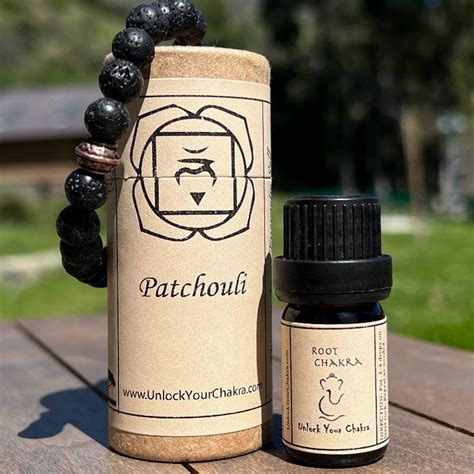
Chakra healing, an ancient Indian practice that focuses on balancing the body's energy centers, has found a valuable ally in patchouli oil. The root chakra, located at the base of the spine, is associated with feelings of safety and security.
Chakras are the energy points of your body that regulate all of your body's functions. Chakras affect everything from keeping your emotions in balance, to proper organ function, to keeping your immune system thriving. Your root chakra must be clear and in balance. After all, when we’re grounded we are in our bodies feeling what we need to feel alive! When your root chakra is stuck in a state of imbalance, you’ll experience negative effects to your kidneys, nerves, feet, and sense of smell. The good news is with patchouli essential oil you’ll rid yourself of all these negative energies.
Your sacral chakra is home to your creativity and helps you enjoy your time here on Earth. With a blocked sacral chakra, you’ll experience anemia, lower back pain, and low energy levels.
The third eye, often associated with the sixth chakra, represents intuition, insight, and spiritual awakening. Patchouli oil is thought to stimulate the third eye, helping individuals access higher states of consciousness and deeper spiritual insights.
Patchouli in Rituals and Ceremonies
Beyond meditation and yoga, patchouli oil plays a central role in various spiritual rituals and ceremonies. Shamans, healers, and energy workers often use it to cleanse and purify spaces before conducting spiritual ceremonies. In some Native American rituals, patchouli is used as an offering to the spirits.
Patchouli for Grounding and Inner Peace
The purported grounding sensation associated with products like “patchouli oil spiritual sky” is a central factor in its appeal. This sensation, a feeling of stability, connection to the present moment, and reduced anxiety, is often sought in practices of mindfulness and meditation. Patchouli oils distinctive earthy and woody aroma is inherently linked to the natural world. This connection can stimulate feelings of stability and rootedness, countering the disorienting effects of stress or anxiety.
Inner peace, a state of mental and emotional tranquility characterized by the absence of negative thoughts and emotions, is often a sought-after state. The association between “patchouli oil spiritual sky” and inner peace stems from the belief that the olfactory properties of patchouli, coupled with the suggestive branding, can facilitate this state.
The earthy aroma of patchouli is thought to possess calming and grounding effects, reducing anxiety and promoting relaxation. Simultaneously, the brand name evokes notions of spirituality and transcendence, potentially amplifying the psychological impact of the fragrance.
The pursuit of inner peace is a recurring theme in various philosophical and religious traditions, emphasizing the importance of mental discipline and emotional regulation. The product offers a tangible and accessible means to cultivate a conducive environment, potentially assisting individuals in their journey towards mental tranquility.
Individuals may incorporate the fragrance into their meditation practices, creating an olfactory anchor that facilitates focus and relaxation. Others may use it in their homes or workplaces to create a calming atmosphere, reducing stress and promoting a sense of well-being.
Patchouli oil's significance in spiritual practices extends to personal transformation. Its grounding properties help individuals navigate their inner landscapes, confront their fears, and embrace personal growth.
Patchouli as a Meditation Aid
The potential of “patchouli oil spiritual sky” to serve as a meditation aid stems from the intersection of its aromatic properties and the established principles of mindfulness practices. Scents can act as olfactory anchors, linking specific aromas to particular states of mind or practices. Consistent use of “patchouli oil spiritual sky” during meditation sessions can establish a conditioned response, wherein the scent itself triggers a relaxation response and enhances focus.
Meditation often involves grounding oneself in the present moment. The earthy and grounding nature of patchouli can serve as a sensory focal point, drawing attention away from distracting thoughts and anchoring awareness in the immediate experience. Specific fragrances, including patchouli, are reported to have a modulating effect on emotions. The scent can assist in reducing feelings of anxiety, stress, or restlessness that may impede effective meditation.
The creation of a conducive environment is an integral aspect of meditation. “Patchouli oil spiritual sky” can contribute to the overall atmosphere by creating a calming and sacred space. The fragrance can signal to the mind and body that it is time to transition into a state of contemplation.
Traditional Associations and Cultural Significance
The connection between “Traditional associations” and “patchouli oil spiritual sky” is significant. The fragrance is not merely a modern invention, but rather carries historical and cultural weight that influences its perception and usage. Patchouli has long been used in Eastern spiritual traditions, including Hinduism, Buddhism, and traditional Chinese medicine. Its earthy aroma is often associated with grounding, centering, and facilitating meditative states.
In these contexts, it is used to create sacred spaces, enhance focus during prayer or meditation, and promote a sense of inner peace. In the Western world, patchouli gained prominence during the counterculture movement of the 1960s and 1970s. It became associated with bohemian lifestyles, alternative spiritual practices, and a rejection of mainstream societal norms. Its use symbolized a connection to nature, a desire for personal freedom, and an exploration of inner consciousness.
Patchouli is also recognized within aromatherapy for its therapeutic properties. It is believed to possess calming, antidepressant, and anti-inflammatory effects. Aromatherapists often use it to alleviate stress, anxiety, and depression, as well as to promote relaxation and improve sleep quality.
Beyond its spiritual and therapeutic applications, patchouli has a long history in perfumery. Its distinctive aroma has been used to add depth, complexity, and longevity to various fragrance compositions. It is often combined with other notes, such as floral, woody, or spicy scents, to create unique and evocative perfumes.
These traditional associations collectively contribute to the overall perception of “patchouli oil spiritual sky.” The fragrance is not simply a scent, but rather a carrier of historical and cultural meanings that resonate with individuals seeking spirituality, relaxation, or a connection to alternative lifestyles.
Practical Ways to Incorporate Patchouli
There are many ways to incorporate patchouli into your spiritual practice. One of the most popular methods is through burning incense. Patchouli incense is a soothing presence in any room in which it is burned.