I’ve always been fascinated with red doors. You’ve probably seen houses, businesses, and even churches with red doors, but did you know red doors offer more than just curb appeal? Different door colors can communicate mood, personality, tradition, and even beliefs. Red doors have many positive associations, including protection, hospitality, and being debt-free.
A red front door is more than just a bold design choice-it’s a powerful expression of history, culture, faith, and personality. From ancient traditions to modern interpretations, a red door has carried significance across cultures and time periods.
If you’ve ever wondered what does a red door mean, you’re not alone. In home design, each color brings its energy, and red is one of the boldest.
Here, we’ll teach you everything you need to know about red doors, including their common and historical meanings and whether you should paint your door red.
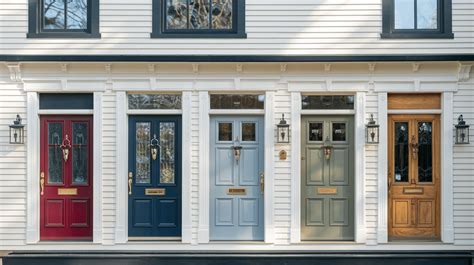
Historical and Cultural Significance
Red doors have deep roots in both tradition and symbolism.
Read also: Money Above the Door: Spiritual Significance
Early American Tradition
In early American tradition, a red door signified a warm welcome. Travelers and weary visitors knew that a house with a red door offered a place to rest. In colonial America, a red door was a universal sign of hospitality. Travelers knew that a home with a red door was a safe place to rest. This practice was especially important before the days of inns and motels. Red symbolizes warmth, welcome, and refuge.
Feng Shui
In Feng Shui, a red door means "welcome!" In Feng Shui, red is associated with positive energy and abundance. Feng Shui, the ancient Chinese art of spatial arrangement and energy flow, places significant importance on the color of your front door. In Feng Shui, the front door is known as the “Mouth of Chi,” the entry point for energy into your home. It's full of powerful, warm energy.
Chinese Culture
In Chinese culture, red is a revered and sacred color. In Chinese culture, red is believed to bring good luck and health and to keep away evil spirits. It is used extensively during holidays and celebrations because it represents joy, good luck, and fortune. During the Chinese New Year, red decorations flood homes, streets, and businesses to attract abundance and drive away bad spirits. A red door during this time signifies happiness and success for the coming year.
Christianity
In Christianity, a red door can symbolize protection and sanctity. Across many belief systems, the red door holds deep spiritual connotations. Many churches paint their doors red to symbolize God’s protection. Historically, churches painted their doors red to represent the blood of Christ, signifying that the church was a safe space. The red paint is often a symbol for Jesus Christ’s blood and the sacrifices he made for Christians. Walking through a red door is symbolic of entering a sacred space, protected by divine grace.
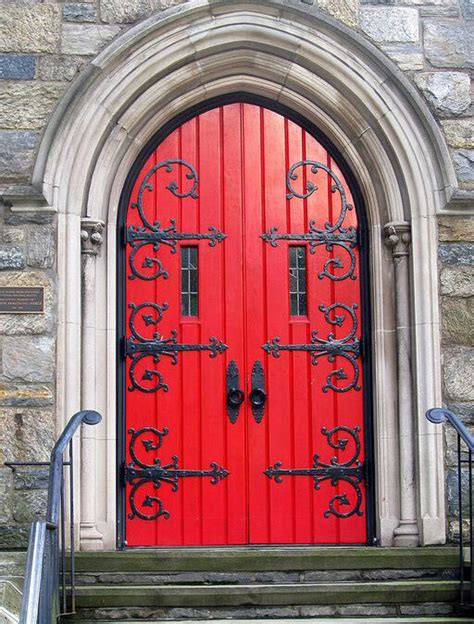
As you drive by the church I pastor in San Diego, one of the things that immediately catches your eye is the color of our entrance doors. Red! In fact, the color is so prominent that we have incorporated it into our church logo. This is a common color for traditional church doors.
Read also: Understanding anemia spiritually
The spiritual explanation I find to be the most poignant is that red symbolizes the blood of Christ. Just as the blood of the lambs marked the doors of Israelite homes in Egypt during the first Passover, so the blood of the Lamb of God that takes away the sin of the world marks the doors of the New Israel. “The household of faith,” as St. Paul calls the church, would not exist apart from the blood of Christ, for it is in the blood of the Lamb that our robes have been washed clean (Rev. 7:14).
In the words of Christ himself, “I am the way and the truth and the life, nobody comes to the Father except through me” (John 14:6). Like the door to your home, a church entrance is its interface with the outside world. While there is nothing particularly sacred about a doorway, there is no better location to place a sign to display the faith of those who reside inside.
Underground Railroad
In the 19th century, red doors were linked to the Underground Railroad in the United States. In the United States, the Underground Railroad was a network of people who helped slaves escape to freedom. Because this was illegal, safehouses needed a way to indicate their existence without being too obvious. Homes that were part of this secret network sometimes had red doors to signal a safe house for escaping enslaved individuals.
Scottish Tradition
In Scottish tradition, homeowners who had paid off their mortgages would sometimes paint their front doors red as a sign of financial stability. In some parts of the Western world, particularly Scotland and the United States, a red door has taken on a modern meaning: financial freedom. It was a way to proudly show that they owned their home debt-free. Homeowners would paint their doors red as a proud symbol that their mortgage had been paid off.
''15 Hottest Front Door Colors Meaning In Feng Shui'' | #FengShuiColors
Read also: Hamsa Hand: Symbolism and history
Other Interpretations and Symbolism
Beyond cultural and historical meanings, a red door is often simply a statement of personality. Homeowners who choose red are often seen as confident, energetic, and welcoming.
- Protection: A further explanation that goes back to the Medieval period is that red marks the church as a place of sanctuary-a place of refuge and safety from violence and injustice (comparable to the cities of refuge found in Numbers 35:9-12). If a person being pursued by the local populace, police or gentry could reach the church door he/she would be safe. Nobody would dare do violence on sacred ground and, in most cases, the Church was not subject to civil law during that time. The red door was fair warning to pursuers that they could proceed no further. One who claimed sanctuary in this way would then be able to present his/her case before the priest and ask that justice be served.
- Welcome: In early American tradition, a red door signaled a hospitable home where travelers were welcome to rest. According to folklore, if a weary traveler stumbled upon a home with a red door, they would stop there and surely be welcomed with a good meal and a good nights sleep.
Like the door to your home, a church entrance is its interface with the outside world. While there is nothing particularly sacred about a doorway, there is no better location to place a sign to display the faith of those who reside inside.
Considerations Before Painting Your Door Red
Red is not a one-size-fits-all color. If you’re drawn to the idea of a red front door, consider what meaning resonates with you.
Red doors do not have any negative associations, so there’s no reason not to paint your front door red, unless it isn’t permitted in your area or by your HOA. If you participate in feng shui, however, a front or main door that faces west or northwest should not be painted red. These directions represent the element of metal, while red represents the element of fire. The shade of red you choose does not affect the associations with the color, so choose whatever shade you like best.
Here in Phoenix, AZ, intense sun exposure is a real issue. Fortunately, many high-quality red exterior paints come with UV protection to resist fading. Phoenix’s arid climate presents a unique challenge for maintaining bright exterior colors.
If your home has a brick exterior, a red front door can create a visually appealing contrast.
Other Door Colors and Their Meanings
While red doors are rich in symbolism, other door colors also carry significant meanings:
| Color | Meaning |
|---|---|
| Blue | Calm, Trust, Serenity. Blue symbolizes calmness, relaxation, and imagination. Blue doors have traditionally represented safety, peace, and faith and are believed to bless the residents of the home with good luck. |
| Black | Sophistication, Power, Elegance. Black doors often symbolize that the residents of the home are sophisticated or wealthy. They also signify power, prosperity, and mystery. |
| White | Simplicity, Purity, Cleanliness. White doors often signal a minimalist or classic aesthetic. White doors symbolize purity and calmness, and because they’re so difficult to keep clean, they often indicate that the interior of the house is spotless. They give off a clean, fresh, and orderly vibe. They can also symbolize a fresh start or new beginning. |
| Gray | Balance, Neutrality, Sophistication. Gray is often associated with reservedness and sophistication. Gray is the great mediator-it sits between the extremes of black and white, symbolizing balance and compromise. It invokes beauty, elegance, and precision and is often connected with the element of metal. |
| Green | Growth, Balance, Prosperity. Green is the color of nature, renewal, and prosperity. Green doors are believed to indicate that the resident of the home is peaceful, cooperative, and loves nature. A green door often implies a love for the environment and a sense of balance. In some cultures, it also symbolizes wealth and financial stability. Historically, green doors were believed to bring fertility, wealth, and good fortune. |
| Yellow | Optimism, Creativity, Cheerfulness. Because yellow is a bright and bold color, having a yellow door often indicates that the resident is an energetic, positive person. A yellow door is a clear sign that joy lives here. This bright, sunny hue radiates happiness and openness. |
| Orange | Creativity, Expression, Fun. Orange symbolizes creativity, expression, and fun, and an orange door often means the resident is warm-hearted. In ancient Rome, the color was also associated with the god Mercury and therefore also symbolizes communication, commerce, and flexibility. |
| Purple | Creativity, Luxury, Spirituality. Historically, purple represented royalty, and sometimes a purple door meant the resident practiced witchcraft. Historically associated with royalty and spirituality, purple suggests an imaginative or unconventional household. In modern times, purple is associated with creativity, inspiration, and elegance. It can also convey a sense of luxury or mystery. |
| Brown | Stability, Warmth, Grounding. Brown is a common color for doors, and it represents the element of earth. It is associated with stability, warmth, grounding, and structure. |