More than just physical postures, yoga is a mind-body practice that enables you to connect with your true self.
Known as the Muladhara Chakra, the Root Chakra acts as the root of the body. Storing energy that is responsible for channeling our astral body, the seven Chakras go down the centerline of the body, influencing our physical health, how we function, characteristics and more. When functioning properly, the Chakras allow this energy to flow freely. When one or more Chakras are blocked, they affect our well-being.
If you're wondering how to unlock root chakra energy to find natural anxiety relief, understanding this fundamental energy center could be the key to finding your balance again.
The root chakra, also known as the Muladhara chakra, is associated with grounding, stability, and a sense of security.
The word Muladhara comes from two Sanskrit words: Mula translates to “root” and Adhara translates to “support” or “base.” The root chakra provides support, helping you build the foundation on which you can live your life. Providing the foundation for life, the root chakra helps you handle challenges and is responsible for your sense of stability and security.
Read also: The Power of Singing Bowls
When balanced and unblocked, you feel more grounded and in-tune with the world around you. It provides a foundation and purpose. When energy is flowing freely through the Root Chakra, you will feel more connected to the earth and your surroundings. There is an increased physical, mental and emotional attachment to yourself, your home and immediate environment.
As it is the base, the Root Chakra supports the solid bone structure. Considering the role it plays, when it is not balanced, all the other Chakras also go out of line. Blocked energy affects physical health and mental stability.
The Root Chakra is represented by a red lotus with four petals. The color brings us a sense of belonging, community and provides vitality and strength. The Root Chakra is associated with the color red, which denotes power, bravery and self-awareness.
The Root Chakra is responsible for our basic needs of good health and a sense of stability. What is the Root Chakra Associated With? The Root Chakra, the Muladhara is associated with the sense of security, familial relationships and a feeling of belonging.
The Root Chakra is associated with the Coccygeal nerve plexus and Adrenal glands. The Muladhara Chakra’s Beej mantra is LAM.
Read also: Prosperity Mantras
Sitting at the root, the Muladhara Chakra is connected to the earth element. It provides us with a sense of balance, foundation and purpose. The Earth Element provides us with a sense of balance, foundation and purpose.
The Root Chakra stores positivity, stability and connection. It allows us to channel our inner needs for belonging by connecting with our surroundings. It allows us to take care of our well-being, physically, mentally and emotionally. The Root Chakra gives us the opportunity to let go of fear.
When balanced and energy is free-flowing, the Root Chakra allows us to be more calm, centered and balanced. Emotions and thoughts are positive, stable and in harmony.
The Importance of Balancing the Root Chakra
As previously mentioned, the root chakra is the starting point, or root, of maintaining balance. It’s the base of the body’s life force and acts as the link between the outside physical world and the internal energetic system. It helps to nurture self-esteem, integrity, and a sense of belonging.
This foundational energy center is at the base of your spine and is crucial in grounding you in Mother Earth’s nurturing embrace. Balancing the First Chakra, or Muladhara, is essential to achieving overall wellness and harmony.
Read also: Grounding Yoga Poses
When the root chakra is imbalanced, we may experience insecurity, fear, and instability. If the root chakra is imbalanced or blocked, you may feel restless, insecure, anxiety-ridden, or fatigued.
The Root Chakra, when imbalanced, makes us feel depressed and anxious. Similar to a blocked Root Chakra, an overactive Muladhara will induce feelings of panic, anxiety and fear. So, keeping it balanced and staying grounded is important.
When the Root Chakra is open, energy is flowing freely allowing you to feel safe, connected and confident.
Here are seven evidence-based methods that combine traditional wisdom with contemporary research to help unblock your root chakra.
Signs Your Root Chakra Needs Balancing
When your root is blocked, it often sends clear signals - though you might not recognize them at first. Here's what to look for:
- Physical Signs: Persistent lower back pain, Frequent leg discomfort or foot issues, Digestive problems or irregularity, Feeling constantly tired or low-energy, Poor coordination, Unexplained muscle tension, especially in your legs or pelvic area.
- Emotional and Mental Signs: Persistent anxiety about basic needs or restlessness, Feeling "spaced out" or disconnected from your body, Difficulty making decisions or feeling paralyzed by choices, Constant worry about financial security or excessive worry about basic needs, Struggling to feel safe in your environment, Finding it hard to complete tasks or stay motivated.
- Behavioral Patterns: Tendency to overwork or undersleep, Difficulty maintaining routines, Frequent procrastination or lack of follow-through, Overspending or extreme frugality, Struggling to feel "at home" anywhere, Resistance to healthy habits or self-care practices.
Understanding these signs is your first step toward healing. Just as you wouldn't ignore a flashing check engine light in your car, these signals from your root chakra deserve your attention.
Yoga Poses for Root Chakra Balancing
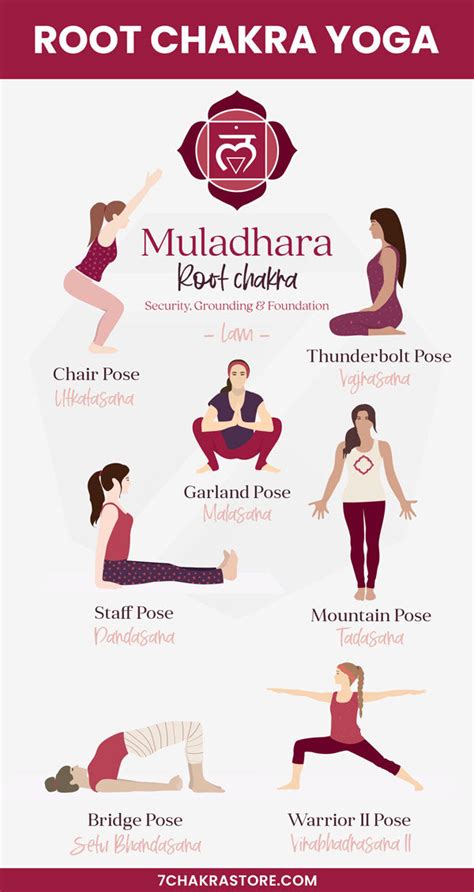
Why should we be concerned with yoga poses for the first chakra?
Chakras are energy centers or vortexes that lie along the spine, beginning in the genital area up to the crown of the head.
The First Chakra, or Root Chakra, is located at the base of the spine in the general area of the perineum. The Root Chakra is associated with an emotional and physical grounding in the earth element. The body parts associated with the Muladhara Chakra are the feet, legs, base of the spine, and large intestines.
Practicing yoga poses specifically targeted for the first chakra can have numerous benefits.
First, it helps strengthen and stabilize our connection with the Earth. In addition to fostering a sense of stability, these poses promote feelings of safety and security within ourselves. They let us release fears or anxieties, blocking our energetic flow in this area.
Furthermore, practicing yoga poses for the first chakra can enhance overall physical strength in the legs and hips while improving posture. Incorporating yoga poses that target the first chakra into your practice can bring physical, emotional, and energetically balanced.
Practicing yoga poses for the First Chakra offers numerous benefits beyond physical strength and flexibility. It can help alleviate anxiety, fear, or restlessness by promoting stability and safety within ourselves.
Practicing yoga poses for the first chakra, we focus on creating a solid base through postures emphasizing stability and rooting into the earth. Regularly engaging with these grounding postures, we can strengthen our connection to the present moment and build a solid foundation to navigate life’s challenges.
To unblock your root chakra through yoga, incorporate grounding poses like Mountain Pose, Warrior I and II, Bridge Pose, and Child's Pose.
Here are some yoga poses to help you harness your root chakra energy:
- Low Lunge: This pose creates an intense stretch for both the psoas and the quad muscles, which are associated with the flight-or-fight response and deeply connected to the root chakra. A mere five breaths in a low lunge can help you harness your root chakra energy.
Start in Downward Dog, exhaling as you step your right foot forward between your hands. Keep the knee aligned over the right heel and lower your left knee to the ground. You can stay here if this stretch is enough, or you increase strength and posture by lifting your torso up and extending your arms above your head. Squeeze your glutes and draw your tailbone towards the floor.
- Sun Salutations: Engaging in Sun salutations works to build heat from within the body. By cultivating a sense of power and focus that connects with each inhale and exhale, you help strengthen your root chakra.
There are three primary variations of Sun Salutation, including variations A, B, and C.
- Mountain Pose (Tadasana): Deepening your connection to the earth is one of the best ways to nourish your root chakra. During Mountain Pose, you focus on the present moment, allowing yourself to feel centered and balanced.
Stand at the top of your yoga mat with your feet together and ankles slightly apart. Dig your feet into the mat to establish a sturdy foundation. Roll your shoulders open and direct your gaze out.
- Head-to-Knee Pose (Janu Sirsasana): Ideally, this pose should help you lengthen your torso, aiming to touch your chest to your thigh. At first, it can be difficult to get this deep into the stretch, but regular practice helps to connect both the upper and bottom half of your body, helping to establish a stronger root chakra.
Sit on the floor with your legs extended in front of you. Bend your right knee and bring the sole of your right foot close to your left inner thigh. Exhale as you hinge at the hips and lower your torso, reaching for your left foot.
- Garland Pose (Malasana): The closer you can bring yourself to the earth while calming the mind and spirit, the more you can nourish your root chakra. This yoga pose also works to strengthen the lower back and open up the hips.
To begin, stand with your feet shoulder-width apart and turn your toes outwards. Bend your knees and lower your hips towards the ground. Bring your hands to the prayer position in the center of your chest and place your elbows on the insides of your knees. Press your elbows against your legs, pushing them out just enough to feel a stretch in your inner thighs.
- Standing Forward Bend (Uttanasana): Ease the mind and find your center and calm within your yoga practice by performing Standing Forward Bend. A gentle stretch of the hamstrings and lower back helps relieve tension to better connect the upper and lower halves of the body.
Start in a standing position with your feet hip-distance apart. Bend your knees slightly and hinge at the hips, folding forward to bring your forehead to the front of your legs. If you can plant your hands on the ground comfortably, please do so. If you cannot do that, rest your hands on your shins, or simply hold your elbows and hang into the pose.
- Child’s Pose (Balasana): Child’s pose allows the entire body to relax into itself. While you’re in this grounding position, you surrender to the support of the earth beneath you, which encourages a stronger root chakra.
Start by kneeling on your mat with your knees hip-distance apart and your feet together behind you. Take a big inhale and lay your torso forward onto your thighs as you exhale, extending your arms overhead.
- Easy Pose (Sukhasana): Also known as Sukhasana, Easy pose allows you to connect with the earth beneath you. Connecting to the floor and controlling your breath teaches you to nourish your internal energy and exhale the negative energy.
Sit up straight in a cross-legged position on your yoga mat, placing a pillow underneath your buttocks if necessary for support. Bring your arms down to your sides and rest your palms on your lap, or gently on top of the knees.
- Warrior II (Virabhadrasana II): The root chakra is linked to our “fight or flight” response and our most primal instincts. Warrior II pose helps ground this energy to establish strength.
From a standing position, step your right foot forward into a lunge position. Keep your left leg straight and turn the left foot out to the side of your yoga mat. Make sure the right knee doesn’t extend over your toes, keep your back straight, and bring your arms into a “T” shape.
These poses ground you and allow energy to flow freely. Standing on one’s two feet and staying in one place is vital to healing and balancing the Muladhara Chakra.
Here is a list of yoga asanas by Author Cristi Christensen that can help you heal your Root Chakra. These include Malasana, Uttanasana, Squats, Utkatasana, Warrior 1 and 2, Vrksasana and Bridge Lifts.
Incorporating yoga poses for the first chakra, Muladhara, into your practice can profoundly affect your overall well-being.
Through the practice of grounding poses such as Tadasana (Mountain Pose), Malasana (Garland Pose), and Virabhadrasana I (Warrior I), you can connect with the earth element and establish stability within yourself.
In addition to fostering a sense of stability, these poses promote feelings of safety and security within ourselves. They let us release fears or anxieties, blocking our energetic flow in this area.
Not only do they promote physical strength and stability in the legs and lower body, but they also help to alleviate anxiety, stress, and feelings of insecurity.
When creating a sequence specifically designed for balancing Muladhara Chakra, it’s crucial to incorporate other grounding poses like Balasana (Child’s Pose) or Uttanasana (Standing Forward Fold).
To create a balanced sequence that focuses on healing and unblocking your root chakra, consider incorporating various standing poses and forward bends like Uttanasana (Standing Forward Bend) or Paschimottanasana (Seated Forward Fold).
Remember that consistency is critical when practicing yoga poses for balancing the first chakra.
Grounding Into Gratitude - Root Chakra Yoga - Yoga With Adriene
Pranayama (Breathing Exercises)
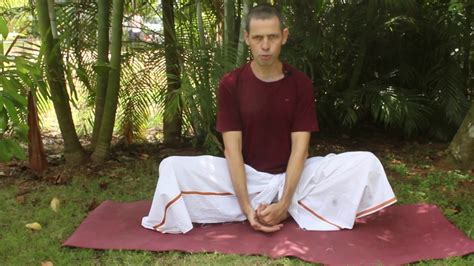
Pranayama, or breath control, is essential to any yoga practice. Specific pranayama techniques can be particularly beneficial when balancing the first chakra.
A few pranayama for Root Chakra are Oceans Breath (Ujjayi Pranayama) and Alternate Nostril Breathing (Nadi Shodhana Pranayama). These practices will energize, calm and center the mind and body.