Throughout history, different cultures have depicted love and affection through an array of symbols. From Greek mythology to Hindu motifs, cultures around the world have used a range of symbols to represent love in Eastern and Western art. Symbols of love take all sorts of shapes and forms, but some prove more enduring than others and span numerous civilizations and cultures. This article delves into the meanings behind these enduring symbols, exploring their origins and significance.
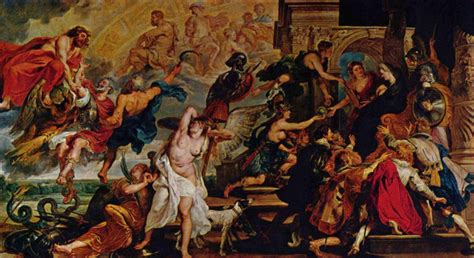
Peter Paul Rubens, “The Judgment of Paris” (detail), c. 1639
Symbols of Love
Apples
Apples appear in many different religious traditions, and though each have their own distinct reference, they all depict the fruit as a symbol of love, desire, and abundance. In Greek mythology, the apple serves as a prominent symbol of courtship. It’s said that Gaia, the Primordial Goddess of Nature, gave apples to Hera during her wedding to signify lasting love and eternal union. Gratified couples as far back as the 7th century B.C. In Norse mythology, many would eat apples from the garden of the goddess of youth, Iðunn, in an attempt to ward off disease and retain their beauty.
Claddagh
The Claddagh symbol is most prominently fashioned into Celtic rings but appears in other forms of jewelry as well. The symbol is associated with the Irish folktale of Claddagh, a village outside the city of Galway, in which pirates captured a young man named Richard, who was out fishing with his family and forced him into slavery. According to the tale, Richard was constrained to work for a goldsmith, where he inevitably learned the craft. As the legend goes, Richard eventually saved up enough gold specks to craft a ring, in hopes of someday presenting it to his loved one. When he finally escaped, he returned to give the beautiful ring to Margaret, who accepted it lovingly.
Cupid
In Roman mythology, Cupid is the god of love, the son of Venus and Mars. In Greek mythology, he was known as Eros, the son of Aphrodite (goddess of love and beauty).
Read also: Valkyrie Meanings
Doves
People have long considered doves as symbols of love and peace. Along with their cooing and bowing courting rituals, doves mate for a lifetime, which has come to symbolize fidelity. Often, a depiction of two doves together translates to everlasting, eternal love.
Harp
Another ancient symbol of love, the harp bears a variety of meanings across different cultures. In Celtic culture, the harp represents a bridge of love, connecting heaven and earth. In Norway and Iceland, it’s believed the strings of the harp form a ladder, symbolizing the ascent to higher states of love.
Jasmine
This aromatic white flower is a powerful symbol of love, especially within the Hindu religion. Its significance is believed to have originated in the foothills of the Himalayas, considered sacred ground in India.
Kokopelli
Kokopelli is a musically talented fertility deity with roots in Native American culture. He’s depicted with a plumed headdress while blowing his flute and has appeared in pottery, cave art, and folklore dating back thousands of years. The love-flute Kokopelli carries was said to be used by a man to attract his maiden, and the two destroyed it after they married.
Love Knot
The Celtic love knot is an ancient symbol representing eternal love through an interlacing design that seemingly has no beginning or end. The intertwining design also represents the binding of two souls. The love knot originated around the 3rd century B.C., first appearing in works of art from the Roman Empire. Christians later adopted the motif around 450 A.D. to adorn illuminated manuscripts and incorporated it into the designs of high crosses.
Read also: Protection with Archangel Michael
Maple Leaf
Maple leafs are ancient symbols of love, most notably in China and Japan. Like the sweet sap from its tree, which ultimately produces maple syrup, maple leaves represent the sweetness and wonder of love in daily life.
Osram Ne Nsoromma
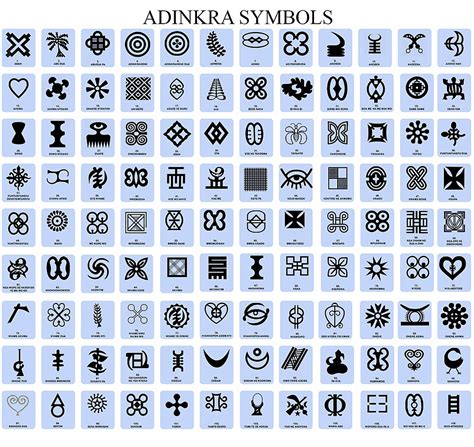
Osram Ne Nsoromma symbol. Adinkra is a cotton cloth produced in West Africa that has traditional Akan symbols stamped on it. These symbols represent popular proverbs, often conveying more meaning than a single word can. Osram Ne Nsoromma is one of those symbols consisting of a star and half moon.
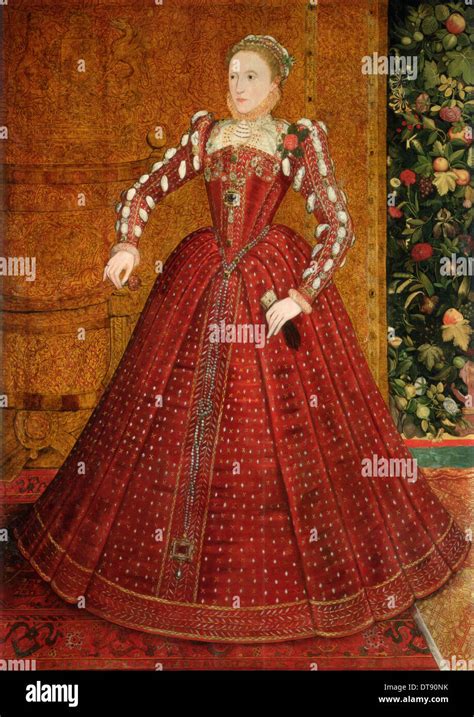
Steven van der Meulen, “The Hampden Portrait,” circa 1563
Roses
Ancient Greek and Roman cultures associated roses with Aphrodite and Venus, respectively-both goddesses of love. Ever since then, people have recognized roses as symbols of love and beauty.
Shells
Like many other symbols of love, shells, and conch shells, in particular, are one of the main objects associated with Aphrodite, goddess of love.
Read also: An Explanation of Karuna Reiki Symbols
Hearts
Hearts are symbols of love most commonly recognized in the modern world. The iconic shape in colors ranging from soft pink to vibrant red transcends cultural boundaries, serving as a powerful symbol of romance and affection.
Infinity Symbol
The infinity symbol represents eternal love in a graceful loop that has no beginning or end.
Lotus Flower
Many cultures, Eastern ones, in particular, consider the lotus flower the spiritual symbol of unconditional love. Representing purity and enlightenment, the lotus flower springs forth from muddy water, flaunting its beautiful blossom in the midst of murkiness.
The History of the Engagement Ring: A Symbol of Love Through Time
Spiritual Symbols and Their Meanings
Spiritual symbols are signs and images that hold a specific meaning and represent certain beliefs, ideas, or concepts of spirituality. Since the dawn of our species, we’ve been trying to understand the world around us. Natural phenomena, death, and life itself, among others, are profound and unsolved mysteries. So we created those symbols to represent the kinds of forces that govern our lives. Likewise, spiritual symbols have the power to connect with people from all walks of life.
Common Spiritual Symbols
- The Cross: The symbol of Christianity represents the sacrifice of Jesus Christ on the cross for the redemption of humankind.
- The Vajr (Dorje): A sacred symbol in Tibetan Buddhism, symbolizing indestructibility and irresistible force.
- The Hamsa: Used as a spiritual symbol for protection from negative energy.
- The Lotus Flower: Represents the ability of humans to rise above life’s challenges and obstacles and reach spiritual awakening.
- Yin Yang: Represents the balance and harmony of opposites.
- The Tree of Life: A powerful symbol deeply rooted in Celtic spirituality and mythology.
- The Eye of Horus: A popular ancient Egyptian symbol, representing the eye of the god Horus, used as an amulet or talisman for protection.
- The Infinity Symbol: Represents the concept of endlessness and the unified nature of all things.
Symbols of Strength
For thousands of years, symbols of strength and power have existed all over the world, from the Ancient Egyptians, to Greek mythology, to the era of Nordic Vikings, and throughout all of the continents. Not only do these specific symbols represent strength, but they remind us that we have the courage and drive within us to keep going, to stand tall, to overcome whatever life throws our way and become the best person we can be.
Table of Strength Symbols From Around the World
| Symbol | Origin | Meaning |
|---|---|---|
| Bear | New World Native American Tribes | Strength, courage, family, health |
| Wolf | New World Native American Tribes | Loyalty, intelligence, power, courage |
| Golden Eagle | Near East and Europe | Strength, immortality, courage |
| Oak Tree | Europe | Wisdom, strength, endurance, knowledge |
| Fasces | Etruscan | Strength through unity |
| Eagle | Ancient Egypt | Determination and vigor |
| Scarab Beetle | Ancient Egypt | Fertility, transformation, strength, resurrection |
| Iron | West Africa | Associated with Ogun, the god of war and authority |
| Sphinx | Ancient Egypt | Intelligence, strength, dominance |
| Aten | Ancient Egypt | Royal power, authority, existence beyond creation |
| Elephant | Africa | Wisdom, loyalty, leadership, power, strength |
| Djed Pillar | Ancient Egypt | Stability, resurrection, eternal life, strength |
| Tiger | China | Courage, bravery, strength and protection |
| Dragon | China and East Asia | Power, good luck, prosperity and strength |
| Lotus Flower | China | Strength, resilience and perseverance |
| Mjölnir | Germanic/Nordic | Strength, protection, fertility, and storms |
| Aegishjalmur, or The Helm of Awe | Nordic Vikings | Protection and strength |
Symbols of love and strength have played a significant role in human culture for millennia. These symbols, whether they represent eternal love, spiritual growth, or inner strength, continue to inspire and resonate with people across different backgrounds.