Sound holds power in our lives, even if we don’t realize it. Whether it’s a sound bath, prayer bowls during meditation, or putting on a song that makes you feel joy, sound holds more power than you may realize. Discover how sound and music can heal, restore, and regulate emotions.
Sound therapy: What it is and how people use it to heal
Emotional Regulation Through Sound and Music
It’s no secret that the right song - or, sometimes, the wrong one - can evoke strong emotions or return the mind to a peaceful place in times of anxiety. Sound and music are tremendous tools for emotional regulation. Different genres of music have different effects on our brains and can elicit various thoughts, emotions, and feelings. If you’ve ever been in a bad mood and put on a song that lifts your spirits, you may already understand how this is possible.
One 2020 study scanned the brains of 24 participants while they listened to either classical, instrumental, or pop music. The paper boasts a 97.5% success rate in guessing the genre based on brain activity but researchers did slightly better (98.6%) based solely on participants’ subjective emotions after listening [1]. This study shows the reliability of music may relate to its specific effects on our brains. Music affects us reliably - we know when to reach for certain albums and when to avoid others.
The Benefits of Sound Baths and Meditation
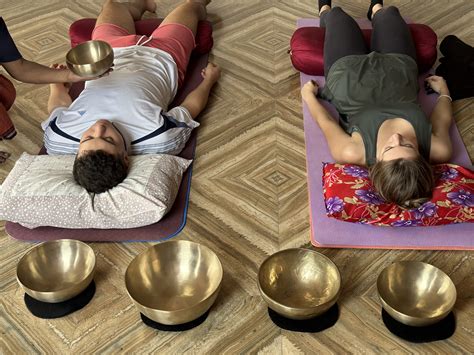
Participating in sound baths and similar events shows it can reduce tension, anxiety, and depression and elevate feelings of spiritual well-being [2]. A sound bath uses singing bowls, bells, gongs, and other instruments to create a serene atmosphere for meditation. “Sound baths” are meditations where these are the main focus, though many forms of meditation include them in some form. By surrounding meditators with ambient, relaxing sounds, it is easier for them to quiet the outside noise of the world and spend time in introspection. Prayer bowls (vibrational bowls that can let out a sustained tone) or bells in meditation create a welcoming environment for introspection. While the environment is relaxing, meditation offers a variety of benefits outside of simple relaxation.
One study even found that one form of sound meditation - Tibetan Sound Meditation - could combat cognitive decline from chemotherapy in cancer patients [3]. Though researchers point out that “traditional cognitive rehabilitation programs…have delivered only modest, if any, improvements.” Meditation seems to be a more holistic approach to healing, offering a short-term boost to several key indicators, though the effects didn’t last long-term. Still, “verbal memory, short-term memory, and processing speed as well as survivors’ perception of cognitive function…mental health and spiritual well-being” all improved.
Read also: Understanding anemia spiritually
Tuning The Rhythm of the Body
Physiological changes such as shallow breathing or elevated heart rate often accompany emotional or mental stress. Learning to listen for changes to the rhythm of your body and figuring out when you need to return it to normal can be tremendously beneficial.
Some research suggests providing haptic feedback or visual/audio representation of a heartbeat can help reduce sensitivity to anxiety [4]. The next time you feel stressed, try sitting in silence, taking deep breaths, and focusing on the rhythm of your heart as it begins slowing back down.
Can Binaural Beats Help With Memory or Creativity?
Binaural beats play slightly different frequencies in each ear to make the brain perceive a third one. Some research suggests it can boost creativity or help the mind switch brain states like relaxation, concentration, or creativity [5]. The main goal is to mimic or elicit various frequencies of brain waves, each associated with a different brain state. These frequencies are alpha, beta, gamma, theta, and delta [6] and they occur naturally when in a state of:
- Alpha - Relaxation (8-12Hz)
- Beta - Anxiety or activity (12-35Hz)
- Gamma - Concentration (35-100Hz)
- Theta - Deep relaxation or meditation (4-8Hz)
- Delta - Sleep (.5-4Hz)
Binaural beats attempt to elicit these brainwave frequencies through “cognitive entrainment.”
Binaural Beats and Cognitive Entrainment
Cognitive entrainment is the process of synchronizing brainwaves to a desired frequency through sound, light, or other external stimuli. One study found that frequencies targeting lambda, theta, and delta brain waves can “obtain the meditation state” and that gamma, lambda, alpha, and delta waves can even accomplish a “marijuana effect [5].” Another study in Frontiers in Human Neuroscience found binaural beats “regardless of the frequency” can help with creativity [7]. Specifically, it helps promote divergent thinking - creative problem-solving as opposed to focusing on a single solution (or, convergent thinking).
Read also: Light Blue: Calmness and Healing
Solfeggio Frequencies and Chakra Balancing
Healing tones, also referred to as solfeggio frequencies, are seven frequencies that correspond with the seven chakras in the body. They are often used during sound baths with Tibetan singing bowls, and each frequency is associated with its corresponding chakra, offering specific benefits. To get a better understanding of how these frequencies work, we first need an understanding of the seven chakras.
Chakras are an energy system that runs through the body with seven main points along the spine. Mentions of chakras date back to India, between 1500 to 1000 BCE. These points, sometimes referred to as wheels, are spinning disks of energy that stay “open.” Blockages in a chakra cause a myriad of physical and spiritual problems.
Here's a breakdown of each chakra and its corresponding solfeggio frequency:
| Chakra | Location | Associated Frequency | Benefits |
|---|---|---|---|
| Root Chakra | Base of the spine | 396 Hz | Grounding, safety, emotional security, elimination of guilt and fear |
| Sacral Chakra | Below the navel | 417 Hz | Creativity, pleasure, sexuality, emotional expression, healing trauma |
| Solar Plexus Chakra | Above the navel | 528 Hz | Personal power, confidence, self-esteem, mental clarity, stress reduction |
| Heart Chakra | Over the heart | 639 Hz | Peace, compassion, forgiveness, connection with others |
| Throat Chakra | Over the voice box | 741 Hz | Communication, self-expression, empathy |
| Third Eye Chakra | Middle of the forehead | 852 Hz | Intuition, spiritual sight, deep relaxation |
| Crown Chakra | Crown of the head | 963 Hz | Highest consciousness, enlightenment, well-being, mental clarity |
Located at the base of the spine, the root chakra is linked to grounding, safety, and emotional security. When blocked, it can cause feelings of insecurity in our basic needs and our well-being. The root chakra is stimulated by the lowest solfeggio frequency, 396 Hz. The sacral chakra is below the navel and is stimulated by the frequency of 417 Hz. We link this energy point to creativity, pleasure, and sexuality. It also has deep ties with our emotional expression. A blockage here can manifest feelings of social insecurity, as well as illnesses within the urinary tract and lower back.
Situated above the navel, the solar plexus chakra represents our personal power. When open, it is the seat of confidence, self-esteem, and self-discipline. This chakra determines how we move through the world and our ability to assert ourselves. When blocked, digestive issues are often the resulting consequence. To help unblock the chakra, listen to the frequency of 528 Hz while doing activities that foster discipline. As the name suggests, the fourth chakra is over the heart. This energy point is all about finding peace, compassion, and forgiveness.
Read also: Explained: Spiritual Blessings
When blocked, diseases of the heart and asthma can manifest. But, most often, people with a blocked heart chakra are likely to be people pleasers and put the needs of others before their own. The throat chakra is located over the voice box and relates to the frequency of 741 Hz. You’d be right in assuming this chakra is heavily involved with our ability to communicate. Blockages can lead to behaviors such as lying, gossiping, and miscommunication. Chanting, singing, and other vocalizations stimulate the point and allow energy to flow.
The third eye is the source of our intuition and spiritual sight. Linked with the frequency of 852 Hz, this tone balances the energy in the middle of the forehead. The benefits are deep relaxation and increased perception. To boost the flow of energy, listen to 852 Hz while practicing meditation or visualization. The final of the seven chakras is the crown chakra. This energy point is at the crown of the head and connects to our highest form of consciousness. Many consider it the chakra of enlightenment. To stimulate this point, deep reflection and honesty are required. The most powerful tone, 963 Hz, helps with feelings of well-being, mental clarity, and a positive outlook on life.
Sound Healing in Addiction Recovery
Sound healing is a therapeutic practice that uses sound vibrations to support mental, emotional, and physical wellness, offering specific benefits for those in addiction recovery. Sound healing works by using sound vibrations to influence the body’s energy frequencies, promoting balance and relaxation. Specific sound waves shift the brain from high-stress states (beta waves) to more relaxed alpha and theta states, reducing mental tension and stabilizing emotions-important support during addiction recovery.
The main types of sound healing include sound therapy, vibrational medicine, music therapy, and sound baths, each of which supports addiction recovery by promoting relaxation and emotional healing. Sound therapy uses pre-recorded tones or frequencies to calm the nervous system, aiding stress management. Vibrational medicine relies on instruments like tuning forks to deliver sound vibrations close to the body, stimulating cellular repair and balance. Music therapy uses selected music tracks to support emotional processing and relaxation, which helps individuals address the mental demands of recovery.
The main benefits of sound healing in addiction recovery include reduced stress, enhanced relaxation, and improved mood stability. By lowering physiological stress markers, sound healing decreases high blood pressure and heart rate, which are linked to cravings and mood fluctuations in recovery. Participants in one study experienced a decrease in systolic blood pressure from 136.8 to 128.8 mm Hg, with 84.6% reporting reduced anxiety and 83.6% feeling less fatigue, all of which benefit those dealing with emotional instability during recovery according to Goldsby et al.
The main application of sound healing in addiction treatment is for managing stress and promoting emotional stability. Sound healing practices such as meditation and healing sessions provide individuals with tools to manage cravings, ease anxiety, and improve focus in recovery. Sound healing management in addiction treatment involves professional guidance and the use of sound healing instruments like singing bowls, tuning forks, and crystal bowls to create therapeutic sound waves. Practitioners select specific instruments based on the desired effects, such as calming the mind or reducing anxiety. Clients are encouraged to fully relax during each session, reducing cravings and supporting the recovery process.
FAQ: The Healing Properties Of Sound
Here are some common questions people ask about the healing properties of sound:
#1. How Can Sound Be Healing?
Sound and music can impact the rhythmic waves of our brain and shift our mood in various directions. Some practices - like sound baths and binaural beats - can also aid in meditation or facilitate deep states of relaxation.
#2. What Are The Benefits of Sound Baths?
Sound baths are the most common form of sound therapy and research suggests they can reduce stress, boost happiness, and help achieve deep levels of introspection.
#3. How Can Sound Improve Meditation?
Prayer bowls, ambient music, and binaural beats can encourage the brain to shift into a relaxed and meditative state with a calm, yet stimulating environment.
References
- Rahman, J. S., Gedeon, T., Caldwell, S., & Jones, R. (2020). Brain Melody Informatics: Analysing Effects of Music on Brainwave Patterns. 2020 International Joint Conference on Neural Networks (IJCNN), 1-8.
- Goldsby, T. L., Goldsby, M. E., McWalters, M., & Mills, P. J. (2022). Sound Healing: Mood, Emotional, and Spiritual Well-Being Interrelationships. Religions, 13(2), Article 2.
- Milbury, K., Chaoul, A., Biegler, K., Wangyal, T., Spelman, A., Meyers, C. A., Arun, B., Palmer, J. L., Taylor, J., & Cohen, L. (2013). Tibetan sound meditation for cognitive dysfunction: Results of a randomized controlled pilot trial. Psycho-Oncology, 22(10), 2354-2363.
- Domschke, K., Stevens, S., Pfleiderer, B., & Gerlach, A. L. (2010). Interoceptive sensitivity in anxiety and anxiety disorders: An overview and integration of neurobiological findings. Clinical Psychology Review, 30(1), 1-11.
- Baakek, Y. N. E. H., & Debbal, S. M. E. A. (2021). Digital drugs (binaural beats): How can it affect the brain/their impact on the brain. Journal of Medical Engineering & Technology, 45(7), 546-551.
- Brain Waves-An overview | ScienceDirect Topics. (n.d.).
- Reedijk, S. A., Bolders, A., & Hommel, B. (2013). The impact of binaural beats on creativity. Frontiers in Human Neuroscience, 7.