Have you ever been walking through the woods or working in the yard only to suddenly feel a cut on your arm or leg? Upon further investigation, you realize that you have just crossed paths with a thornbush. Although small, thorns certainly can inflict pain, causing you to change direction. When the Bible speaks of hedges or thorns, they have a similar purpose.
Contrary to popular belief, we are never instructed to pray a “hedge of thorns” around those we love. Instead, the Bible shows us that hedges and thorns are sovereignly and providentially placed by our loving Father for our protection from others but also from destroying ourselves by our own sin.

One of these false teachings about spiritual warfare is that of “praying a hedge of thorns” around those we love.” Based on a few passages in Scripture, taken out of context, Christians have formed this theology that this is an admonition for us to pray in this way. Nothing is farther from the truth. Sadly, this false teaching takes away from the true beauty of the intended meaning of these passages and what they teach us about the character of God.
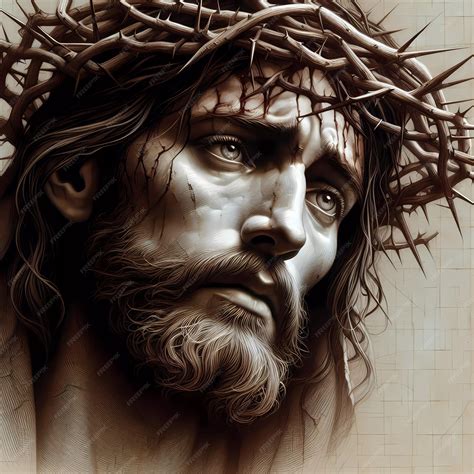
He Wore A Crown Of Thorns | Genesis 3:18 & Matthew 27:29 | Biblical Context Explained
Thorns as a Hedge of Protection
When the book of Job begins, we see that Job is a man who was blameless and upright, serving the Lord. Satan approaches the throne room of God after walking to and fro on the earth “looking for whom he may devour” (1 Peter 5:8). God asks if he has considered Job. Satan shares his personal reasoning about why Job is being faithful to God. He says it is because “you (God) have put a hedge around him and his house and all that he has” (Job 1:10).
Satan is suggesting that if Job’s life wasn’t so blessed and fruitful, then perhaps he would turn his back and curse God. The point here is not that we are to pray for a hedge of protection. No, it just shows that God is indeed sovereign in His protection of us. Satan cannot harm one of God’s children without it passing through the hands of our Almighty God. As Martin Luther once said, “The Devil is God’s devil.” This passage is not a prescription for prayer, but a purpose for praise. Absolutely nothing happens to a child of God apart from God’s loving and purposeful will.
Read also: Understanding anemia spiritually
Thorns as a Protection Against Idolatry
The presence of thorns in other portions of Scripture show the deep love of God’s covenant with His bride. He is a jealous God, who does not want His bride’s affections turned elsewhere. Hosea 2:6-7 states, “I will hedge up her way with thorns, and I will build a wall against her, so that she cannot find her paths. She shall pursue her lovers but not overtake them, and she shall seek them but shall not find them. Then she will say, ‘I will go and return to my first husband, for it was better for me then than now.’”
This passage isn’t at all about spiritual warfare. No, the thorns here are used as a protection against idolatry. When you begin to pursue other lovers, the Lord will make your way painful. Dear friend, what do you spend most of your time thinking about? What do you spend your time pursuing? Probably, for most of you, these things are in and of themselves “good” things. Perhaps it is parenting, a ministry in the church, a relationship with another believer, etc. These are all good things to pursue, but when they become the driving desire of your life to the point that you forget God, or you pursue them for the wrong reasons, then you are guilty of idolatry. Hosea paints this as a picture of spiritual adultery against Him. He refers to it as “whoring” after other things. That is a very stern warning from the Lord in love. He zealously loves His bride. Spiritual adultery, or idolatry happens when we pursue something other than God Himself for the pure satisfaction of our souls.
If you continue to pursue other lovers as a true child of God, you can confidently expect that God will pave your path with a “hedge of thorns.” He will not make it easy for you to pursue other affections apart from Him. There may be disappointments, setbacks, or many other providential things that hinder you in your pursuit. These afflictions are evidence of the Lord’s great love for you. They were evidence of the Lord’s love for Apostle Paul. A thorn was used to prevent Paul from boasting or relying on his own strength. He writes, “So to keep me from becoming conceited because of the surpassing greatness of the revelations, a thorn was given me in the flesh, a messenger of Satan to harass me, to keep me from becoming conceited.” 2 Corinthians 12:7 Paul was still able to serve the Lord. The thorn was placed to lovingly prevent him from becoming prideful and relying on himself. The thorn was placed in love, for Paul’s good and God’s glory.
God wants your full attention, affection, and pursuit. Do not forget the One who rescued you from sin. Do not forget the One who sustains your life this very day. Do not forget the One who is the Giver of all good things. He is the only one worthy of praise. Hold tight to this promise. “Delight yourself in the Lord and He will give you the desires of your heart.” Psalm 37:4 Christian, this isn’t saying, “Love God so that He will give you what you want outside of Himself.” No. It’s saying, “Love Him, and He will give you your greatest delight IN Himself.”
The Crown of Thorns: Symbol of Suffering and Redemption
It had already been a long, dark, and relentless night for Jesus when He was brought before Pontius Pilate, the Roman-appointed governor of Judea. He had been crushed at the “place of the olive press”-Gethsemane, and suffered for the pains and sins of the world and then mocked and smitten at the palace of Caiaphas. It wasn’t until I most recently read these verses that I noticed that it says, “when they had plaited…”, meaning one of the soldiers sat and went through the potentially hazardous effort of weaving thorny branches together into a ring for the sake of this jest. Perhaps he was taken in by the mob mentality of the teasing and wanted to take it one further, but he didn’t realize just how significant what he was doing was.
Read also: Light Blue: Calmness and Healing
First, let’s explore the significance of thorns, where they have previously appeared in scripture and what they represent. Thorns played no part in Adam and Eve’s idyllic Eden existence. As President James E. Faust said in an April 1991 conference address[i]: “I wish that I better understood all of the divine purposes in having to contend with so many painful irritants in this life. Lehi explained one reason: that we will appreciate and savor the goodness and loveliness of the world. Adam was told that the ground is cursed with thorns and thistles for our sakes. Likewise, mortality is “cursed” with the thorns of worldly temptation and the slivers of sin so that we can be tested and prove ourselves. The purposes of our mortal sojourn couldn’t be fulfilled without the thorns, as much as we sometimes wish we could avoid them.
Sometimes the thorn is a sinful behavior that we hope to just cover with a band-aid, but which won’t stop hurting us until it is fully rooted out. Sometimes the thorn is something outside of ourselves and our choices, that causes us pain anyway. In an April 2011 article[ii] published in the then Ensign magazine, Larry Hiller shares an interesting insight about the crown of thorns pressed upon Christ’s head that night. “In the ancient world a green, leafy crown or wreath-usually of fragrant laurel leaves-was often given to the winners of contests and battles,” says Hiller. “Laurel wreaths adorned the images of kings and emperors. Perhaps the cruel crown pressed down on the Savior’s brow was leafy and green in sardonic reference to that ancient honor. It’s just supposition, not a matter of doctrine.
Even more significant to me was Hiller’s comment that, like the thorns on that tree that were at first unnoticeable, “So many of us bear unseen hurts. The hymn teaches that “in the quiet heart is hidden sorrow that the eye can’t see” (“Lord, I Would Follow Thee,” Hymns, no. 220). But the Savior does see. He is well acquainted with private anguish. His whole ministry was lived in anticipation of the Atonement and Resurrection. Yet those He taught and blessed and healed did not know. But let’s return to that soldier, plaiting a crown of thorns and not realizing the symbolism of what he was doing.
Our general perception of this scene is focused on the irony that they dressed him as a king and mocked Him for its ridiculousness, while in reality He who stood before them was the King of Kings. Perhaps this cruel act was a perverse attempt to mimic the placing of an emperor’s laurel upon His head. Thus, there was pressed down upon Him a crown of thorns. He accepted the pain as part of the great gift He had promised to make.
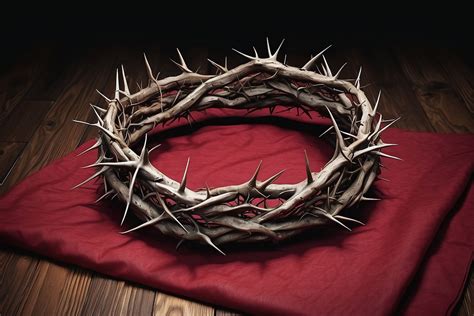
How poignant this was, considering that thorns signified God’s displeasure as He cursed the ground for Adam’s sake that henceforth it would bring forth thorns. Thorns signify the pitfalls and pains of our mortality, but because of what Jesus Christ was willing to do for us, He made it possible for those weaknesses to become our strengths; and for our sorrows to become our glory. He made our thorns a crown.
Read also: Explained: Spiritual Blessings
For centuries leading up to that day, the stinging thorn of sin and the days and years of drowning in spiritual darkness had no hope for a light to reveal a better version of ourselves. For generations, the sharp sting of death had meant an end to one’s dearest associations with no hope of reunion. For all of time until this night, hearts that were broken by life’s unyielding thorns could never be fixed. But Jesus took those thorns and changed their very nature.
Whoever plaited that crown of thorns created the perfect symbol of how the difficulties of this life are the very building blocks of our divine potential. That thorns denote the falsities of concupiscences, is evident from the following passages. Upon the land of My people cometh up thorn and brier (Isa. the land denotes the church; the thorn and brier denote falsities, and the consequent evils. As for your spirit, a fire shall consume you, so the peoples shall be burned into lime, as thorns cut down that are kindled with fire (Isa. There shall be no more a pricking brier to the house of Israel, nor a thorn causing grief (Ezek. a pricking brier denotes falsity of the concupiscences of the love of self; a thorn, falsity of the concupiscences of the love of the world. the thistle and the thorn denote evil and falsity that lay waste the goods and truths of worship. They compassed me about like bees; they go out like a fire of thorns (Ps. a fire of thorns denotes the concupiscence of evil. By their fruits ye shall know them. Do men gather grapes of thorns, or figs of thistles? (Matt. gathering grapes of thorns denotes deriving the goods of faith and of charity from the falsities of concupiscences. Other seed fell among thorns, but the thorns came up, and choked it, that it yielded no fruit. here there is explained what is meant by being sown among thorns, thus what by thorns. Thus said Jehovah to the man of Judah, and to Jerusalem, Break up your fallow ground, and sow not among thorns (Jer. They have sown wheat, and have reaped thorns (Jer. represented the condition of the Divine Word at that time in the Jewish church; namely, that it was stifled by the falsities of concupiscences.
The King of the Jews, as He was then hailed by them, signified truth Divine. By a king in the Word is signified truth from the Divine, (AC 1672, 2015, 2069, 3009, 3670, 4575, 4581, 4966, 5044, 6148); and that the like is signified by the Anointed, which in the Hebrew idiom is the Messiah, and in the Greek the Christ, (AC 3004, 3008, 3009, 3732). By Judah in the supreme sense is meant the Lord as to Divine good, and in the internal sense as to the Word, and thus as to doctrine from the Word (AC 3881); and that when such a crown was upon His head the Lord said Behold the Man, signified, Behold the Divine truth such as it now is in the church. For the Divine truth proceeding from the Lord in heaven is a Man; consequently heaven is the Grand Man, and this by influx and by correspondence, as has been shown at the end of many chapters (AC 1871, 1276, 2996, 2998, 3624-3649, 3741-3750, 7396, 8547, 8988). From this also the Lord's celestial church was called Man (AC 478, 479), this church being that which the Jews represented (AC 6363, 6364, 8770). From this it is evident what was signified by the crown of thorns, and by His being hailed King of the Jews, by behold the Man, and also by the inscription on the cross, Jesus of Nazareth, the King of the Jews (John 19:19, 20); namely, that Divine truth, or the Word, was so regarded and so treated by the Jews, among whom was the church. That all things done to the Lord by the Jews at His crucifixion signified the states of their church with respect to truth Divine, or the Word, (AC 9093). In the beginning was the Word, and the Word was with God, and God was the Word.
The Curse and the Promise
When Adam first disobeyed his Creator, disastrous events for humanity were set in motion. God’s natural favor toward mankind dissipated. The joyous relationship God and His image bearers shared was fractured. As horrific as this was, the effects of Adam’s sin weren’t confined to the human race. Every plant, every animal, and every square inch of the universe was also grievously affected. The home that had been created to perfectly serve and satisfy humans was transformed into a world of danger, frustration, and pain. Christians call this event the fall and its result on humans and the world, the curse.
“The ground is cursed because of you. You will eat from it by means of painful labor all the days of your life. It will produce thorns and thistles for you, and you will eat the plants of the field. You will eat bread by the sweat of your brow until you return to the ground, since you were taken from it. It’s interesting God speaks of thorns and thistles when He’s describing the curse to Adam. God could have chosen to reveal the damaging effects hurricanes and earthquakes would now have on the world. He could have foretold droughts and pandemics. God could also have warned Adam about genocides, torture chambers, human trafficking, and any untold number of evils his sin had put into motion.
God may have simply been showing mercy to Adam by not disclosing the full weight of his sin at one time. Understandably, Adam’s now-frail heart could probably not have handled the heaviness. But what if God had a second agenda for emphasizing the particular pains He did? Luke records a night in which Jesus sweated so intensely it was like drops of blood hitting the ground (Luke 22:44). Matthew also writes, “They twisted together a crown of thorns, put it on his head, and placed a staff in his right hand.
Note what Jesus is forced to wear on His way to the cross: a crown of thorns-a byproduct and symbol of the curse literally placed on the head of the sacrificial Lamb. A crown is normally a sign of authority and honor, but Jesus’ murderers use this one as a cheap and painful prop to mock Him. Take in the weight of this image. Before Jesus hangs on a cross to absorb the wrath of God, the curse literally hangs on His head as thorns and drips from His body as blood-soaked sweat. As the mangled crown of thorns was pushed into Jesus’ skull, I wonder if He reflected on the day He first heard the curse pronouncement given to Adam.
As Jesus stood silent before His mockers, the imbedded points of each thorn would have been sharp reminders of His mission. Thankfully, we now live on the other side of the cross where Jesus still wears a crown, but one that is no longer a symbol of the curse. The next time you wrestle with a result of the curse, whether it’s questioning a natural disaster, an untimely death, or an unexpected diagnosis, remember Jesus bore the weight of sin to ultimately redeem humanity from such suffering. Jesus once wore your curse; you now wear His righteousness.