The candlelight flickers, stretching shadows along the walls. The air is thick with anticipation, heavy with the scent of wax and something else, something older. Around the table, hands clasp tightly, knuckles white. Silence.
Is it the dead, reaching through the veil? For centuries, séances have promised a connection to those lost to the grave. They have comforted the grieving, deceived the desperate, and confounded even the most skeptical minds. But where did they begin? Who first attempted to summon the dead?
Let's delve into the fascinating history of the seance parlor, exploring its origins, evolution, and enduring appeal.
Ancient Roots of Communing with the Dead
Communing with the dead is hardly a new idea. Long before Victorian parlors were filled with ghostly whispers and mysterious rappings, ancient civilizations sought messages from beyond the grave. The Greeks visited necromanteions, underground temples where the dead were said to speak. The Chinese practiced fuji, a form of spirit writing.
The desire to understand the mysteries of life, death and fate goes back to the earliest days of humanity - Israel’s first king, Saul, allegedly used a medium to summon the spirit of the prophet Samuel for advice on an upcoming battle.
Read also: The Final Game: A Comprehensive Explanation
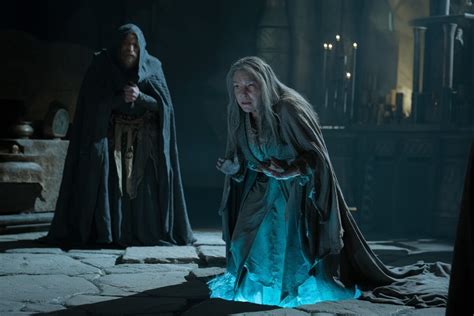
The Witch of Endor by Nikolai Ge
The Rise of Modern Spiritualism
The tale’s genesis is etched in the dust of 1848, within the creaking timbers of a meager farmhouse in Hydesville, New York. The movement’s birth is often traced to Hydesville, New York, in 1848, when two young sisters, Maggie and Kate Fox who claimed they could communicate with a spirit through mysterious knocking sounds.
Here, the sisters (a.k.a. the Fox Sisters), Leah Fox, Margaret “Maggie” Fox, a mere twelve years of age, and her elder, fifteen-year-old Catherine “Kate” Fox, wove a tapestry of the uncanny. They whispered of a disembodied presence, a phantom that responded not with spectral apparitions, but with a chilling symphony of raps-a percussive language echoing from the very bones of their home, the walls, the furniture, vibrating with an unearthly rhythm.
Their mother, a woman surely at her wits’ end or possessed of a desperate, hungry curiosity, summoned the neighbors. Each question hurled into the charged air was met with an answering, insistent knock, a pulse of the unseen that throbbed with undeniable reality.
The girls, just 14 and 11 at the time, said a ghost was answering their questions through a series of coded raps on the walls and floors. Their older sister, Leah, soon turned their talents into a sensation.
Read also: Decoding "Séance Sound"
In the space of a breath, the world convulsed. The press, with ravenous hunger, christened them “the Hydesville Phenomenon,” their names plastered across headlines like some dark, alluring prophecy. The sisters, once ordinary girls from a forgotten corner of New York, were catapulted into a dazzling, terrifying orbit of celebrity. They traversed the nation, their every demonstration a spectacle, a dizzying performance of the spectral. And with them, they carried the seeds of a revolution-Spiritualism-a movement that ignited like wildfire, consuming hearts and minds.
Spiritualism spread like wildfire, promising not just proof of the afterlife, but a direct line to it. What began as a domestic haunting, a whisper of disquiet in the quiet dark, transmuted into a fervent religion of grief.
In an epoch suffocated by the stench of war, the chilling grip of high mortality, and the relentless shadow of epidemic, the séance offered a desperate solace that the staid pronouncements of churches could not. It promised the ultimate communion: direct contact.
No dusty dogma, no distant sermon-only the velvety embrace of a darkened room, the hushed anticipation of a circle of fervent souls, and the searing, undeniable hope that the bonds of love could, against all earthly reason, defy the finality of the grave.
When Queen Victoria sat on the British throne, the world was in a state of scientific and religious upheaval, and the upper classes were already enamored of elaborate rituals around death and grieving. Another American, Maria Hayden, brought the practice to England in 1852, intriguing the likes of Sherlock Holmes author Arthur Conan Doyle and the cream of fashionable society. Women had long been left out of religious positions of power, and many were drawn to the new movement of Spiritualism.
Read also: "Invincible's" Séance Dog Voice Actor
President Lincoln’s wife, Mary Todd Lincoln, conducted séances in the White House after the death of their son Willie.
Anatomy of a Séance
A true séance wasn’t just about lighting a few candles and asking questions into the dark. At the heart of every séance was a medium, the person who claimed to act as a conduit between the living and the dead. There was also the circle of participants who would sit in a ring, often holding hands to create an unbroken link of energy.
And then, on top of this was the various methods a medium might use to summon spirits:
- Table Tipping - The table would rock, shake, or even levitate in response to the spirits.
- Automatic Writing - The medium would let their hand be guided by an unseen force, writing out messages from the beyond.
- Spirit Trumpets - Hollow cones that supposedly amplified the whispered voices of ghosts.
- Rappings - Knocks and taps that responded to yes-or-no questions.
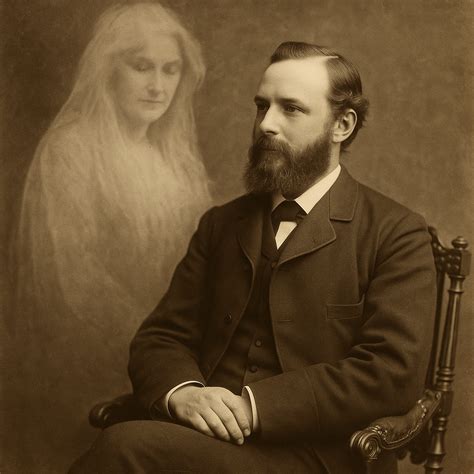
Spirit Photography
By the 1850s and 1860s, the ethereal whispers that once graced hushed private parlors were ripped from their confines and unleashed upon the clamoring expanse of public halls. Here, titans of the spectral realm, figures like the almost impossibly agile Daniel Dunglas Home and the enigmatic Eusapia Palladino, commanded the very air.
Imagine it: tables, heavy and solid, defying gravity, lifting into the suffocating darkness. Phantoms of spectral hands, chillingly real, materializing from nothingness. And voices, oh, the voices! Not mere echoes, but the very essence of the departed, pouring forth in their original timbre, a chilling testament to realms unseen.
Even the steeliest of minds, the ones that dissected the world with scalpel-like precision, found themselves ensnared by the profound mystery. Consider the titan of logic himself, Sir Arthur Ignatius Conan Doyle, the architect of Sherlock Holmes. This master of deduction, this paragon of reason, was utterly captivated, dedicating his very being to the cause of Spiritualism for the rest of his days.
And the crown jewel of the empire, Queen Victoria, a monarch bowed by an ocean of grief, is whispered to have sought solace, to have desperately reached across the veil for her beloved Prince Albert in the flickering candlelight of forbidden stances.
The séance had transcended mere trend; it had become a ravenous beast of fashion, a mandatory ritual at the opulent gatherings of the elite. These were not simple parlors anymore. They were transformed into sacred theaters, draped in the oppressive weight of dark velvet, thick with the cloying perfume of exotic incense, and punctuated by the percussive heartbeat of ghostly raps.
It was a potent elixir, a heady brew where the raw, unadulterated thrill of performance fused seamlessly with the unyielding grip of faith. Skeptics, their arms crossed in defiance, and the yearning believers, their eyes wide with desperate hope, found themselves pressed together in the wavering glow, bound by a shared, charged silence.
The Skeptics and the Charlatans
Of course, not every séance was genuine. Many mediums used tricks like hidden wires, ventriloquism, and secret accomplices to create the illusion of ghostly activity. Yet, for every breathtaking spectacle, for every tear of wonder shed, there lurked a shadowed hand, a cunning sleight of hand that mocked the very miracles it appeared to conjure.
As the 19th century drew to a close, the once-radiant flame of Spiritualism began to flicker, its ethereal glow dimming like a dying ember. Into this encroaching darkness strode Harry Houdini, a titan of illusion, a shadow whispered about in awe and fear, who declared war on the charlatans peddling spectral comfort.
If anyone could see through the tricks of the séance, it was Harry Houdini. Houdini set out to expose deception, debunking fraudulent mediums by crashing séances and revealing their hidden tricks. He was a hunter of secrets, his keen eyes piercing through the velvet drapes and incense-laden air of the séance room, dissecting every whispered illusion, every trembling hand, every cunningly deployed silken thread. He knew the stench of deceit, the cold touch of a hidden mechanism, the phantom chill that was merely a breath exhaled in the gloom.
At first, his fascination was personal. Houdini had lost his beloved mother in 1913, and grief, that ancient conspirator of belief, drove him to séances in search of comfort. But what he found instead were deceptions. His sorrow turned to fury. He vowed to expose those who preyed upon the bereaved, calling mediums “human leeches” who fed on grief.
From New York’s backrooms to Washington’s halls of power, Houdini made his crusade public. In 1926, he even urged Congress to pass legislation banning fortune-telling and mediumship for profit. He brought trunk-loads of props and devices used by fraudulent mediums to his hearings-false arms, phosphorescent masks, hidden bells, and “spirit trumpets.” He exposed trick after trick, revealing how ghosts could be conjured with little more than fishing wire, stagecraft, and manipulation.
As the history of séances continued to evolve, these gatherings became more than personal rituals, they were woven into the political and social fabric of the era.
Séances at the White House?
There’s a popular claim that Jane Pierce invited the Fox Sisters to the White House in 1853 to contact her son Bennie, who had been killed in a horrific train accident just weeks before Franklin Pierce’s inauguration. But while Jane’s overwhelming grief is well-documented, there’s no solid evidence that she ever hosted the Fox Sisters or participated in a séance.
What is known is that she withdrew almost entirely from public life, spending her time writing letters to Bennie as a form of coping. Some have speculated that she may have sought out a medium privately, as Spiritualism was gaining traction in America, but no verifiable records confirm it.
Still, the fact that the legend persists says something about the era-Spiritualism was booming, fueled by grief and the desperate hope that death wasn’t the end.
Grief-stricken after the death of her son Willie in 1862, Mary Todd Lincoln turned to Spiritualism, attending séances in the White House and consulting mediums like Nettie Colburn Maynard and the fraudulent “Lord” Charles Colchester.
Rumors swirled that President Lincoln himself had attended a séance. A sensational April 1863 article in the Boston Saturday Evening Gazette claimed Lincoln hosted a “spiritual soirée” in the Red Room, attended by Secretaries Stanton and Welles, with a medium named Charles E. Shockle. The spirits allegedly pinched Stanton’s ears, tweaked Welles’ beard, and moved objects around the room.
When Lincoln returned after briefly stepping out, the ghost of Henry Knox delivered wartime advice, while Stephen A. Though the Gazette retracted the story two months later, the tale took on a life of its own. Lincoln’s critics painted him as a deluded spirit-rapper, while Spiritualists cited it as proof of his belief.
In reality, Lincoln was a skeptic. While he humored Mary’s séances, his close friends insisted he never took them seriously.
And indeed, his relentless investigations ripped away the veil. They exposed the furtive movements of hidden assistants, the twitch of a retractable rod, the unnatural shimmer of phosphorescent paint glinting in the shadows, the chilling projection of “spirit trumpets” that mimicked the very breath of the departed.
The very mothers of this spectral theater - the Fox Sisters - ultimately unmasked their own performance, their confession a hollow echo: the chilling crack of toe joints beneath a table, the crude percussion of fraud masquerading as divine intervention.
Yet even this shattered truth could not extinguish the burning ember of hope for some, one sister’s desperate recantation leaving a lingering, festering doubt that refused to die.
And therein lay the tragedy of Houdini’s crusade. For every fraud he unmasked, another believer was born. The exposés filled newspapers; the crowds only grew. Grief, it seemed, could not be reasoned with. Faith was not something that could be bound by rope or revealed by a mirror.
Even after Houdini’s death on Halloween night, 1926, his name became entwined with the very thing he despised. His widow, Bess, famously held an annual séance on the anniversary of his passing - a ritual she kept for ten years before conceding defeat. “Ten years is long enough to wait for any man,” she said.
Yet even that farewell felt like a whisper through the veil - a man who spent his life breaking chains, still bound to the mystery he tried to destroy.
Séances were more than mere parlor tricks; they were raw, throbbing reflections of a society grappling with the void. Death held less terror than the crushing, absolute silence that followed, a silence that echoed in the hollows of bereaved hearts.
The Enduring Appeal of Séances
But by the mid-20th century, the movement faded. The rise of scientific skepticism, fraud exposures, and changing religious beliefs thinned their numbers. As Spiritualism exploded in the mid-to-late 19th century, some mediums weren’t content with dimly lit parlors and private gatherings.
Instead, they took their acts to theaters and public halls, drawing packed crowds eager to witness full-body spirit manifestations, ghostly apparitions, and messages from the beyond. The Fox Sisters, whose spirit-rapping performances had launched the Spiritualist movement, were among the first to bring séances to the stage.
Soon, others followed. Mediums like Florence Cook, who claimed to conjure a spirit named “Katie King,” and Eusapia Palladino, known for her dramatic physical phenomena, held séances in large venues, where flickering gaslight and shadowy curtains added to the eerie atmosphere.
For those shattered by loss, the séance offered a desperate, intoxicating mercy - a phantom touch, a whispered echo of what was lost. For the hardened cynic, it was a slick, venomous manipulation, a stage for the charlatan’s art. And for the huddled masses, it was a potent, forbidden temptation, the intoxicating notion that the common man, the everyday soul, could wrench secrets from the Unseen, could bend the ethereal to their will.
By the dawn of the 20th century, the air grew thick with prohibition. Legislators, their brows furrowed with unease, began to weave legal nets around public mediumship. The hallowed halls of churches thundered with pronouncements of heresy, while the cold, sterile laboratories of science dismissed these flickering embers as mere pseudoscience.
What had once been a desperate act of solace morphed into a defiant roar against the encroaching darkness. Yet, even scorched by exposure, bruised by ridicule, the séance refused to die. It did not vanish; it simply shed its skin, migrating into deeper shadows.