Thulite, also known as Pink Zoisite or Rosaline, is a captivating gemstone celebrated for its vibrant pink to reddish-pink color and unique metaphysical properties. It is a relatively rare mineral and a pink variety of Zoisite.
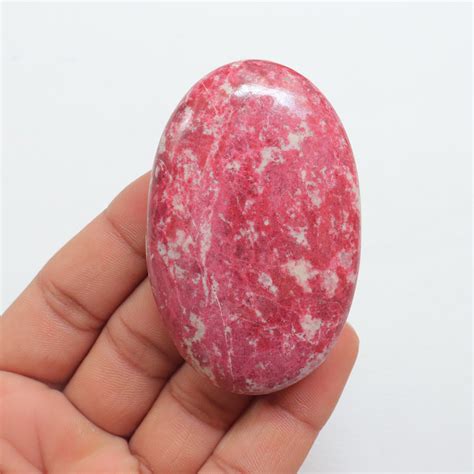
This stone is not only visually appealing but also carries a rich history and is associated with various healing energies. It is the national stone of Norway.
History and Discovery
Thulite was first documented in 1820 in the small village of Sauland, Norway. It was found in a gravel mine located between two small farms. Thulite was named after Thule, a legendary place in the far north of Europe, beyond the borders of the known world. The name "Thulite" is derived from the word "Thule," which was a term used by ancient Greek and Roman geographers to describe a distant and mysterious northern land.
There are no known legends directly associated with this stone, and its healing properties are still being explored. It’s a shame because not only is it a beautiful crystal but it is quite powerful as well. Thulite has a rich history as well.
Geological Properties
Thulite is a calcium aluminum silicate mineral. It is a variety of zoisite minerals classified as silicate minerals. Its pink color comes from manganese. The deeper the color means the higher the concentrated Manganese volume is, which drastically increases the value.
Read also: Understanding anemia spiritually
Thulite typically forms in metamorphic environments. It is often found in regions where low- to medium-grade metamorphism has occurred, particularly in calcium-rich rocks like limestone or marble. It is typically found in association with other metamorphic minerals, such as garnet, calcite, epidote, and quartz. It can occur in veins, fractures, or as disseminated grains within the host rock.
When it comes to transparency, thulite is generally opaque. However, it can have crystal-like qualities, giving it a lovely shine or shimmer. It also polishes nicely since the stone has a fairly forgiving hardness score - usually near a 6 or 6.5 on the Mohs scale.
Where is Thulite Found?
Thulite is found in Namibia, Norway, South Africa, and the United States. It is also found in the United States, Norway, Austrailia, Austria, and several other countries all over the globe. Along with originally being discovered in Norway, thulite is still found in that country today.
Thulite is mined in its primary deposit by artisanal and small-scale mines. Thulite is fully natural, enhanced only through cutting and polishing.
Thulite Meaning and Healing Properties
Thulite is a fabulous stone for cultivating self-love and self-care. It reminds us that self-care is much more than just relaxing or indulging. True self-care includes every act of kindness and wisdom that improve our life. Once you begin to connect with your Thulite and its soothing vibrations, you’ll find it makes you feel happier, more at ease, optimistic, and loving.
Read also: Light Blue: Calmness and Healing
This crystal is also known to connect with the Universal Life Force and both stimulate and regenerate the body. Thulite also encourages romance and intimacy. It is a great talisman for attracting and nurturing a life partnership based on love and respect.
Thulite is known as the “Stone of Expression”. It resonates with the Heart Chakra and is one of the most powerful crystals to work with for learning to express love. It helps you gain insight into love and how to communicate your feelings with grace.
Spiritual Healing Properties
Thulite is a joyful stone that reminds us that all the pleasures of life are proof that the Divine loves us and wants us to be happy! It encourages us to be more spontaneous, creative, and open to adventure. It opens the heart to unconditional love and makes us more generous in giving love and more gracious when receiving love.
It reminds us that we ARE our Highest Self, we just forget to act like it sometimes, and can become addicted to staying small. Thulite whispers sweetly that all we need to do is step back into the Light and just BE. It gives us courage and strength so we can follow our heart and find our bliss.
Emotional Healing Properties
Thulite encourages us to embrace our sensual and romantic sides. When we feel positive emotions, it encourages us to live them to the fullest and enjoy every second. However, when faced with negative emotions, Thulite helps us to resist the urge to become overly dramatic or bogged down.
Read also: Explained: Spiritual Blessings
It helps us to take life in stride, with a smile on our face and a kind word on our lips. Thulite gently removes negative vibrations from our emotional body and encourages us to see the silver lining in dark, stormy clouds. It strengthens our sense of empathy and our ability to relate to other people.
It also helps us to see our own beauty, both inner and outer, and to be self-confident without becoming arrogant or vain.
Mental Healing Properties
Thulite sparks our curiosity for the world around us. It encourages us to ask more questions, to do our own research, to experiment, and to invent. Thulite helps us to focus on solving problems, rather than bemoaning their existence.
Lending us its happy energy, it reminds us that every problem has a solution and that given proper attention nothing is impossible. It also aids in self-reflection and the quest for self-knowledge. It helps us to examine our own dualities and to view ourselves both logically and lovingly.
When faced with an aspect of ourselves that we don’t like, Thulite helps us figure out how to change and become the kind of person that we can admire.
Physical Healing Properties
Thulite is recommended for when we are faced with a healthcare challenge that triggers us emotionally. If we feel weak or exhausted, it gives us strength and courage to go on. If we are highly-stressed, Thulite keeps us focused on self-care and problem-solving.
It is especially good for helping us deal with fertility issues and anything related to the sexual and reproductive systems. It helps us to ask questions, be open to a variety of healthcare options and to stay hopeful throughout it all. Thulite is also an excellent talisman for the keeping the physical heart healthy and the digestive track working smoothly.
Regarding thulite healing properties, some connect the stone to overcoming gastric, reproductive, or circulation issues.
How to Use Thulite
Thulite is incredibly simple to use. It can be used in many applications such as grids or during ceremonies. However, the majority of healing from Thulite comes from simply being near it. For this reason, things like bracelets and necklaces are recommended.
Keeping some tumbled stones in your pocket, purse, or on your desk while you work also works well. It doesn’t matter what shape or type you get. Just get some Thulite into your life!
Thulite is particularly beneficial for those who are pursuing creative projects or endeavors that require a deep connection to their inner fire. It helps to dissolve creative blocks, allowing for the free flow of ideas and inspiration. Thulite ignites passion in all areas of life.
Thulite is truly a stone of love, passion, and the heart. It connects deeply with the Heart Chakra and also resonates with the Third Eye Chakra. This brings a more loving and positive outlook on life to everyone who uses it.
Thulite and the Chakras
Chakras are energy centers within the body, and each chakra is associated with specific colors and gemstones that can help balance and align them. Thulite, with its pink color, is closely linked to the heart chakra (Anahata).
Thulite is primarily associated with the heart chakra. It is believed to help open and balance this chakra, fostering love, compassion, and emotional healing. It is believed to open and activate the heart chakra, allowing for the flow of love, compassion, and emotional healing.
By focusing on the heart chakra, Thulite helps individuals release emotional wounds, promote forgiveness, and nurture self-acceptance.
Thulite Varieties
Thulite, with its enchanting pink hues and metaphysical allure, is a gemstone that comes in several intriguing varieties. While all Thulite shares its characteristic pink or reddish-pink coloration, variations in its composition and appearance can lead to distinct types of Thulite.
- Norwegian Thulite: As the most well-known and prized variety, Norwegian Thulite hails from the Telemark region of Norway, where it was first discovered.
- Pink Zoisite: While Pink Zoisite is sometimes used interchangeably with Thulite, it specifically refers to Thulite with a pink or rose-red coloration without significant black or white streaks.
Care and Maintenance
Thulite, with its delicate pink hues and metaphysical properties, requires proper cleansing to maintain its energy and beauty. Cleansing helps remove any negative energies and restore its vibrancy.
Here are some tips for caring for your Thulite:
- Thulite is generally safe to clean with lukewarm water and a mild soap.
- Gently wash the Thulite beads or jewelry under running water, using a soft brush if necessary.
- You can also cleanse Thulite by soaking it in a water bowl with a pinch of sea salt.
- Another effective method is smudging with sage or incense smoke.
- Place your Thulite near or on a piece of clear quartz or selenite, both of which are excellent for cleansing other stones.
Proper care and maintenance of your Thulite jewelry or beads will ensure their longevity and continued beauty.
Store your Thulite jewelry or beads separately from other jewelry to prevent scratches. Regularly clean your Thulite jewelry with a soft, lint-free cloth to remove dirt, oils, and sweat.
To recharge the energy of your Thulite, place it under the light of a full moon overnight. Avoid prolonged exposure to heat (or extreme heat), direct sunlight and contact with abrasive surfaces or chemicals.
Remove before contact sports, weight lifting or activities where it may come into contact with force.
Thulite vs. Clinothulite
There are a lot of so-called “Thulite” specimens coming out of North Carolina. Although this mineral may look similar, it is actually a crystal called Clinothulite. This mineral is a sister mineral of Clinozoisite that also has Manganese inclusions.
Identifying Genuine Thulite
As with any precious gemstone, ensuring you're acquiring genuine Thulite is essential.
- Authentic Thulite displays a unique pink to reddish-pink color, often with contrasting white or black streaks.
- Thulite has a hardness of 6.5 on the Mohs scale.
- Thulite is typically translucent to opaque.
- Norwegian Thulite is the most renowned variety.
Thulite in Jewelry and Decoration
Thulite is used in various forms of jewelry and ornamental carvings. Thulite's mesmerizing pink hues make it a popular choice for jewelry. It is commonly used as a decorative stone in jewelry and carvings. Its vibrant pink color and unique patterns make it a popular choice for gemstone enthusiasts.
Since thulite is opaque, cabochons are more common in thulite jewelry than faceted stones, often featured in pendants and rings. Thulite beads are also quite popular, making their way into thulite earrings, strand necklaces, and bracelets. Sometimes, you may also see tumbled thulite, especially in pendants, drop earrings, and pendulums.
As with many stones, the thulite metaphysical properties can vary depending on the belief system involved. It’s also frequently connected with emotional healing through confronting past negative experiences, ensuring that opportunities for growth and progress are available.
In those cases, thulite is viewed as a gem of self-healing, giving comfort and stability to a challenging journey.
Thulite and Zodiac Signs
Zodiac signs play a significant role in determining which gemstones resonate best with an individual.
- Thulite is considered highly compatible with Taurus individuals, as it aligns with their traits of patience, sensuality, and emotional depth.
- Thulite resonates with Pisces's compassionate and empathetic nature.
Thulite Feng Shui
Feng Shui Placement: Love & Relationships place or any room you wish to attract more love and pleasure.
Here is a table summarizing the key properties and uses of Thulite:
| Property | Description |
|---|---|
| Color | Pink to reddish-pink |
| Chakra Association | Heart Chakra |
| Healing Properties | Emotional healing, self-love, compassion |
| Uses | Jewelry, meditation, decorative purposes |
| Zodiac Compatibility | Taurus, Pisces |