Astrology, the belief in a relation between celestial observations and terrestrial events, has captivated humanity for millennia. From ancient civilizations to modern-day enthusiasts, the stars have been consulted for guidance, understanding, and prediction. This article delves into the fascinating history of astrology, tracing its origins, development, and transformation across different societies.
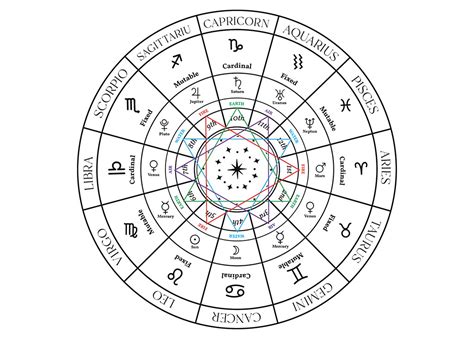
Zodiac Wheel
Ancient Roots: Mesopotamia and Egypt
The earliest roots of astrology can be traced back to Mesopotamia, where the Babylonians developed the first organized system of astrology during the 2nd millennium BC. They systematically applied myths to constellations and astrology and described the twelve signs of the zodiac. Texts from this time also refer to an oral tradition. Evil celestial omens attached to any particular planet were therefore seen as indications of dissatisfaction or disturbance of the god that planet represented.
In ancient Egypt, astrology played a crucial role in religious and political life. The alignment of the pyramids with specific celestial bodies showcases the Egyptians' early interest in astrological phenomena, viewing them as symbols of divine intervention and guidance. In 525 BC Egypt was conquered by the Persians so there is likely to have been some Mesopotamian influence on Egyptian astrology. After the occupation by Alexander the Great in 332 BC, Egypt came under Hellenistic rule and influence. It was in Ptolemaic Alexandria that Babylonian astrology was mixed with the Egyptian tradition of Decanic astrology to create Horoscopic astrology.
Greco-Roman Period: Shaping Modern Astrology
Every time ancient Greece is mentioned, most people automatically think of democracy, the Olympic Games, mythology, philosophy, technology and various sciences such as mathematics and astronomy. It seems that very few are aware that the ancient Greeks were also superstitious, despite their logical thinking. The Greeks borrowed some of their myths from the Babylonians and came up with their own.
Read also: Learn about Rick Levine and his contributions to astrology.
During the conquest of Asia by Alexander the Great, the Greeks were eventually introduced to the unknown cultures and cosmological schemes of Syria, Babylon, Persia and central Asia. Greek overtook cuneiform script as the international language of intellectual communication and part of this process was the transmission of astrology from cuneiform to Greek. Around 280 BC, Berossus, a priest of Bel from Babylon, traveled to the Greek island of Kos where he ended up teaching astrology and Babylonian culture to the local populations.
Horoscopic astrology first appeared in Hellenistic Egypt. By the first century BC two varieties of astrology were in existence: one that required the reading of horoscopes in order to learn accurate details about the past, present and future, while the other focused to the soul's ascent to the stars and the search for human meaning in the sky.
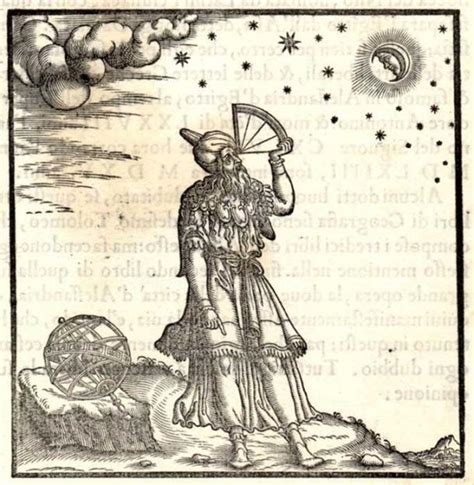
Depiction of Ptolemy employing a quadrant, from Giordano Ziletti's Principles of astrology and geography according to Ptolemy, 1564.
Ptolemy's Contributions
A very significant role in the development of Western horoscopic astrology was played by Greek mathematician, astrologer and astronomer Ptolemy, whose work Tetrabiblos laid the foundations of the Western astrological tradition. Under Ptolemy the planets, Houses, and signs of the zodiac were first explained in great detail while their function set down hasn’t changed much compared to the present day. Moreover, Ptolemy decisively explained the theoretical basis of the western zodiac as being a tropical coordinate system, by which the zodiac is aligned to the equinoxes and solstices, rather than the visible constellations that bear the same names as the zodiac signs.
Significant Astrologers
Two very significant astrologers that with their works contributed in the evolution of Western astrology are undoubtedly Antiochus of Athens and Dorotheus of Sidon. Dorotheus was a first century AD Greek astrologer who lived and worked in Alexandria just like Ptolemy. He’s remembered for writing a didactic poem on horoscopic astrology known as the Pentateuch. He made one of the earliest references to astrological reception, and discussed the twelves houses of the astrological chart, heliacal risings and settings, and the Lots.
Read also: The Secrets of Astrology and Numerology
Medieval and Renaissance Periods: Islamic and European Influences
Astrology was taken up enthusiastically by Islamic scholars following the collapse of Alexandria to the Arabs in the 7th century, and the founding of the Abbasid empire in the 8th century. The second Abbasid caliph, Al Mansur (754-775) founded the city of Baghdad to act as a centre of learning, and included in its design a library-translation centre known as Bayt al-Hikma 'Storehouse of Wisdom', which continued to receive development from his heirs and was to provide a major impetus for Arabic translations of Hellenistic astrological texts. In the 9th century, Persian astrologer Albumasar was thought to be one of the greatest astrologer at that time. The Arabs greatly increased the knowledge of astronomy, and many of the star names that are commonly known today retain the legacy of their language.
By the 13th century astrology had become a part of everyday medical practice in Europe. In medieval Europe, a university education was divided into seven distinct areas, each represented by a particular planet and known as the seven liberal arts. During the Renaissance, court astrologers would complement their use of horoscopes with astronomical observations and discoveries. At the end of the Renaissance the confidence placed in astrology diminished, with the breakdown of Aristotelian Physics and rejection of the distinction between the celestial and sublunar realms, which had historically acted as the foundation of astrological theory.
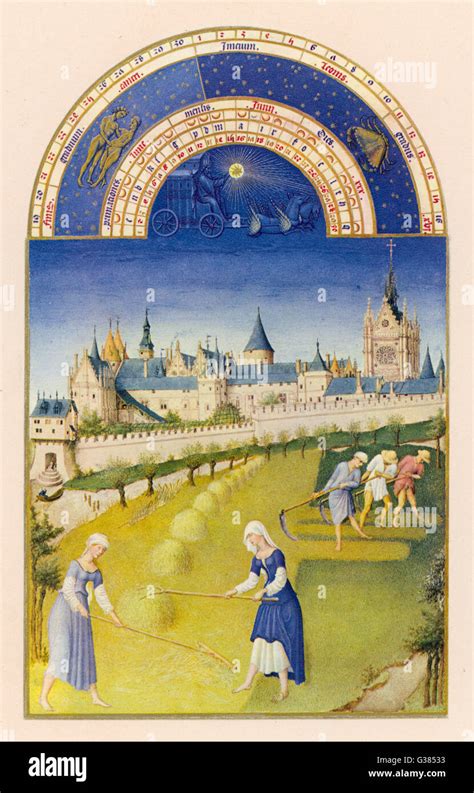
An image related to astrology from the Très Riches Heures du Duc de Berry.
Modern Astrology: Revival and Contemporary Trends
However, astrology and horoscopes’ prevalence faded with the onset of the Scientific Revolution and subsequent Age of Enlightenment. Personal horoscopes didn’t make a resurgence in modern history until the early 20th century with the advent of the horoscope newspaper column. Today, horoscopes are more popular than ever, especially with Gen Z and Millenials. Beyond its astronomical origins, astrology, according to experts, can foster a sense of community and bring social cohesion.
In the 19th century, astrology saw a resurgence in popularity. In the 20th century, astrology underwent further transformations with the emergence of psychological astrology. The advent of the internet and digital technologies revolutionised astrology. Modern astrologers often emphasise psychological and humanistic perspectives, exploring the symbolic and archetypal dimensions of astrological symbols.
Read also: Leo Celebrities and Their Charts
Is Astrology Pseudoscience?
Vedic Astrology: An Indian Perspective
Vedic astrology, also known as Jyotish, originated in India thousands of years ago. The history of Vedic astrology is rich and multifaceted, reflecting the cultural, religious, and scientific developments of the Indian subcontinent over the centuries. The roots of Vedic astrology can be traced back to the Vedas, the oldest and most revered texts of ancient India. The early development of Vedic astrology is marked by the compilation of several texts that laid the foundation for astrological principles and practices.
During the Hellenistic period, there was an exchange of knowledge between the Indian subcontinent and the Greek and Persian civilizations. The mediaeval period saw the flourishing of Vedic astrology under the patronage of various Indian dynasties. With the advent of colonial rule in India, Vedic astrology faced challenges from Western scientific rationalism. The 20th century witnessed a revival of interest in Vedic astrology, fueled by the efforts of scholars and practitioners to preserve and promote traditional knowledge. In recent decades, Vedic astrology has experienced a global resurgence, gaining popularity beyond the Indian subcontinent.
Astrology: Science or Pseudoscience?
Despite its rich history and enduring popularity, astrology faces criticism from skeptics who dismiss it as pseudoscience. While some view astrology as entertainment, others see it as a powerful tool for understanding personality, relationships, and life cycles. It was commonly accepted in political and cultural circles, and some of its concepts were used in other traditional studies, such as alchemy, meteorology and medicine. By the end of the 17th century, emerging scientific concepts in astronomy, such as heliocentrism, undermined the theoretical basis of astrology, which subsequently lost its academic standing and became regarded as a pseudoscience.
The debate over astrology's validity continues to this day, with proponents arguing for its symbolic and psychological value, while critics demand empirical evidence to support its claims.
The Enduring Legacy of Astrology
From its ancient origins to its modern-day resurgence, astrology has shaped human history for thousands of years. Whether viewed as a science, a pseudoscience, or a symbolic language, astrology continues to fascinate and inspire people around the world. Its enduring legacy lies in its ability to provide a framework for understanding ourselves, our relationships, and our place in the cosmos.
Timeline of Key Events in Astrology's History
| Date | Event |
|---|---|
| 2nd millennium BC | Babylonians develop the first organized system of astrology. |
| 3rd century BC | Hellenistic period: Babylonian and Egyptian traditions blend with Greek thought. |
| 2nd century AD | Claudius Ptolemy writes Tetrabiblos, a cornerstone of Western astrology. |
| 8th-14th centuries | Islamic Golden Age: Persian and Arab scholars preserve and expand astrological knowledge. |
| Middle Ages | Astrology gains prominence in mediaeval Europe, intertwined with religious and political matters. |
| 19th century | Revival of interest in astrology fueled by spiritual and occult movements. |
| 20th century | Emergence of psychological astrology, shifting focus to self-reflection and personal growth. |