Photographed by Elizabeth Weinberg. The commercials for the Psychic Readers Network were ubiquitous, and Miss Cleo was practically a household name, urging viewers with her fake Jamaican accent to "Call me now!" But what was it really like to be on the other side of those calls?
This is a look back at the phenomenon of phone psychics, focusing on the Psychic Readers Network, Miss Cleo, and the experiences of someone who briefly worked as a telephone psychic. It explores the themes of loneliness, the allure of easy money, and the ethical questions raised by this industry.
The Allure of the Phone Psychic Job
What compels someone to become a phone psychic? In my case, it had nothing to do with vocation and everything to do with convenience. I had recently dropped out of a rigorous program at a prominent engineering school because of a stress-induced breakdown. Really, all I wanted to do was write stories and paint pictures, but these desires did not align with the internship I was offered at a Merck pharmaceutical plant. I declined the job offer and withdrew from school two years from finishing the program.
At 20, with no degree to my name and a strong desire to not leave my apartment, working from home seemed ideal. But this was years before telecommuting was commonplace, so as I browsed the limited listings online, there was only a single option that would work - a single entry-level job that did not look like a scam. I was immediately intrigued when I came across a listing for telephone psychic. I was articulate. I could tell stories. I had won oratory awards in high school. Friends often asked me for advice. Tarot cards seemed interesting. Sure, I could talk to some people on the phone, I thought. How hard could it be?
It was one of the few jobs that seemed legitimate (I use that word loosely). It didn’t require me to pay for my own training, like the “medical transcription” gigs I read about. And with Miss Cleo, I’d make my state’s minimum wage of $7.25 an hour.
Read also: Call of Cthulhu: A Must-Play for Horror Fans?
Training and the Reality of the Calls
Communications with my manager took place over AOL chat. I had one phone interview prior to being hired. The manager asked me if I had psychic abilities. I said something like, “Well, as a woman, I believe I have great intuition." Training consisted of learning about Tarot cards and how to weave the meanings of the cards into stories.
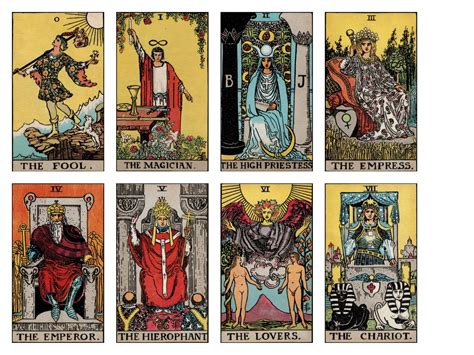
I bought two Tarot decks: the classic Rider-Waite deck and another which had the meanings and interpretations printed right on the cards (which turned out to be extremely helpful while on the phone). I learned the five-card spread, the Celtic cross, and the ellipse. I found templates online for various financial and relationship spreads. I learned about the Major and Minor Arcana. I memorized things to say about the Fool, the King of Cups, the Magician, the Tower, and so on. With the cards, and a manual of Tarot spreads, I trained myself for about two weeks before I took my first call. I did not have any one-on-one training or any practice calls, but I was warned that any caller could be a quality-control test - a fake caller from within the company could evaluate my performance at any time.
Before actually becoming a phone psychic, I imagined I would need to talk a lot during these calls. However, it turned out that most people who called were lonely and wanted someone to talk to. My hours were up to me. I could work at any time, however, there was more traffic on the lines in the evening and late at night. Each day started the same way: I would call a number from my home phone, listen to a recording of Miss Cleo asking if I would like to send in a video tape of myself doing a reading (they were looking for new faces for the television commercials), and enter my code. Once I had joined the network, I would hang up the phone and wait for it to ring. Most nights, it was only a few minutes until I got my first call and I would be busy answering the phone for a few hours until I got tired. I tried working during the day once - and my phone simply did not ring. I stuck with working evenings.
I was expected to keep a 24-minute call-average minimum. At first, this sounded intimidating, but it was not difficult at all. I could easily keep someone on the phone for 45 minutes or an hour. I can’t remember if the callers were paying $3.95 a minute or $4.95 a minute, but even at the low end, the price adds up quickly.
Before I took the job, I assumed only idiots must call such a phone psychic. I will not feel guilty about their wasted money, I thought. However, once I started working, my perspective changed. Almost all of the callers were incredibly lonely and the problems they talked about were serious: dire job, family, financial, and marital problems. Some of these people clearly called once or twice a week - if not more. I couldn’t help but do the math and think about the huge amount of money they were wasting.
Read also: Descent into Madness
The Breaking Point
The last call I ever took was from an elderly woman. She was one more caller with financial problems, but this did not begin as a routine call. First, she asked to speak with Miss Cleo. I gave the standard reply: Miss Cleo was not currently working the lines, but I’d be happy to help her. She insisted she needed to speak with Miss Cleo, specifically. Apparently, she had spoken with her before. I wondered how many phone psychics donned a fake Jamaican accent. The Miss Cleo. Very important! The woman was following the instructions to find out the very important information she would need in her life. She kept saying, “Miss Cleo told me to call. Today. Her life was in shambles, mostly financial. I felt sick about it. Still, I let her talk about her problems for well over 24 minutes. When I hung up with this woman, I went to my computer. I opened AOL chat and looked for my manager’s handle. I was done. I lasted three weeks.
This job experience made me more cynical about the world and more skeptical of corporations. That same year, many states and the Federal Trade Commission (FTC) brought lawsuits against the Psychic Readers Network.
The FTC Lawsuit and Miss Cleo's Legacy
In District Court in Ft. Lauderdale, Fla., the Federal Trade Commission accused two telemarketing firms of using deceptive tactics to lure callers to the hotline, which actually provides psychic readings at a cost of $4.99 a minute.
According to Beales, the three minutes typically run out while the callers are on hold or being asked routine questions, such as name and address. Hotline operators, he said, do “whatever it takes to keep them on the line and keep the meter running”--including lying about when the free time has ended. According to the FTC lawsuit, psychic readers “who consistently fail to keep consumers on the line past the allotted free time are likely to be terminated.”
In many cases, Beales said, customers are called with the news that “Miss Cleo has had a dream about you”--and are urged to call her right back on the 900 number. “Some consumers have gotten 10 calls a day, and when consumers say, ‘Please don’t call me anymore,’ sometimes the marketer has been abusive,” Beales said.
Read also: Detailed Weapon Analysis
Cautioning that the numbers are rough estimates, the FTC said that as many as 6 million people have called the hotline through the years, running up average phone charges of $60 apiece--or $360 million total.
On July 26, 2016, Miss Cleo once again made headlines when she passed away after a battle with cancer at 53. Seeing the headlines made me recall how adrift I had once been to have been a part of her tribe. It turns out, I wasn’t so different from the men and women who were seeking guidance on those late-night calls.
Miss Cleo, born Youree Dell Harris in Los Angeles, in 1962, was an American television personality who appropriated a Jamaican accent to play a voodoo priestess character on the pay-per-minute call service Psychic Readers Network.
Miss Cleo was a character, sure, but did Youree Dell Harris have a psychic gift? We will never truly know. Some swore by her talent. However, we do know that Harris was originally a playwright and performer who went by the name Ree Perris in the late ‘90s. Harris maintained that she had a gift in her “Hotline” interview: “I absolutely commune and chat with those on the other side - some call them dead, some call them spirits - but absolutely with the energy and vibrations with those that crossed over.
Official Trailer | Miss Cleo: Her Rise and Fall | Lifetime
There were other signs that Harris might have been a bit of a fraud, regardless of whether she had a talent for tarot or not. Former colleagues said she was under contract at the theatre earlier in her career and was paid a set amount that she was supposed to disperse among those involved in the production. She allegedly never paid up and then disappeared. Harris kept her background equally as mysterious as her character Miss Cleo. She had a number of aliases. Besides Miss Cleo, Harris went by Cleomili Harris and Youree Perris. Some interviewees said she went by other mystical identities, too, leading them to believe she could have been battling mental illness.
In a 2012 interview Harris said that she took her psychic ability seriously: her sister encouraged her to work for the Psychic Readers Network but Harris said it was silly and she had a “reputation to maintain.” Ultimately, she decided to read her tarot cards on camera and the Network was inundated with callers. She catapulted to fame from there, doing live readings with callers who were stunned by how accurate she was. Some interviewees believe that she wanted to help people. However, others who worked for the network, which shut down in the ‘00s after a Federal Trade Commission investigation, admitted they weren’t real psychics themselves - they just needed work.
Several former psychics said: “[the Network] preyed on the souls that needed to be seen.” It was Harris’ energy and charisma that made her so convincing.
“She was quick on the draw,” said Bennett Madison, another former PRN phone psychic. “She would take these sort of ordinary questions and launch into sort of very funny, very unexpected sort of spiels about whatever the topic at hand was. I don’t really believe in, like, psychics or magic. “It was the best Insta[gram] Live you could’ve had in 1997. It was so good, so good,” Raven-Symoné said.
Remembering this time feels as though I’m listening to one of the callers, to a message from a stranger who is also me.
A recent HBO documentary, Call Me Miss Cleo, traces the celebrity psychic’s fall from grace. In 2002, the Network lost several lawsuits for fraud and paid millions to the callers they’d swindled. Miss Cleo herself was never charged with a crime.
Call Me Miss Cleo situates her as a product of her time, spawned by the infomercial/1-900 culture of the ‘80s and ‘90s, her services a bridge to the internet era with its anonymous connection and public divulgence. Even so, we always use the available technology to mediate our identities and desires.
Perhaps overhearing JJ’s other romance was cosmic retribution for the lies I’d told for Miss Cleo, for what I’d listened to and taken from those calls.