Moths, often seen as the nocturnal counterparts to butterflies, hold a rich tapestry of symbolism. Similar to butterflies, the moth can represent change and transformation. Personally, I see moths as a symbol of hope. I view them as a reminder to always look for the light in the darkness. I love to include them in my artwork because I know that no matter how hard and dark things get there is always a way out, you just have to keep pursuing the light.
In recent years, my purpose has been to share my testimony and the legacy of Saint Colman with others who may be seeking a sign of faith. As my wife and I departed from Boston’s Logan Airport heading to Shannon, Ireland, our hearts and minds were filled with anticipation. An hour or so into our flight I began to converse with the gentleman seated next to me on the plane. We asked each other about the purpose of our trips, which were quite different. I explained it was our anniversary and how we would be researching the life of Saint Colman. The conversation led to me telling him of our baptisms and the sighting I had of the moth with the crucifix pattern on its wings the day my wife and I were baptized in 2002. He was amazed by the story and I was able to give him a brochure and one of my Blessing Moth medallions that I helped fasten to a ring on his backpack.
Our first two nights in Ireland would be at the Naomh Colman B&B which is located across from the Kilmacduagh Monastery in Gort. That would become our home base as we attempted to see all of the Saint Colman sites in that area. When we arrived, I explained the reason for our Saint Colman pilgrimage to the owner of the B&B, Josephine. Through our conversations that afternoon, I shared more of my story and was able to provide her with a Blessing Moth medallion and one of my brochures. With the Kilmacduagh Monastery being directly across the street from the B&B, we elected to go there first to spend time exploring and taking photos. Josephine provided us with a visitor’s guide that included a map of each building and landmark within the monastic site.
Before we left for the afternoon, Josephine told us to be sure to visit Coole Park and the nature reserve on the north side of Gort. June 2015 was the 150th anniversary of the birth of poet W. B. Yeats and the nature reserve was celebrating his birth and history with Lady Gregory who lived on the grounds of Coole Park in the late 19th and early 20th century. Many of Yeats’ poems were written during the 1920s at his summer home Thoor Ballylee and also at Coole Park. As my wife and I headed through Gort that afternoon, we passed the sign for Coole Park and decided it would be a good time to visit.
We awakened on our second day in Ireland with the sun lighting up the hillside of the Burren across the valley. I immediately got dressed and grabbed my camera, walking to the monastery to get some quality photos in the morning sunlight. At breakfast that morning, we told Josephine we wanted to next see the baptism well of Saint Colman and locate Saint Colman’s cave in the Burren. Josephine recommended we stop and ask for directions when we got closer to our destination and people would be happy to assist us. I typically considered it a last resort to ask directions and I thought there must be some way to locate these places on a map. We made way back through the center of Gort in the general direction Josephine described. Nothing stood out to us on our first pass up the main road so we doubled back to see if we might have missed it. Seeing two gentlemen standing and talking at the corner of a side road, I decided it was time to ask for directions. I had no idea how my inquiry would be received by the two men, but trusted the advice given by Josephine. The men smiled as I approached them and as soon as I told them I was looking for Saint Colman’s Baptism Well they pointed back in the direction I came from.
Read also: The Black Moth: Interpretations
After driving a short distance back toward Gort, we came across the white farmhouse at the crest of a small hill that had a storage trailer parked next to it. Believing it was the correct location, I turned through the stone walled entrance and followed the gravel driveway to the farmhouse. The owner of the property soon came out and greeted us. He could tell by the rental car we were driving that we were tourists. When I asked about Saint Colman’s well he said, “This is the place.” He then gave us directions to follow the dirt road behind the house to a lower field and said, “It will be on your right, you can’t miss it.” I then mentioned that we also wanted to locate Saint Colman’s cave in the Burren and he asked, “Have you been to the museum? My cousin, Sr. de Lourdes Fahy, is the local historian and she oversees the museum.” I asked where the museum was and he said, “A short distance down the road toward Gort. There is a sign at the triangle and turn right there.
As we approached the lower field we could see the dome of the well encasement rising above a stone walled compound. It was a larger and more elaborate structure than I envisioned and I could tell the people responsible for it took great pride in what it represented. Inside the structure were steps leading into the holy well and above the well was a statue and shrine dedicated to Saint Colman. I said a prayer and using a small bottle I brought with me, filled it with water from the holy well which is known for its special healing powers. We returned to our car and proceeded on the main road back toward Gort. A short distance later we came to the right turn at the triangle we were told about and there ahead of us was the sign for the Kiltartan Gregory Museum. Entering the museum, we were greeted by a pleasant woman named Elizabeth who volunteered there. We told her we had just come from Saint Colman’s baptism well and the owner of the property recommended we stop at the museum to speak with his cousin, Sr. de Lourdes. Elizabeth told us, “Sr. de Lourdes is not here at the moment as she was in town giving a talk on the history of W.
I then began to explain the purpose of our Saint Colman pilgrimage and told her of the Haploa Clymene moth I discovered the day my wife and I were baptized in Vermont in 2002 and the connection I later made with Saint Colman and his miraculous baptism. Elizabeth then escorted us into a small backroom where a notebook lay on a side table. The collection was the digitization of the oral history of Irish folklore, much of which was documented by the schoolchildren of Ireland in 1938 - 1939. The project for the children was to interview their parents, grandparents and elder neighbors and write down the folklore of Ireland, much of which had been lost. Thumbing through the notebook, Elizabeth came to several pages about Saint Colman. As we returned to the main room of the museum, we examined the many items on display from the Kiltartan history hoping to find more on Saint Colman. A short time later, Elizabeth was able to rejoin us and I described how the wing pattern of the moth I discovered was a close match to the photo of a crucifix statue that sits on the side altar of a church ruin near Corker. We explained that we wanted to visit the church ruin, but Elizabeth wasn’t familiar with the location. We then inquired about locating the cave where Saint Colman spent his hermitage in the Burren.
Elizabeth had a general idea, but thought our best bet would be to check with the owner of the village store in Kinvara to see if he had a map of the area that we could purchase. We were given directions to the store and before we left the museum I presented Elizabeth one of my Blessing Moth medallions and a brochure. Carefully following our new directions, we made our way into Kinvara where we came upon the store Elizabeth told us about. Once inside, we asked for the store owner and he came out of his office to greet us. I explained our desire to visit Saint Colman’s cave and we were escorted to a shelf that contained various pieces of tourist literature. Leaving the store, we headed south out of town through a residential area that led to farm land where we came to a four-way intersection. We could see the highest ridges of the Burren in front of us to our right and matched it to our location to the map. Crossing the intersection, we made our way up the very narrow road where tall bushes along both sides seemed to form a shadowy tunnel. Eventually, our surroundings opened up, but we had no idea where the beginning of the trail was. Breaks in the wall to our right might be a trail, but we could not be certain. Soon we approached a residence with a long driveway and a stone entrance. A woman near the house was working on her landscaping and I decided to enter the property and ask directions. Asking for directions was something I was finally getting accustomed to.
The woman was very gracious toward us and explained the parking for the trail to the cave was a bit further up the road. We couldn’t miss it. Arriving at the car park the woman described was a relief to us. Our pilgrimage was far more involved than either of us had imagined and we felt we were falling behind schedule. We regrouped and had some lunch before heading up the trail. As we crossed the wall at the gate we tried to locate the path to follow. Because the terrain is primarily slabs of limestone karst, we had to identify areas of grass between the slabs where people had walked before us. We eventually came to a second stone wall in the open landscape and crossed to the other side. As we looked north along the wall we could see two other hikers in the distance moving in our direction. The path was more defined now and we proceeded toward the base of the rock cliffs ahead of us. As the path narrowed through the hazel trees we could see the remains of the oratory ruin in a small clearing.
Read also: Understanding anemia spiritually
Entering the clearing we got the sense that this was definitely a spiritual setting. I first examined the oratory remains, reflecting on the fact that it was constructed more than 1,400 years earlier. How many people had visited this site since then? I looked to the right of the oratory and the holy well that Saint Colman drank from was a short distance away on the other side of a small stream. In front of the holy well stood a rag or blessing tree where visitors had fastened strips of cloth or other objects of remembrance. I brought several Blessing Moth medallions with me and wanted to leave one on the tree by the well. Neither my wife nor I seemed to have anything suitable for tying the medallion to the tree with, so I began to look along the ground for something I might possibly use. There, not far from the base of the tree, I found a single piece of new emerald green ribbon that would be perfect for the job. It was as if someone had left it there specifically for me.
My next task was to locate the cave where Saint Colman slept. To the left of the oratory, the grass at the edge of the clearing merged with a stand of hazel trees and the ground raised behind them to a large rock outcrop. I could see a narrow path through the grass where visitors had gone before me. As I reached the path and looked up through the trees I could see a small landing with what appeared to be an opening in the rock face. Grabbing hold of the trees in front of me, I made my way up the slippery path until I reached the flat surface. Once there, I found myself standing in front of the cave opening and could immediately see how someone might want to claim this for a dwelling place. Again, I reflected back to the day Saint Colman decided to call this his home for seven years. We exited the cave and carefully made our way down the hillside to the clearing below. The couple we had seen in the distance near the second stone wall were now making their way in our direction. We greeted each other and they were pleased to see us. They were on holiday from Edinburgh and took a different route to find Saint Colman’s cave. As a result of my research, I was able to educate them on the history of the site as well as other places attributed to Saint Colman. I told them we were from the United States and shared the fact that our last name was Colman and that I had made an unusual connection with Saint Colman through a moth I discovered on the day my wife and I were baptized in 2002. I then removed two Blessing Moth medallions from my pocket and gave them each one along with a brochure that described the highlights of my story and discovery.
The woman looked at me and said, “It seems we decided to come here on a good day. We have learned so much. As my wife and I left the site and headed back down the path, I felt blessed to share my story with two strangers at this holy place and witness their reactions. It gave me a sense of validation of my mission and encouragement to continue on. We had an early breakfast at the Naohm Colman B&B to allow time to travel to the Ros-a’-Mhil ferry terminal west of Galway. In recognition of our anniversary, Josephine sent us off with a lovely gift of napkins in the colors of the flag of Ireland. The hospitality we received from all the people we met during our first two days in Ireland was wonderful. The ferry ride to Inishmore was about 45 minutes and we had a reservation at a B&B on the island for the night. We were given a map of the island before we boarded the ferry and we studied it on the ride over. Saint Colman is reported to have built two of the seven churches late in the 6th century before he left for his hermitage in the Burren. After the ferry docked, we were greeted at the terminal by our B&B owner and driven to her establishment where we settled into our room before starting our tour of the island. Making our way along the lower road toward the Seven Churches we came to Kilmurvey Beach where we saw the sign to Dun Aonghasa fort.
The path to the fort is a gradual climb up rocky terrain that can become slippery during and after a rain. The pace of our walk was dictated by the number of visitors and their ability to navigate the trail while securing solid footing. About a quarter of the way to the fort we came to a bend in the trail where a man had a display of woven baskets for sale. I thought a small basket from the island might be a perfect souvenir and approached the wood frame rack looking at the assortment of items. I soon realized the basket maker was on his cell phone and decided to continue on to the fort, expecting to stop there again on our return from the fort. At the top of the trail, we entered the fortress structure and once within the walled courtyard made our way toward the edge of the sheer cliff that dropped some 100 meters into the Atlantic Ocean below. The time came for us to leave the fort to assure we would have time to visit the Seven Churches. We began our descent down the rocky and somewhat slippery path. Going downhill was slower than our hike to the fort and as we got closer to the bottom I looked ahead to see if we were approaching the basket maker. In the distance, I could see him carrying the display frame on his back with all of his baskets fastened to it. I kept looking ahead periodically and could see he was still in front of us. But when we neared the Admissions building, he exited through a service gate that went around the back of the building. As a paying visitor, we needed to follow the path to the main building and exit through the gift shop, which took more time. Once we made it outside the front of the building, I walked around to see if there was...
Throughout time moths have been a symbol of rebirth and transformation. The moth is a reminder for us to lighten up and not to take life so seriously.
Read also: Light Blue: Calmness and Healing
There was a moth that landed at my feet. And it was cream colored with a black marking on its wings. That was in the shape of a cross. And, of course, I had my iPhone, and I grabbed a photo of it, and just marveled over it. I have never seen one like that. And as I was walking back, I tried to get a picture of it in flight. The next morning, I walked over the bridge as I was preparing to get to the airport. And would you believe that that moth was there again, sitting restfully on a stick, and a patch of moss, so lovely. So,I was able to get a better picture of it. Of course, there's all these gadgets that you can look up animals and plants and identify them. And I did identify the moth Clymene moth (Haploa clymene) which is in the tiger moth sub family. And as I researched further, I found out that some people call it the Blessing Moth because of the beautiful sign of the cross on its wings when they are folded.
So as the story goes, if you see one of them consider it a blessing, and that you will have a blessing coming forward in your life. And certainly, it was a blessing to make it here in time to be with Gene. In Moth Identification.com. I read that the name Clymene moth holds great significance in Greek mythology, as it wasn't the name of many people. Moreover, the wings form a pattern similar to the Holy Cross. Thus, seeing these moths is considered a good omen and a blessing indeed.
Clymene moths are found in the woodland and love to eat oak leaves. Both males and females are bright orange with a white spot on both sides of their wings. Its main purpose is to reproduce. The Clymene moth is rare and is thought to be a spiritual sign of a ‘blessing’ for those who come across this beauty.
Other Moth Species
Geometer Moths: Geometer moths are small to medium in size and have slender bodies. They are also known as the pepper and salt geometer or peppered moth because of the light and dark bands on their wings. When I saw this moth, I thought it was a piece of stick that got caught onto the front of the cabin after a rain storm. 😂 Their wingspan is 32-45mm and the markings have tiny black dashes with light grey wings.
Sphinx Moths: A very large moth with large chunky wings that can fly 12 mph. They are called sphinx moths because when resting their turtle-like heads retract and resemble the symbol of the sphinx.
Rosy Maple Moth: The rosy maple moth is known to be one of the most beautiful moths due to its vibrant pink and yellow colors. The females lay 10-30 eggs on the underside of the leaves. Their wingspan is 3.4-5.2 cm. These moths have thick and fuzzy bodies with long antennae that allow them to detect pheromones. Mating adults are looking for partners in the early summer through fall. I saw this one on my way to the local supermarket, Ingles. It was hiding on the white cement wall by the entrance.
Leopard Moth: The leopard moth is recognized by its white wings and black spots. Their wingspan is 5.7-9.1 cm.
In Appalachian folklore, white moths are believed to signal the presence of ancestors. Black moths hold a more complicated symbolism. Dreaming of a moth can signify inner turmoil and a need for change. Moth dreams may foreshadow a significant life transition on the horizon. The moth can be a guide, urging you to pursue your goals and follow the light of your passions. Moths are also closely associated with the soul and the afterlife. The moth as a tattoo can symbolize resilience, and the ability to find light in the darkness. Moths are often associated with death, decay, and misfortune in Celtic Mythology.
In West Virginian folklore, the Mothman is a strange creature with glowing red eyes and enormous wings. This story emerged in Point Pleasant, West Virginia, in the late 1960s. Eyewitnesses reported that they had seen the Mothman but the cryptid became a bad omen associated with tragedy when the Silver Bridge collapsed in 1967, resulting in the deaths of 46 people.
On the other hand, this attraction to light can also be a cautionary tale. Although, some may have negative connotations with moths such as death and dying or simply having holes left inside your expensive sweaters.
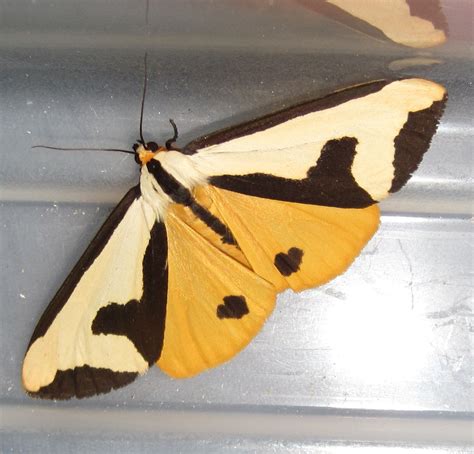
Clymene Moth
Spiritual Meaning of a Moth: Transformation, Intuition & Hidden Messages
Bottle Trees: Trapping Evil Spirits
As I was walking the neighborhood and it was very hilly here, almost like San Francisco kind of hilly. So, it's a great workout. I have to say, though, when the heat is on, it's not something that you can manage to easily and so I get out early. And as I was doing so I walked past a home that had a festive display of patriotic colors in their garden art. And one of the things they had was a Bottle Tree, which we spoke about before way back in Episode nine clearing spaces, bottle trees. It was based on a visit to Festival Hill in Roundtop, Texas, there was a bottle tree there and I wrote about it. I'm going to visit it again because it's fun.
Festival Hills and music venue and so the bottle tree had a sign that describe that one of the artists superstitions from ancient folklore dates to the glassblowers in the ninth century Africa, several African tribes employ glass objects as talismans, magical objects, against evil spirits. Did you ever wonder why bottles moan in the wind? Fascinating. So that was the sign. With further research I learned that they believed evil spirits find their way into the inverted glass bottles and become trapped. Then come morning, as sunbeams hit the bottles, the evil spirits will be destroyed. It sounds like a long ago cure for the evil of a spirit of a hangover.
Bottle Trees were initially popular primarily in the South. Most often in crape myrtle trees prevalent there. Or trees that have died, that is, now they've grown to become an admired garden sculpture color for assortments of mostly wine bottles inverted on a wrought iron looking post with arms like branches. Blue bottles are the desired dominant color, as blue is often associated with ghosts and spirits. Blue is also said to encourage healing. These folks had red, white and blue bottles, but they were painted from wine bottles, and it was just lovely because they had other little art full things in their garden. I'm not a real fan of garden art by and large, but I do like some creative things. And I could tell this is a theme that they had for the Fourth of July that's kind of carried over. So they'll probably, you know, adjust the colors based on the season.