The wisdom of Jewish time is intricately connected to the skies, where a new day arrives at sundown and a new month with the appearance of a new moon. Many Jewish holidays occur during the full moon. But what about the stars? Does Jewish wisdom take into account the constellations and their movements? It may surprise you to learn that the answer is yes!
If you’ve ever wished someone “Mazel tov!” you’ve invoked Judaism’s mystical tradition, specifically its association with astrology. “Mazel tov” means “a good constellation.” This probably surprises a lot of people, since there’s a general understanding that Judaism avoids astrology. After all, a Biblical commandment states “There should not be found among you…one who calculates times” (Deuteronomy 18:10).
And, of special note to those of us interested in Jewish needle crafts, we see signs of the zodiac used to decorate embroidered Torah binders for hundreds of years in Eastern Europe and Italy. From the seventeenth century into the Twentieth century, a time span of more than three hundred years, it was the custom in these communities for a new mother to commemorate the birth of a son by making a Torah binder, also known as a wimple. These binders came in direct contact with Jewish communities’ most sacred objects, the Torah scrolls, and the rabbinic leaders of these communities allowed it.
Each Hebrew month is intricately connected to a constellation, forming what we call the Jewish Zodiac. In Hebrew, the word for constellation is mazal, and it represents a cluster of stars forming a distinctive pattern. During each month, the sun passes through a particular constellation.
You can think of the constellations as being like the facial expression of the Divine. Just as our facial expressions give cues about our inner emotions, the celestial bodies can be seen as an indicator of the spiritual energy of the moment. They serve as an external expression of the Creator's internal world.
Read also: Understanding the Spiritual Meaning of Hebrew Names
Each Month’s Jewish Zodiac Sign
Here’s a list of each month and its corresponding zodiac sign:
- Tishrei: Moznaim the Scales (Libra)
- Cheshvan: Akrav the Scorpion (Scorpio)
- Kislev: Keshet the Bow (Sagittarius)
- Tevet: Gedi the Goat (Capricorn)
- Shvat: D’li the Water Pourer (Aquarius)
- Adar: Dagim the Fish (Pisces)
- Nissan: T’leh the Lamb (Aries)
- Iyar: Shor the Bull (Taurus)
- Sivan: T’umim the Twins (Gemini)
- Tammuz: Sartan the Crab (Cancer)
- Av: Aryeh the Lion (Leo)
- Elul: Betulah the Inner Child (Virgo)
Each season, including the changes in weather and nature, mirrors the energetic qualities of that time. Just as a sunny day can uplift us and a cloudy day might bring a sense of melancholy, these influences can shape our experiences. However, we are reminded that we have the power to rise above these influences and choose our own path.
Each month’s symbol connects to Jewish calendar. For example, Tishrei’s symbol, the scales, reflects Yom Kippur’s theme of judgement. During Kislev, whose symbol is the archer, we celebrate Hanukkah and the Maccabees’ victory in retaking the Temple. Av is the month during which both Temples were destroyed, once by Babylon and once by Rome.
Now, we often see some of these symbols as Jewish motifs when they have no association at all with the zodiac. The vast majority of lions depicted in Judaica, for example, do not represent the sign of Leo. The fish, the astrological symbol for Pisces, has its own separate meaning as a Jewish symbol of good luck.
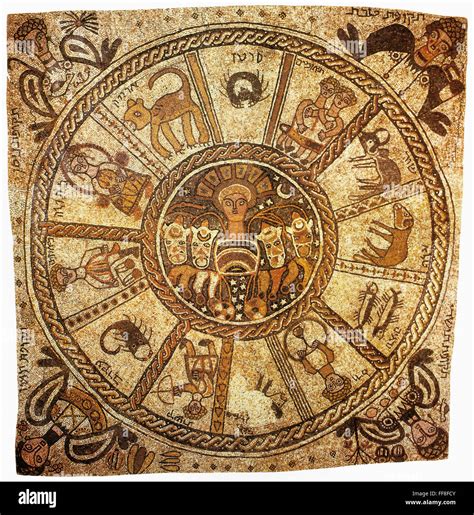
Zodiac mosaic from Beit Alpha synagogue
Read also: Orient Star Retrograde: Is it Worth It?
Kabbalistic Astrology
Kabbalah posits a system whereby God exerts influence over our lives through angels associated with the planets. You can find a detailed, authoritative examination of a number of ancient Kabbalistic astrological teachings in Aryeh Kaplan’s translation and commentary on the Sefer Yetzirah.
The Tree of Life: Kabbalistic Secrets of the Universe’s Blueprint
Whether astrology works or not, why did the rabbis in some communities permit depictions of astrological signs? Getting back to the Sefer Yetzirah, Kaplan writes in his commentary that the Biblical prohibition on calculating auspicious times means only “that one should not make astrology a dominant influence in one’s daily life.” According to a number of prominent commentators, practices intended to enhance personal traits such as wisdom and peace, for example, are permitted, according to Kaplan.
It’s also important to note that in the applications we’ve talked about, synagogue floors and Torah binders, the signs of the zodiac were employed as decorations, like painted figures in illuminated Jewish manuscripts.
The Kabbalists’ Conception of Astrology
The Kabbalists’ conception of astrology differs from other schools of astrological thought in critical ways. For one, Kabbalah recognizes that God, not the planets and stars, is in charge of the universe. In this system, the planets are mechanisms through which God exerts influence in the physical world. Also, Kabbalah teaches that although astrological forces influence our fate, they don’t determine our fate.
If you’ve read common astrology, you may have a sense that your birth chart is an immutable force shaping your life. In other words, “Oh, you’re a Pisces, so you’re always going to do X, Y, Z.” The Zohar, one of the classic books of Jewish mysticism, does note that each Zodiac sign has a positive and a shadow side (Zohar 3, 232a). But our Sages teach that stars do not dictate our fate. We can go beyond our mazal!
Read also: Meaning of Crescent Moon and Star
Rashi teaches that da’at (integrated awareness) is our real mazal (Rashi, Bava Kama 2b). Through our attention and response to what is unfolding, we have the power to creatively choose our path, no matter what outside influences there are.
The Talmud also suggests that prayer, reflection, and connection to the Divine are paths to transcend the influence of the constellations, as it says, “There is no mazal (constellation) for Israel” (Shabbat 156b:2). We can live from a higher place - above the stars. We can always tap into the Source and rise beyond.
The most important medieval rabbinic authority, Moses Maimonides, emphatically opposed astrology. A consummate rationalist, Maimonides understood astrology as claiming that it is impossible to alter one’s destiny, a view he deemed incompatible with Jewish tradition since it denied humanity free moral choice.
Why Pay Attention to the Zodiac?
If we can transcend the Zodiac, why pay attention to it at all? Personally, I find it so helpful to understand the spiritual and emotional patterns of each month. There are times that are more conducive to exploring our anger (like in Tevet), and there are times devoted to embracing joy (like in Adar). Living with the times allows us to embrace the ebbs and flows in life, without fighting them.
As King Solomon so eloquently put it in Ecclesiastes 3:1: “For everything there is a season and there is a time for everything under the sky - a time to be born and a time to die, a time to plant and a time to reap that which is planted” and so on.
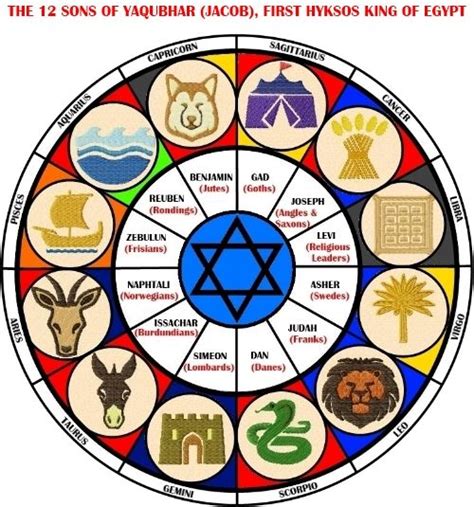
Jewish Zodiac Wheel
Astrology in Jewish History
Judaism's relationship with astrology is one that has many twists and turns. Jewish interest in the zodiac can be traced back to the time of the Babylonian exile, which is evidenced by the fact that many of the Hebrew names of the constellations are actually Hebraicized versions of the original Assyrian names. For instance, both the Assyrian name (gisherin) and Hebrew name (moznayim) for the astrological sign Libra translate to "scales."
There is speculation that some of the most prominent people in the Hebrew Bible were given the gift of astrology, including Abraham and King Solomon (Genesis 24:1, I Kings 5:10). Indeed, when Jethro gives Moses advice on leadership in Parashat Yitro, he suggests that Moses consult "anshei chayel," literally, strong people. Many understand this as a euphemism/reference to astrologers.
While the prophets derided astrology (especially in Isaiah 47:13 and Jeremiah 10:2), Josephus writes in the first century that consulting the stars was a common practice among Jews during his time. He even goes so far as to blame the failed revolt against the Romans and destruction of the Second Temple in 70 C.E. on Jewish astrologers who misinterpreted the stars.
We can see the practice of astrology becoming more accepted over time. Eventually, rabbis attempted to create parallels between the signs of the zodiac and tales from the Bible, which we can see in the seventh chapter of "Esther Rabbah." In that midrash, Aries represents the Passover sacrificial lamb; Taurus recalls Joseph, who was called "a bull"; Gemini represents the twins born to Judah and Tamar, Peretz and Zerah, and so on.
By the time of the Talmud, the rabbis took the fact that the stars influenced the lives of people for granted. At that point, their main debate focused on whether Jews were immune to the stars' influences. Rabbi Yohanan famously said, "Ein Mazal L'Yisrael," meaning, "there is no constellation for the people of Israel." However, Rabbi Hanina ben Hama held the opposite opinion, stating, "the stars make one wise, the stars make one rich, and there are stars for Israel" (Babylonian Talmud Shabbat 156a).
Comparison Between the Zodiac and the Word of God
Here's a comparison between the zodiac and the Word of God:
- Both are inspired by the spirit of God.
- Both preach the gospel.
- Both the Bible and the Signs in the heavens are misinterpreted and misapplied.
- Both the Bible and the Zodiac signs are interpreted based upon theological biases.