If you’ve ever wished someone “Mazel tov!” you’ve invoked Judaism’s mystical tradition, specifically its association with astrology. “Mazel tov” means “a good constellation.” This probably surprises a lot of people, since there’s a general understanding that Judaism avoids astrology.
Jewish tradition is generally seen as opposed to magic and sorcery, as well as to objects that people may come to believe possess power independent of God. References to amulets are found throughout the Talmud, which suggests that the practice of keeping them was a common one. One talmudic passage suggests that amulets were used by ancient rabbis to repel demons. The Shulchan Aruch code of Jewish law rules that it is permitted to heal with an amulet and to carry one for protection.
One tradition concerning amulets is that they were placed near young babies or laboring women for protection.
Perhaps the best-known Jewish amulet is the hamsa, a palm-shaped charm with an eye embedded in it. Another common one is a red string tied around the wrist, which became popular after being worn by a number of celebrity adherents of Jewish mysticism, or Kabbalah.
The exact time when Jews in Islamic lands first began to believe in the protective qualities of the hamsa is unknown. It is speculated that Sephardic Jews were among the first to use this amulet due to their beliefs about the evil eye.
Read also: Evil Eye Beliefs and Practices
The symbol of the hand appears in Kabbalistic manuscripts and amulets, doubling as the Hebrew letter "Shin", the first letter of "Shaddai", one of the names referring to God. The hamsa remained widely used among Sephardi communities and Jews from Islamic countries, but largely fell into disuse in Ashkenazi milieus by the mid-20th century.
The notion of a protective hand has been present in Judaism dating back to Biblical times, where it is referenced in Deuteronomy 5:15, stated in the Ten Commandments as the "strong hand" of God who led the Hebrews out of Egypt. The hamsa is later seen in Jewish art as God's hand reaching down from heaven.
Evidence has also emerged of the hamsa being used by Jews from medieval Spain, often associated with "sympathetic magic". Historians such as Shalom Sabar believe that after the Jewish expulsion from Spain in 1492, exiled Jews likely used the hamsa as protection in the foreign lands to which they relocated. Jewish people have also adopted the symbol of the hand, often interpreted in relation to the Biblical passage that says that "the Lord took the Israelites out of Egypt with a strong hand and an outstretched arm".
The "strong hand" is representative of the hamsa, which rooted its relevance in the community. The helping hand exemplified God's willingness to help his people and guide them out of struggle. Around the time of the Byzantine period, artists depicted God's hand reaching from above. God's hand from heaven would lead the Jewish people out of struggle, and the Jews subsequently made a connection with the hamsa and their culture. The hand was identified in Jewish texts and became an influential icon throughout the community.
Among Jewish people, the hamsa is a highly respected, holy, and common symbol. It has sometimes been used to decorate the Ketubah (marriage contracts) and items used to dress the Torah, such as pointers and the Passover Haggadah. The presence of the hand image both inside and outside of synagogues suggests the importance and reverence the Jewish community associated with the hamsa.
Read also: Guide to Jewish Witchcraft
The hand, particularly the open right hand, is a sign of protection that also represents blessings, power, and strength, and is seen as potent in deflecting the evil eye.
Historically and traditionally, it was most commonly carved in jet or formed from silver, a metal believed to represent purity and to hold magical properties. It is also painted in red (sometimes using the blood of a sacrificed animal) on the walls of houses for protection, or painted or hung on the doorways of rooms, such as those of an expectant mother or new baby.
The hand can be depicted with the fingers spread apart to ward off evil, or closed together to bring good luck. Similarly, it can be portrayed with the fingers pointing upward to ward off evil, or downward to bestow blessings.
Due to its significance in both Arabic and Berber culture, the hamsa is one of the national symbols of Algeria and appears in its emblem. It is also the most popular among different amulets (such as the Eye and the Hirz-a silver box containing verses of the Quran) for warding off the evil eye in Egypt. Egyptian women who live in baladi ("traditional") urban quarters often make khamaysa, which are amulets made up of five (khamsa) objects attached to their children's hair or black aprons.
During modernisation across the Middle East, the hamsa symbol became less prominent in some areas due to its perceived incompatibility with secular ideals. However, it later emerged as a symbol of secularity and became a trendy talisman, frequently seen as a "good luck" charm. Throughout various celebrations across the region, such as festivals emphasising fertility and prosperity, the number "5" is often highlighted, reflecting its association with the hamsa amulet.
Read also: Cultural Significance of White Sage
One theory postulates a connection between the khamsa and the Mano Pantea (or Hand-of-the-All-Goddess), an amulet known to ancient Egyptians as the Two Fingers. In this amulet, the Two Fingers represent Isis and Osiris and the thumb represents their child Horus.
According to von Kemnitz, "the Berbers brought the khamsa to al-Andalūs. Within the Islamic world, historical use of the amulet is concentrated in the western Muslim world (Maghreb; historically al-Andalus), while attestations in the eastern Muslim world (Mashriq) are sparse; where a "hand" appears in eastern contexts it is often part of distinct Shi'i ritual iconography rather than the Maghrebi amulet tradition.
"In al-Andalūs, the use of the hamsa as amulet is well-documented from the thirteenth century onwards. Among the Morisco population of Granada and nearby regions, khamsa pendants were particularly popular and were described as "large engraved medals ... The khamsa holds recognition as a bearer of good fortune among Christians in the region as well.
In Shia Islam, the hamsa is reinterpreted through devotion to the Ahl al-Bayt. The five fingers are read as the panjtan or Ahl al-Kisa (Muhammad, Ali ibn Abi Talib, Fatimah bint Muhammad, Hasan ibn Ali, Husayn ibn Ali), so the hand works as a visual shorthand for Shi'i imamology and for seeking the intercession of Fatimah in particular. This explains invocations written on or around hand-shaped objects, with the names of the panjtan placed on the fingers to activate their protective baraka.
In the same milieu, the hand can be identified not only as the "hand of Fatimah" but also as the hand of Ali ibn Abi Talib or, very prominently, the hand of Abbas ibn Ali, whose severed hands at the Battle of Karbala made the open palm a powerful emblem in Muharram processions and on ʿalams. Here the hamsa fuses protection, loyalty to the Prophet's household, and memorialisation of Karbala.
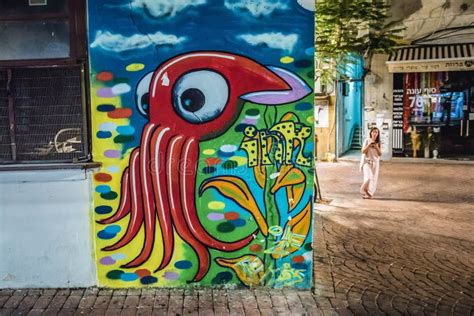
Hamsa, or Hamesh, in Tel Aviv street art
| Symbol | Meaning | Cultural Significance |
|---|---|---|
| Hamsa | Protection against the evil eye, blessings, power, strength | Widely used in Jewish, Arabic, and Berber cultures |
| Red String | Protection, good luck | Popularized by Kabbalah adherents |
| Amulets | Protection, healing | Used historically, especially for babies and laboring women |
Here’s some background from the introduction to the hamsa project in the Sew Jewish book:
Hamsa Your hand is strong. Your right hand, exalted.
An amulet is an object, often a charm or piece of jewelry, that is believed to possess certain magical powers of protection.
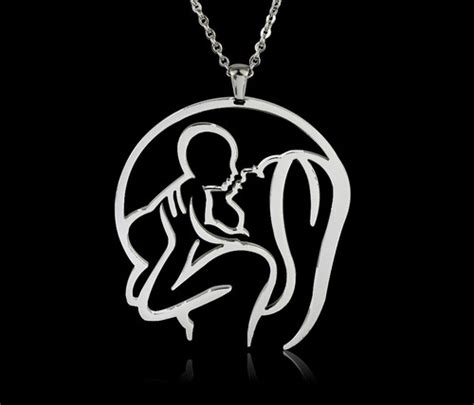
An amulet created to protect an expectant mother in Podkamen, Ukraine, in 1879
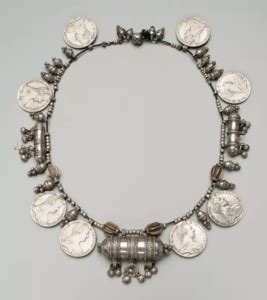
An amulet necklace worn in 18th-century Yemen
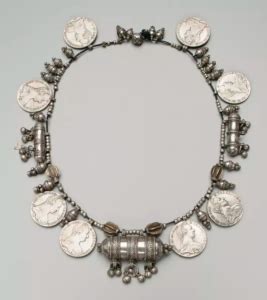
An amulet that was worn on a headpiece by a new mother in the Ottoman Empire, specifically to deter Lilith, from the 19th century
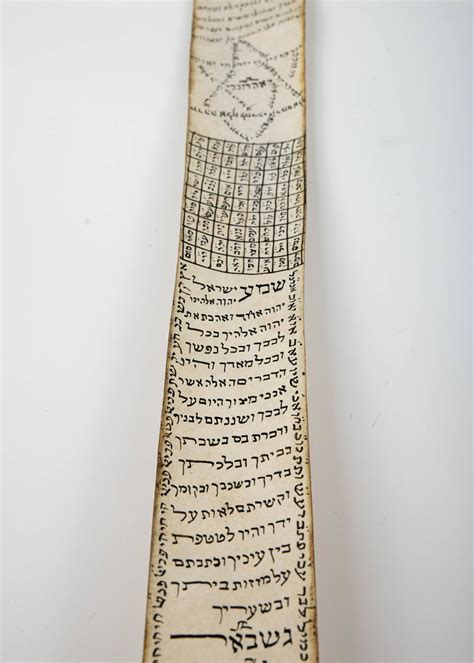
A kabbalistic amulet created in the 18th century to protect a daughter from a plague