When Amazon released the first Kindle in 2007, it kickstarted an entirely new way to read your black and white books. Using e-ink, which relies on tiny pixels made up of real ink droplets, Kindles display content like novels, putting much less strain on your eyes than traditional backlit screens, and with lower battery draw to boot. Now, with the release of the Kindle Colorsoft, Amazon’s first color e-reader, color e-ink is finally in the mainstream.
The time has come for a comparison review between the Kindle Colorsoft and the Kobo Libra Colour. In general, there are a lot of differences between Kindles and Kobos, but I’m not going to rehash all of that again here. I will make a comparison of these 2 e-book readers. This post is not sponsored etc.
While I was doing research, I couldn’t find ad-free articles with enough opinions. I am writing this article to express my opinions and to help you.
Currently, my favorite alternative is this Canadian-made Kobo Libra Colour. It's about $50 cheaper than the Kindle Colorsoft, and there's a ton of reading you can do on it without paying a cent for e-books with a library card of digital stockpile of PDFs.
If you want ease of use, go Amazon Kindle. If you want freedom, join me on the Kobo side.
Read also: Which color e-reader is better?
The Kobo Libra Colour is a worthy e-reader, and a worthwhile alternative to buying into the Kindle ecosystem. The Kobo store isn't as easy to navigate as Kindle's, nor can it quite stay competitive with prices and deals.
If you buy all your books, that might cancel out the lower cost of entry. But if you're digitally renting from the library or using PDFs, the Kobo Libra Colour is a far more affordable way to get your books.
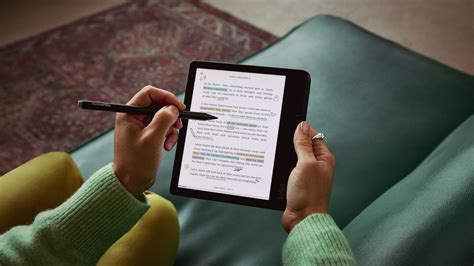
Overall, I really like the Kobo. It’s much more comfortable to hold in one hand. I love the buttons. I love the ability to read in landscape mode. The color e-ink technology is fun (though, doesn’t feel necessary to me) and I love being able to annotate e-books using the stylus. (The new Kobo Libra allows you can take notes directly on an e-book page, which is something you can’t do with any Kindle.)
Ultimately, the decision between the Kobo Libra Colour and the Kindle Colorsoft depends on your individual needs and preferences. Let's delve into a detailed comparison to help you make an informed choice.
Kobo Libra Colour vs Kindle Colorsoft Comparison Review
Raw Specs and Physical Attributes
Raw specs are a bit of an unusual topic when it comes to e-readers. You’re not necessarily browsing the internet or using productivity apps on these devices, and so topics like processor speed or memory capacity don’t matter as much as they do on, say, a laptop.
Read also: Libra 2 E-Reader Review
While slow computing can hamper these devices, typically, any lag you’re going to encounter has more to do with the limitations of e-ink than anything else.
But there are still considerations to take into account here. Factors like screen size and resolution matter, as do battery life, lighting, and weight.
For the most part, the Kindle Colorsoft and the Kobo Libra Colour have almost the exact same capabilities, with some minor differences worth noting.
Both e-readers use the same 7-inch E Ink Kaleido 3 display, which has a 300 ppi resolution when looking at black-and-white content, a 150 ppi resolution when looking at color content, and can display 4,096 colors overall.
Both have 32GB of storage (although there is now a cheaper, 16GB version of the Colorsoft), both are IPX8 waterproof, and both have an adjustable front light with color temperature settings, although their specifics differ.
Read also: Kobo Libra Colour: Australian Release
Here's a table summarizing the key specifications:
| Feature | Kobo Libra Colour | Kindle Colorsoft |
|---|---|---|
| Display | 7-inch E Ink Kaleido 3 | 7-inch E Ink Kaleido 3 |
| Resolution (B&W) | 300 ppi | 300 ppi |
| Resolution (Color) | 150 ppi | 150 ppi |
| Colors | 4,096 | 4,096 |
| Storage | 32GB | 16GB or 32GB |
| Waterproof | IPX8 | IPX8 |
| Front Light | Adjustable color temperature | Adjustable color temperature |
| Light Sensor | No | Yes |
| Weight | 199g | 217g |
| Page Turn Buttons | Yes | No |
| Stylus Support | Yes (sold separately) | No |
| Price | $230 | $280 (32GB) / $250 (16GB) |
For instance, the Kindle gets a little brighter than the Kobo, measuring in at 395 nits for me vs. the Kobo’s 382 nits, although the bigger difference is in color temperature.
Speaking subjectively, the Kobo felt as if it always had a yellowish tint, even with the color temperature set to 0, whereas the Kindle more easily emulated a white page with color temperature set to 0.
This isn’t noticeable with the lighting turned off, and both are adequately warm with the color temperature set to max. It’s likely just a quirk of the lights each manufacturer chose, but worth taking into account if you’re sensitive to that sort of thing.
Similarly, the Kindle Colorsoft has a light sensor that allows for automatic brightness adjustment. Both brightness and color temperature can also be put on a schedule on the Kindle, but on the Kobo Libra Colour, scheduling is the only automation available.
Any other changes to lighting or temperature will need to be made manually. For weight, the Kobo Libra Colour is slightly lighter at 199g versus 217g for the Colorsoft, although both are still more lightweight than the typical paperback novel (based on a few I pulled off my shelf).
Battery life is also similarly rated at a little over a month for each, and while that mostly rang true over my time with each device, your situation will differ based on how bright you set your screen and how frequently you enable wifi.
When it comes to build, each device is roughly the same thickness, but the Kindle is a little taller while the Kobo is a little wider.
That’s because the former places its grip on the bottom of the device while the latter has it to the right.
The Libra Colour has some hardware advantages with the addition of page buttons and stylus support. It also has a rotation sensor, and the power button is located on the back and it’s recessed so it’s hard to accidentally press.
The Colorsoft has a flush front screen and the Libra Colour has an indented screen.
The Kindle Colorsoft is essentially a Kindle Paperwhite Signature Edition with a color screen, so it has the SE upgrades, which includes wireless charging and an auto-brightness sensor.
Both have USB-C ports, with 32GB of storage space, and both devices are waterproof.
Overall, I like the design of the Kobo better with the page buttons on the side and the power button out of the way, but I think the screen and the frontlight look better on the Kindle (minus the yellow band).
The Kobo has a big advantage being able to use a stylus if you want to take notes, provided they don’t disappear when turning pages.
The Libra Colour has some hardware advantages with the addition of page buttons and stylus support.
It also has a rotation sensor, and the power button is located on the back and it’s recessed so it’s hard to accidentally press.
Here are some pros and cons of Kobo Libra Color:
- Pros:
- Vivid E-ink screen for comfortable reading in color and B&W
- Lighter than most paperbacks
- Battery life for weeks of reading or days of listening
- Easy to upload PDFs, news articles, Dropbox and Google files
- OverDrive compatibility
- Costs less than the Kindle Colorsoft
- Cons:
- Storefront is clunky to navigate
- Books are more expensive than Kindle
- Not compatible with Kindle libraries
- PDF files can be slow to load
My first impressions.At first glance, the Kobo Libra Colour isn't much. I mean that positively. It boasts a 7-inch color e-ink screen, is as small as an iPad mini but easier to use one-handed. It's easier to handle on a crowded subway car than even the thinnest of paperbacks, with a responsive touchscreen and two physical buttons to page forward and back. By and large, these are all traits of a good e-reader. So, what does the Libra Colour do that's so special?
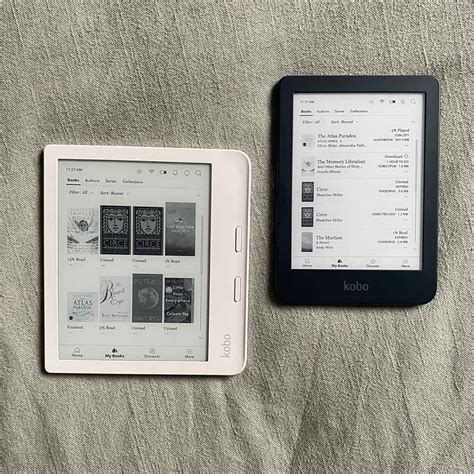
Image Quality and Display
On paper these two e-readers are roughly on par, which mostly bears out in reality.
Despite having the same specs on paper, not to mention the same screen, image quality is less of a toss-up than you’d think.
Both use the same base display, yes, but Amazon also says it’s supplemented the Kaleido with a special oxide backplane for sharper contrast and a light guide to help keep light rays from bleeding into areas where they’re not wanted.
Are these changes actually noticeable, or are they marketing speak?
To my surprise, yeah, they make a pretty big difference.
In testing with both older and newer comic books, the Kindle Colorsoft regularly displayed color content with more accuracy and fewer washed-out colors.
In particular, shading was more consistent on the Colorsoft, whereas the same details were often either splotchy or lost entirely on the Kobo.
This also extended to black and white content. I should note that the Kobo does have a “Reduce Rainbow Effect” setting that’s supposed to combat this, but in practice, I found it made images so blurry and performance so laggy (both effects Kobo warns may happen when enabling it) that I preferred to leave it turned off.
The Kindle has no such option, but even comparing the Kobo with rainbow effect reduction turned on to the Kindle, I still preferred the latter.
The Kindle does ship with two color modes that allows you to control how vivid colors are.
Additional Features: Kobo Libra Colour's Advantages
That’s two categories down for the Colorsoft, including the seemingly all-important image quality category. But here’s the trick: having a bit better image quality on a color e-reader might not be the be-all, end-all, depending on your preferences.
With only a few thousand colors available, you’re already making a compromise here versus reading on an LCD or a physical copy. Beyond that, marginal improvements to the way content is displayed will really only matter to you based on how sensitive you are to minutiae like inconsistent shading.
And the Kobo Libra Colour offers a few bonuses that the Kindle Colorsoft doesn’t.
While both e-readers have bluetooth connectivity for audiobooks, that’s about it when it comes to alternate ways to use the Kindle Colorsoft. Otherwise, it’s just a nondescript tablet, with page turns activated via touchscreen, even if the color screen does allow for color-coded highlighting.
The Kobo Libra Colour, meanwhile, has two big additions that make it feel a bit more premium than the Kindle at first blush: page turn buttons and stylus support.
The former is pretty self explanatory, and how much it matters to you depends on the type of reader you are.
Personally, I don’t mind losing page turn buttons, but I do acknowledge that some of my friends would die for them, and it’s a bit of a shame that despite the Colorsoft being Amazon’s second most expensive Kindle, it doesn’t have them.