Rudrashtakam is a timeless hymn that takes us on a spiritual journey, guiding us through the multifaceted nature of Lord Shiva. Shiva Rudrashtakam Mantra Lyrics starting with the verses Namami Shamishan Nirvan Roopam is an eight verse Octet (Ashtakam) dedicated to the Vedic god Rudra. Rudra is regarded as a manifestation of Lord Shiva. Rudhrashtakam was composed by the great Vaishnavite saint Goswami Tulsidas - the author of epic Ramcharitmanas, a retelling of the Sanskrit Ramayana in the vernacular Awadhi language.
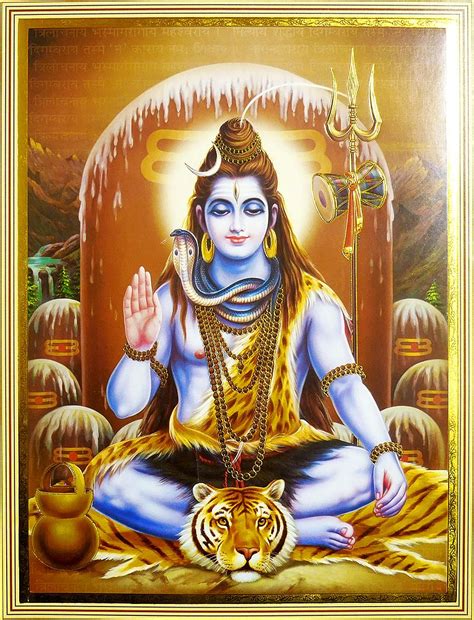
Lord Shiva
An eight-part hymn, it is devoted to Rudra-Shiva, and Goswami Tulsi Das is credited with its creation. Chanted during a longer Puja, or separately, Rudrashtakam is a lyrical journey into the incomprehensible aura of Shiva.
रुद्राष्टकम् : हिंदी भावानुवाद l Ashutosh Rana l Aalok Shrivastav l Official music video
Who is Rudra?
In the pages of Rig Veda, Rudra emerges as a potent and supreme deity, who controls the balance of the universe. He is Vastospati- the protector of Vastu or the sacred order of Srishti. He is Pashupati, who controls the frantic soul in the forest of the world. In the Mahamrityunjaya Mantra, it is Rudra, who is being evoked for the powers that he holds over death and time. Rudra of Rigveda merges with Shiva in the Puranas, becoming an aspect of the Lord, when he is angered and takes up the task of protection of good and destruction of negative forces.
What is an Ashtakam?
Ashtak, Ashtaka, or Ashtakam, is a form of sacred poetry or hymn, which has eight parts or verses, placed in a bundle of four lines each. Since the Rig Vedic times, Ashtakam with its lyrical flow has been a popular way of creating and reciting religious poetry dedicated to various gods and goddesses.
Read also: The Significance of Lakshmi Stotram
The Verses of Rudrashtakam
Each verse invites us to explore different aspects of the divine, from his serene form to his compassionate role as the protector of devotees.
Verse 1: The Serene Lord
In the first verse, we bow down to Bhagavan Ishaan, whose form represents liberation. He is all-capable, omnipresent, and the very embodiment of the Vedas. His tranquil nature, untouched by the material world, is vividly described.
नमामीशमीशान निर्वाणरूपं विभुं व्यापकं ब्रह्मवेदस्वरूपम् ।
निजं निर्गुणं निर्विकल्पं निरीहं चिदाकाशमाकाशवासं भजेऽहम् ॥१॥
Namaam-Iisham-Iishaana Nirvaanna-Ruupam Vibhum Vyaapakam Brahma-Veda-Svaruupam |
Nijam Nirgunnam Nirvikalpam Niriiham Cidaakaasham-Aakaasha-Vaasam Bhaje-[A]ham ||1||
Meaning:
(I Reverentially Bow down to Sri Rudra) I Bow to the Lord Ishana (another name of Sri Shiva) whose Form represents the state of the highest Nirvana (extinction of all desires and passions leading to the highest bliss), Who Manifests taking a Form though in essence He is Pervading everywhere; and His Form embodies the Highest Knowledge of Brahman present in the core of the Vedas. Who remain absorbed in His Own Self which is Beyond the three Gunas (Sattva, Rajas and Tamas), which is Beyond any Vikalpas (Change and Manifoldness), and which is Free from any Movement (due to desires etc), Who Abides in the Sky of the Chidakasha (Spiritual Sky); I Worship that Ishana.
Read also: Read the Aparadha Kshamapana Stotram
Verse 2: The Formless One
Verse two pays homage to Bhagavan Shiva in his formless state, representing the root cause of creation.
निराकारमोङ्करमूलं तुरीयं गिराज्ञानगोतीतमीशं गिरीशम् ।
करालं महाकालकालं कृपालं गुणागारसंसारपारं नतोऽहम् ॥२॥
Niraakaaram-Ongkara-Muulam Turiiyam Giraa-Jnyaana-Go-[A]tiitam-Iisham Giriisham |
Karaalam Mahaakaala-Kaalam Krpaalam Gunna-[A]agaara-Samsaara-Paaram Nato-[A]ham ||2||
Meaning:
(I Reverentially Bow down to Sri Rudra) Who is Formless and the very Root from where the Sacred Omkara arises; Who Abides in the state of Turiya (the fourth state in which Brahman is experienced in meditation) He is the Lord Who is Beyond the Knowledge which Speech can express and Beyond the Perception which Sense Organs can perceive; He is Girisha (another name of Sri Shiva literally meaning the Lord of the Mountains) Taking the Terrible form of Mahakala He can tear apart Kala (Time) himself; at the same time He is an embodiment of Compassion to His devotees, I Bow down to Him Who helps in Crossing this Samsara (delusion of worldly existence) which is like a Dwelling Place made of Gunas.
Verse 3: The Radiant Lord
In the third verse, Bhagavan Shiva's radiance is compared to a thousand suns.
Read also: Benefits of Chanting Mahalakshmi Ashtakam
तुषाराद्रिसंकाशगौरं गभिरं मनोभूतकोटिप्रभाश्री शरीरम् ।
स्फुरन्मौलिकल्लोलिनी चारुगङ्गा लसद्भालबालेन्दु कण्ठे भुजङ्गा ॥३॥
Tussaara-Adri-Samkaasha-Gauram Gabhiram Mano-Bhuuta-Kotti-Prabhaa-Shrii Shariiram |
Sphuran-Mauli-Kallolinii Caaru-Ganggaa Lasad-Bhaala-Baale[a-I]ndu Kanntthe Bhujanggaa ||3||
Meaning:
(I Reverentially Bow down to Sri Rudra) Who is Shining White Resembling a Mountain of Snow; and His Being is very very Deep, ... in the depth of Whose Mind exist Millions of Rays of Splendour, which expresses themselves on His Auspicious Body, Over Whose Head, the Beautiful Ganga Throbs and Surges forth towards the Worlds, Over Whose Forehead the Newly Risen Moon Shines spreading its Rays, and around Whose Neck adorns the beautiful Serpents.
Verse 4: The Beautiful and Compassionate Lord
Verse four takes us on a journey through Shiva's enchanting physical attributes. His smiling face, large, beautiful eyes, and serene blue throat are celebrated.
चलत्कुण्डलं भ्रूसुनेत्रं विशालं प्रसन्नाननं नीलकण्ठं दयालम् ।
मृगाधीशचर्माम्बरं मुण्डमालं प्रियं शङ्करं सर्वनाथं भजामि ॥४॥
Calat-Kunnddalam Bhruu-Sunetram Vishaalam Prasanna-[A]ananam Niila-Kannttham Dayaalam |
Mrga-Adhiisha-Carma-Ambaram Munndda-Maalam Priyam Shangkaram Sarva-Naatham Bhajaami ||4||
Meaning:
(I Reverentially Bow down to Sri Rudra) Whose Ear-Rings Sway near His beautiful face, which is adorned with a striking Eyebrow and Large Beautiful Eyes, Whose Face is beaming with Joy and Grace, Whose Throat is Blue (due to drinking the poison during samudra manthana) and Who is extremely Compassionate, Whose Clothes are the Skin of the Lord of Animals (signifying Tiger) and Whose neck is adorned with a Garland of Skulls, I Worship Him Who is Beloved of His Devotees, Who is Shankara (another name of Sri Shiva) and Who is the Lord of All.
Verse 5: The Supreme and Terrible One
The fifth verse describes Bhagavan Shiva as terrible yet compassionate, superior, and the destroyer of suffering.
प्रचण्डं प्रकृष्टं प्रगल्भं परेशं अखण्डं अजं भानुकोटिप्रकाशं ।
त्र्यःशूलनिर्मूलनं शूलपाणिं भजेऽहं भवानीपतिं भावगम्यम् ॥५॥
Pracannddam Prakrssttam Pragalbham Pare[a-Ii]sham Akhannddam Ajam Bhaanu-Kotti-Prakaasham |
Tryah-Shuula-Nirmuulanam Shuula-Paannim Bhaje[a-A]ham Bhavaanii-Patim Bhaava-Gamyam ||5||
Meaning:
(I Reverentially Bow down to Sri Rudra) Who is Terrible, Eminent and extremely Strong; Who is the Highest Lord, Who is ever Unborn and Whole; and with the Effulgence of Million Suns, Who has a Trident in Hand, the Three Spikes of which Uproots the bondages of the Three Gunas (Tamas, Rajas and Sattva), I Worship the Consort of Devi Bhavani Who can be Attained only by Devotion.
Verse 6: Beyond Worldly Attachments
In the sixth verse, we acknowledge Bhagavan Shiva's transcendence of worldly materials. His role as the destroyer of demon Tripurasura and bestower of knowledge is celebrated.
कलातीतकल्याण कल्पान्तकारी सदा सज्जनानन्ददाता पुरारी ।
चिदानन्दसंदोह मोहापहारी प्रसीद प्रसीद प्रभो मन्मथारी ॥६॥
Kalaatiita-Kalyaanna Kalpa-Anta-Kaarii Sadaa Sajjana-[A]ananda-Daataa Pura-Arii |
Cid-Aananda-Samdoha Moha-Apahaarii Prasiida Prasiida Prabho Manmatha-Arii ||6||
Meaning:
(I Reverentially Bow down to Sri Rudra) Whose Auspicious Nature is Beyond the Elements of the gross material world and Who Brings an End to a Kalpa (a cycle of creation when all gross elements are dissolved), Who Always Give Great Joy to the Wise Men and Who is the Enemy (signifying Destroyer) of the Tripurasuras (who represents Adharma), By Taking Away the Great Delusion, He plunges the prepared Soul in the Fullness of Cidananda (the Bliss of Brahman or Pure Consciousness), O, the Enemy (signifying Destroyer) of Manmatha; Please be Gracious to me; Please be Gracious to me, O Lord.
Verse 7: Seeking Peace and Prosperity
Until Lord Shiva's feet are worshipped, humans are said to remain in the cycle of suffering.
न यावद् उमानाथपादारविन्दं भजन्तीह लोके परे वा नराणाम् ।
न तावत्सुखं शान्ति सन्तापनाशं प्रसीद प्रभो सर्वभूताधिवासं ॥७॥
Na Yaavad Umaa-Naatha-Paada-Aravindam Bhajanti-Iha Loke Pare Vaa Naraannaam |
Na Taavat-Sukham Shaanti Santaapa-Naasham Prasiida Prabho Sarva-Bhuuta-Adhi-Vaasam ||7||
Meaning:
(I Reverentially Bow down to Sri Rudra) As Long as the Lotus Feet of the Lord of Uma ...is not Worshipped in This World or Later by the Human Beings, ... So Long (i.e. Till then) Joy, Peace and End of Sorrows will not be experienced in life. Therefore O Lord, Please be Gracious, You Who Reside within All Beings.
Verse 8: The Simple Devotee's Prayer
The eighth verse conveys the simplicity of devotion.
न जानामि योगं जपं नैव पूजां नतोऽहं सदा सर्वदा शम्भुतुभ्यम् ।
जराजन्मदुःखौघ तातप्यमानं प्रभो पाहि आपन्नमामीश शंभो ॥८॥
Na Jaanaami Yogam Japam Naiva Puujaam Natoham Sadaa Sarvadaa Shambhu-Tubhyam |
Jaraa-Janma-Duhkhau-[A]gha Taatapyamaanam Prabho Paahi Aapanna-Maam-Iisha Shambho ||8||
Meaning:
(I Reverentially Bow down to Sri Rudra) I do Not Know how to perform Yoga, Japa or Puja. I Always at All Times only Bow down to You, O Shambhu (another name of Sri Shiva), Please Protect me from the Sorrows of Birth and Old Age, as well as from the Sins which lead to Sufferings, Please Protect me O Lord from Afflictions; Protect me O My Lord Shambhu.
Verse 9: A Path to Pleasing Shiva
The final verse highlights the significance of reciting Rudrashtakam with devotion.
रुद्राष्टकमिदं प्रोक्तं विप्रेण हरतोषये ये पठन्ति नरा भक्त्या तेषां शम्भुः प्रसीदति ॥९॥
Rudraassttaka-Idam Proktam Viprenna Hara-Tossaye Ye Patthanti Naraa Bhaktyaa Tessaam Shambhuh Prasiidati ||9||
Meaning:
This Rudrashtaka (eight verses in praise of Rudra) has been Said (i.e. The ways to worship Shiva are innumerable.
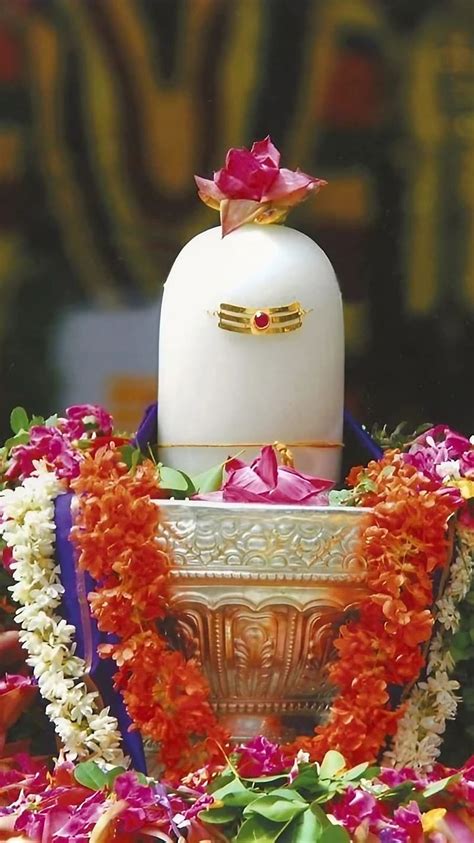
Shiva Lingam
Reciting Rudrashtakam: Power and Benefits
In words that stir devotion of the devotee and imagination of the artist, Rudrashtakam of Tulsidas revers Rudra whose benevolence and wrath are the seeds of Srishti (creation) and Pralaya (destruction). As a hymn recited by Shiva Bhaktas to gain proximity to Shiva-tattva (Shiva’s essence), Rudrashtakam removes worldly ties, cleanses the soul, and strengthens the mind. It increases one’s focus on Shiva and becomes a shield against the troubles of the world. Sowing seeds of spiritual virtues and Shiva’s benevolence, Rudrashtakam is a vehicle that uplifts one to higher levels of devotion and realization of Shiva’s powers.
From offering him an elaborate Puja, observing the Somvar Vrat (Monday fast) to reciting “Om Namah Shivay”, devotees have their own methods of calling upon Mahadeva, whose answers to all the forms of prayers offered to him with devotion and purity in heart.
tags: #rudrashtakam #stotram #lyrics #in #sanskrit