Sarah Jessica Parker's connection to witchcraft and Salem, Massachusetts, goes far beyond her role in the 1993 Halloween classic, "Hocus Pocus." The "Sex and the City" star was featured on season one of NBC's genealogy series, "Who Do You Think You Are?," which aired in 2010. On the show Parker learned that her 10th great-grandmother was accused of witchcraft during the Salem Witch Trials. When Parker took on the role of the Sanderson sister 300 years later, she had no idea of the connection.
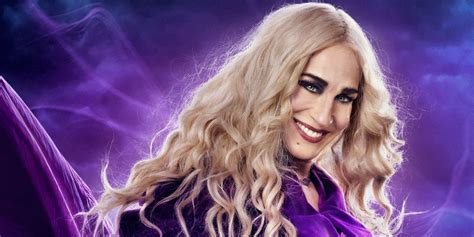
Sarah Jessica Parker portraying a fictional Salem witch in 'Hocus Pocus.' / Image via Disney
In the two movies, the Sanderson sisters, who are witches, terrorized Salem, Massachusetts, in the 17th century, only to return in 1993 and again in 2022 to wreak havoc on the town.
Esther Elwell: Sarah Jessica Parker's 10th Great-Grandmother
Sarah Jessica Parker is the 10th great granddaughter of Esther Elwell, who was accused of witchcraft in 1692. Esther Dutch was born in September 1639 in Bridport, Dorset, England. Her family traversed the Atlantic Ocean to settle in Massachusetts Colony. Her family was prominent in the Gloucester area, living at the harbor in an area known as Dutch’s Slough.
Esther married a wealthy man, Samuel Elwell, on 7 June 1658 in Salem. Taking her husband's last name, she is known in the history of the Salem Witch Trials as Esther Elwell. Together, Esther and Samuel had many children.
Read also: Zodiac Sign and Jessica Alba

Sarah Jessica Parker's line of descent from an accused witch. / Chart by Mike Batie
The Salem Witch Trials: A Summary
In 1692, mass hysteria concerning witchcraft swept over Salem and extended beyond to neighboring towns in the colony. The Puritans of the day firmly believed in the reality of witches-those who had sold their souls to the devil for his assistance. Witches were believed to be able to change from human to animal form, appear as apparitions or "familiar spirits," and ride through the night sky on brooms to secret witch meetings and orgies.
The events started in the home of the local minister, when his daughter and niece heard tales of voodoo and learned some fortune telling from Tituba, their enslaved house servant brought up from Barbados. The girls began displaying erratic behavior that turned to "fits," in which they contorted their bodies, screamed, made odd sounds, and said they were being bitten and pinched. When a doctor couldn't diagnose what was ailing them, he declared it to be a supernatural, sinister force.
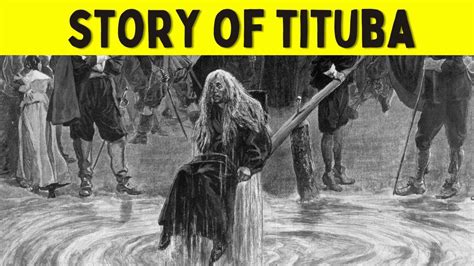
This 1880s engraving romanticizes Tituba sharing stories of fortune telling or voodoo from her time in Barbados to the Puritan children. / Image via Mary Evans Picture Library
The minister pressured the girls to identify who their tormentor was, and the girls claimed to have been bewitched by Tituba and two other women, Sarah Good and Sarah Osborne. All of the accused were marginalized by society: Tituba was a slave, Good was a beggar, and Osborne was an elderly woman. Neither Good or Osborne attended church regularly. It's likely the girls were being young delinquents, and pointing the finger of blame to those that were "other" than themselves, which made for easy targets.
Read also: A Journey Through Witchcraft
All three of the accused women professed their innocence, but ultimately, after imprisonment, interrogation, and threats, Tituba confessed to witchcraft and told the interrogators what they wanted to hear, and accused Good and Osborne. The confession and accusation saved her life, a precedent that would perpetuate the witch hysteria: confess and accuse others, or be hanged.
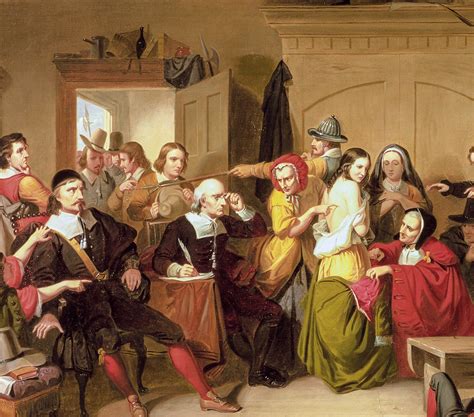
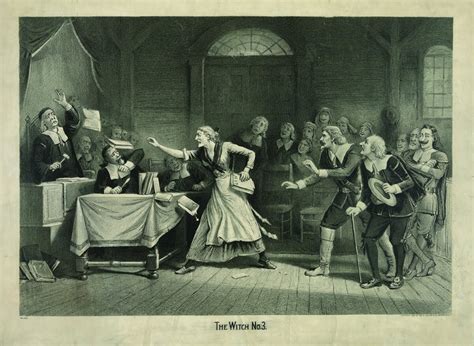
"Examination of a Witch," by Tompkins Harrison Matteson (1853). / Image via Peabody Essex Museum.
More than 200 people would be accused of witchcraft in the Salem Witch Trials, and 20 were executed: 19 by hanging (not the quick neck-breaking kind, but the slow strangulation kind), and one person was pressed to death by rocks. All were executed for maintaining their innocence, rather than confessing and accusing others. Five more died in jail from the horrible conditions.
As the witch trials went on, more children began acting out and accusing others of witch craft, and soon hundreds were accused, including Esther Elwell, the 10th great grandmother of Sarah Jessica Parker.
History's Greatest Mysteries: The Salem Witch Trials Cause Darkness and Death (Season 5)
Read also: Understanding Witchcraft in Scripture
Esther Elwell Arrested as an Accused Witch
On 5 November 1692, an arrest warrant was issued for Esther Elwell and two others for committing "wickedly and feloniously sundry acts of witchcraft upon the body of Mrs. Mary Fiche of Gloucester." Esther was apprehended and taken to Ipswich where she was jailed to await an examination of the charges against her.
A 17-year-old girl named Elizabeth Hubbard accused Esther and two others of witchcraft against Mary Fitch, by coming to her as apparitions to inflict harm.
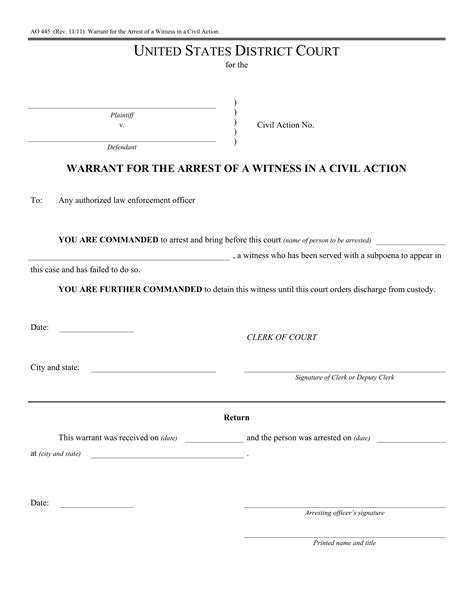
Arrest Warrant for Esther Elwell on charges of witchcraft. Esther's name is on the sixth line. / Suffolk Court Files vol. 32, docket 2689 p. 17
Luckily for Esther Elwell, the witch trial courts were dissolved after the accusations had run too wild and gone so far as to accuse the governor's wife of witchcraft. "Spectral" or supernatural evidence were no longer admissible in court. Esther was released from jail on 7 November 1692. Esther ended up living to the age of 82, passing away in 1721 in Gloucester, Massachusetts Colony.
The actual site where it is believed the accused witches were hung. / Image by Mike Batie | Hollywood Ancestry
While Esther's life was spared, 20 others were not so lucky, including Mary Ayer Parker, the sister of the author's 9th great grandfather. Mary Parker was hung on 22 September 1692, with several others.
For Sarah Jessica Parker, that's portraying a (fictional) Salem witch in Hocus Pocus, and being in fact descended from a woman accused in the Salem Witch Trials.
Lessons to be Learned from the Salem Witch Trials
- Science is key to understanding the world around us.
- Credible evidence should always be used.
- Don't blame those that are "other" for your problems.

Don't run amuck blaming people who are "other" for all of life's problems. / Image via Disney
Over 300 years have passed since the Salem Witch Trials, and people today still blame those that are "other" for their problems: those of a different race, nationality, socioeconomic class, religion, and so on. The next time you're tempted to lay the blame on someone or a group that is "other" than you, take pause and remember the Salem Witch Trials and those innocents who were accused, given an unfair trial, and hung to death.
tags: #sarah #jessica #parker #witchcraft