Voodoo, also spelled Vodou, is a creolized religion that originated in Haiti during the seventeenth century. It's a dynamic religion with no standardized dogma. It is quite common and completely acceptable for two neighboring voodoo temples to practice different traditions. The word ‘Voodoo’ derives from the word ‘vodu’ in the Fon language of Dahomey, which means ‘spirit’ or ‘god’.
This small religion has a big cultural impact and a decidedly sinister reputation. Over two centuries of hostile propaganda have morphed Voodoo into a deeply racialized form of witchcraft in the popular imagination. Whether it is feared or mocked, Voodoo almost always inspires a kind of morbid curiosity in outsiders. Contrary to popular opinion, Voodoo (or voudou) is not a form of witchcraft or demonic worship.
In the wake of decades of racist sensationalism, the commercialization of Voodoo continually manipulates tourists’ fascination with the unfamiliar. Modern Voodoo is still recovering its reputation in the wake of a smear campaign that has lasted for over two centuries (and still has not entirely let up). This legacy of Voodoo’s complex history is very much recognizable today.
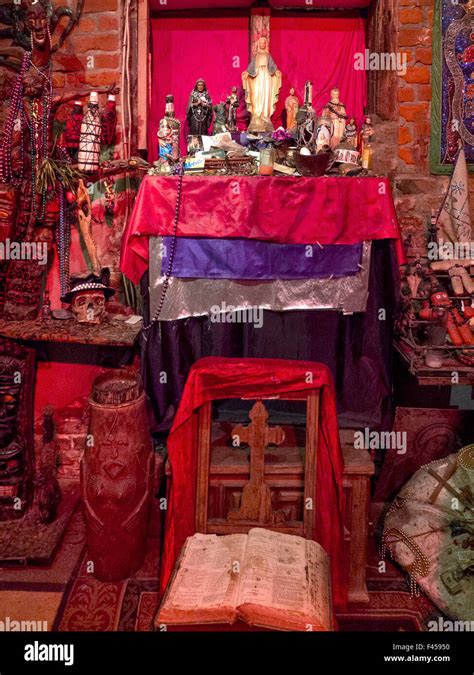
Origins and Development
The African roots of Voodoo may stretch back over 6000 years, making it one of the world’s oldest ancestral traditions. The foundations of this practice evolved from Tribal religions in West Africa. The more modern incarnation of this ancient African religion-Voodoo-emerged as a unique blend of Catholic and African magical and religious rites.
Vodou was brought to Haiti by slaves being captured from the Dahomey Kingdom. The Dahomey Kingdom is located near present day Nigeria. During the seventeenth century this area was very isolated which allowed the practice to rapidly evolve and develop. The population consisted of different tribes and the enslaved Africans.
Read also: Understanding anemia spiritually
These tribes shared several beliefs such as the worship of the spirits of family ancestors and the belief that followers were possessed by immortal spirits. They also used singing, drumming and dancing in religious rituals. Once living in Haiti, the slaves created a new religion based on their shared beliefs and those of the tribe’s. The practice of these traditions allowed slaves to feel free and get passed their hardships.
As slaves migrated they continued to practice Vodou. White slave owners prohibited the native religions forcing slaves to worship in hiding. Slave owners threatened slaves and baptized them all as Catholic, in hopes of stopping the Vodou religion. Although the slaves still practiced Vodou they adapted to some Catholic traditions.
The initial adoption of Catholic rites, after all, was indeed a result of European colonists’ ruthless attempt to suppress all aspects of African culture, particularly so-called “heathen” religious beliefs. In Haiti and across the Atlantic world, enslaved Africans were forced to toil in merciless conditions. Their homes, property, families, and communities were all torn away. In Haiti, as elsewhere, there was an attempt to strip them of that.
In 1685 the French king Louis XIV passed Le Code Noir, a decree that dictated the lawful conditions that were applied to slaves and slaveholders across the French colonial empire. Le Code Noir specified that slaves must be baptized as Roman Catholics upon arrival in the French colonies and that the practice of any other religion was forbidden. But the colonists were outsmarted.
As aforementioned, African and Catholic practices became integrated as a way of circumventing religious oppression so that the enslaved population could continue to practice their own religious customs under the guise of worshipping Catholic saints. For this reason, many lwa became equated with specific saints. Papa Legba, for instance, the lwa guardian of the crossroads and spiritual gatekeeper in Voodoo traditions, is associated with Saint Peter.
Read also: Hamsa Hand: Symbolism and history
Core Beliefs and Practices
That said, there are recognizable threads that unite the varying traditions of Voodoo. The African elements of the religious practice are derived mainly from the Dahomey region of West Africa (modern Benin) and from the Yoruba, Fon, and Ewe peoples of West Africa and the Kongo people from Central Africa.
Vodou: Haiti's African-Derived Religion
There are clearly recognizable Christian elements of Voodoo. Those unfamiliar with the practice might be surprised to learn that it has a lot in common with Catholicism, including prayers such as the Lord’s Prayer and Hail Mary, and rituals such as baptism, making the sign of the cross, and the use of candles, crosses, and images of saints. Some followers of Voodoo self-identify as Catholics and regard the saints and the lwa as different embodiments of the same entities.
The lwa (or “loa”) are thought to be invisible supernatural beings that serve as intermediaries between humans and the supreme creator God known in Haitian Creole as Bondye (from the French “bon dieu” meaning “good God”). The lwa are crucial to Vodouisants’ practice since Bondye is thought to be too distant for humans to contact directly.
Another lwa, Ezili Dantor, is thought to be a protective warrior mother and is the national lwa of Haiti. Believers recite prayers and perform sacrifices to call and feed the spirits. Once the spirits have been beckoned, the Vodouisants dance, hoping to be possessed or “mounted” by the lwa. This tradition is often met with suspicion, primarily because in European and Euro-American Christian cultures, possession is associated with the devil and demons.
Read also: Light Blue: Calmness and Healing
But for Vodouisants, to be possessed by a spirit is an honor and humanity’s primary means of communication with the divine. It is believed that the spirits communicate through possession, by which they can offer guidance to the worshipper, heal them or even speak to the congregation through them.
The primary goal and activity of Vodou is to sevi lwa (“serve the spirits”)-to offer prayers and perform various devotional rites directed at God and particular spirits in return for health, protection, and favour. Spirit possession plays an important role in Afro-Haitian religion, as it does in many other world religions. During religious rites, believers sometimes enter a trancelike state in which the devotee may eat and drink, perform stylized dances, give supernaturally inspired advice to people, or perform medical cures or special physical feats; these acts exhibit the incarnate presence of the lwa within the entranced devotee.
Vodou ritual activity (e.g., prayer, song, dance, and gesture) is aimed at refining and restoring balance and energy in relationships between people and between people and the spirits of the unseen world.
Vodou is an oral tradition practiced by extended families that inherit familial spirits, along with the necessary devotional practices, from their elders. In the cities, local hierarchies of priestesses or priests (manbo and oungan), “children of the spirits” (ounsi), and ritual drummers (ountògi) comprise more formal “societies” or “congregations” (sosyete). In these congregations, knowledge is passed on through a ritual of initiation (kanzo) in which the body becomes the site of spiritual transformation.
There is some regional difference in ritual practice across Haiti, and branches of the religion include Rada, Daome, Ibo, Nago, Dereal, Manding, Petwo, and Kongo. There is no centralized hierarchy, no single leader, and no official spokesperson, but various groups sometimes attempt to create such official structures.
A calendar of ritual feasts, syncretized with the Roman Catholic calendar, provides the yearly rhythm of religious practice. Important lwa are celebrated on saints’ days (for example: Ogou on St. James’s Day, July 25; Ezili Danto on the feast of Our Lady of Mount Carmel, July 16; Danbala on St. Patrick’s Day, March 17; and the spirits of the ancestors on All Saints’ Day and All Souls’ Day, November 1 and November 2). Many other familial feasts (for the sacred children, for the poor, for particular ancestors) as well as initiations and funerary rituals occur throughout the year.
Voodoo and the Haitian Revolution
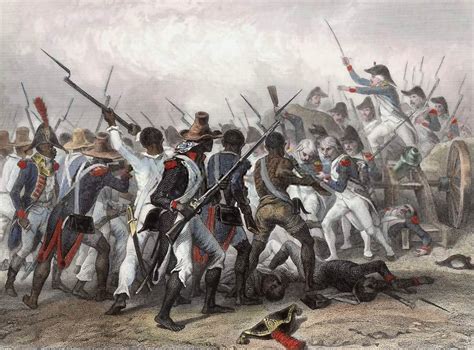
On the night of 14 August 1791, as the story goes, slaves from a few neighboring plantations stole away in the night to meet deep in the forest at Bois Caïman, in what was then the French colony of Saint-Domingue. There, gathered around a bonfire, mambo Cécile Fatiman presided over a ceremony. The priestess prophesied that a revolution was coming. Slitting the throat of a black creole pig, Fatiman handed each a cup of the sacrifice’s blood to drink as they swore their solemn oath to destroy their oppressors.
According to folklore, at that very moment, storm clouds gathered and thunder rumbled as Fatiman was possessed by Ezili Dantor. Thus began one of the most consequential movements in the history of the Atlantic slave trade. The Haitian Revolution (1791-1804) was a spectacularly successful insurrection that overthrew the white colonist population and freed black Haitians from enslavement. It was also responsible for bringing Voodoo to the United States.
Voodoo in the United States
Louisiana, and more specifically New Orleans, then became the epicenter of Voodoo in the United States. This cultural import from the Caribbean had a profound influence that can still be felt today. Due to its unique history, Louisiana had a very different ethnic and religious makeup to the rest of the United States by the time of the Louisiana Purchase in 1803.
At this time, the other states already had a unique American identity, having declared independence from Britain around twenty-seven years prior. Louisiana was not only late to the game in becoming an American state, but it was quite culturally distinct, having been a Spanish and French Catholic colony. This was significant, given that the Haitian Revolution had been such a crucial turning point in the history of slavery, striking fear into the hearts of slavers across the Americas.
It was the only slave insurrection that had seen success on such a remarkable scale, having overthrown a colonial government, abolished slavery, and installed the formerly enslaved people in power. Haiti and Haitians themselves, therefore, were seen to represent an enormous threat to the colonial world. Voodoo, as something unique to Haiti at that time, was viewed as an important factor.
The authorities (like many of the enslaved) believed that Haitian Voodoo religious leaders and even the lwa had had a hand in instigating the rebellion. Now these Haitian Voodooists were on American soil and had brought their “dangerous spirits” and “heathen” religion with them.
Emphasizing these supposed ties between Voodoo and slave rebellions was one of the most important social functions of post-Civil War public Voodoo narratives. As historian Michelle Gordan has argued, Voodoo narratives were used to establish black criminality and hyper-sexuality as “fact” in the popular imagination; the practice of Voodoo could then be cited as evidence to justify racism and segregation.
Take for instance a story published in the Daily Picayune in 1889, melodramatically entitled “Orgies in Hayti - A Story of Voudou Horrors That Pass Belief”. The author claimed that Vodouisants engaged in wild interracial orgies, carried out violent sacrifices, and had even cannibalized a little girl. Such violence, demonic rituals, and bloody sacrifices served to “prove” the supposed barbarity of people of Haitian/African descent in the white imagination.
The sensationalistic reports of Vodouisants and their purportedly monstrous rituals could then be used to undermine Louisiana’s notably radical Reconstruction and emphasize the imagined horrors of black enfranchisement and desegregation. Likewise, in the twentieth-century public, Voodoo narratives continued to rely on those racial and sexualized tropes, appropriating Voodoo as a form of gaudy entertainment.
Misconceptions and Cultural Appropriation
There are plenty of misconceptions about Vodou, most of which come from television and films such as Live and Let Die (1973), The Serpent and the Rainbow (1988), and Child’s Play (1988). Many consider Vodou to be an organized religion when in reality it is more complex and is mostly centered on healing. Another misconception is that Vodou comes from Africa. However, it derives from practices in several parts of Africa that were combined with catholic rituals, due to slaves adopting their owners’ religion, as well as new practices in the Caribbean.
Vodou believes in one God. However, because that one specific God is too far away for them, practioners call upon spirits or lwa, for aid and guidance. These lwa are divided into different “houses.” Some houses have stronger spirits than others. A popular misconception is that all Vodou is evil. Instead, in Vodou energy is amoral and can be used toward different ends. Summoning the lwa isn’t a dark ritual, but rather a ceremony of connection and togetherness.
In the United States, Vodou has almost been normalized to culturally appropriate the religion. The Voodoo Music + Arts Experience is a music festival in New Orleans, LA, that consists of many white concert goers dressing up in costumes that culturally appropriate Vodou and Mexican culture, among others. Cultural appropriation can even be found at the grocery store.
The image of Voodoo in the public imagination morphed into something slightly more complex as movies and novels shifted the focus away from “news reports” and towards sensationalistic fiction. This tantalizing sort of evil is palpable in films such as Douglas Fowley’s Macumba Love (1960. In the film, an American writer and his son-in-law are beset by a South American “Voodoo Queen” seeking to pursue her insatiable lusts, both for blood and sexual gratification.
The theatrical release poster demonstrates the blatantly prejudiced overtones of the narrative, depicting the image of a ghoulish woman in a skeletal mask, holding a screaming infant over a flaming black cauldron while scantily-clad dancers revel in the violent ritual. Meanwhile, the captions read, “Blood-lust of the VOODOO QUEEN! Weird, Shocking, Savagery in Native Jungle Haunts…” The imagery and lexicon here used to describe Voodooists and their practices is very telling. It employs the very same racist appeals to the so-called “savagery” and “weirdness” of Voodoo to inspire shock and horror in its audience.
From the 1960s up until the present day, Voodoo in the United States has been used as a source of entertainment and a tourist attraction quintessential to New Orleans. Nowadays, the city’s tourists are sold things like mass-produced Voodoo dolls, “blessed” chicken’s feet, and ghost tours, most often touted by people with no real connection to the religion but a desire to capitalize on its notoriety.
Contemporary Voodoo
In an effort to tackle the prejudiced ideas surrounding Voodoo, institutions across the world such as the New Orleans Voodoo Museum, the Bureau of Ethnology in Port-au-Prince, Haiti, and Chateau Musée Vodou in Strasbourg, France, serve to offer the curious public a more educational insight into the history of this deeply misunderstood religion.
Meanwhile, there has also been an upsurge of interest in the spiritual practice of Voodoo amongst Americans, but especially in Voodoo’s spiritual heartland, Louisiana. Today there is a plethora of mambos and hougans (priestesses and priests) who serve a multi-racial community of believers who are serious students and followers of Voodoo.
New Orleans’ modern intelligentsia are waking up to the potential of a religion that is seemingly much more in tune with contemporary liberal ideologies than more traditional Western faiths. Voodoo affords its priests and priestesses and its male and female followers equal status. Moreover, it also seems that in Voodoo, all followers are valued and respected, including LGBT folks.
McAlister notes that Voodoo inherently embraces notions of gender fluidity; female spirits can take possession of male bodies, and male spirits can possess the bodies of women. Poignantly, it is even believed that gay lwa can “adopt” and serve as protectors for young gay adults.