Delve into the beguiling history of witches and uncover a fascinating world laden with myth, magic, and superstition. The world we live in presents many mysteries, from the awe-inspiring Northern Lights to the secrets of alchemy. Each year on Halloween, children will take to the streets dressed in their finest black clothes and pointed hats, fitting the stereotype of the modern witch.
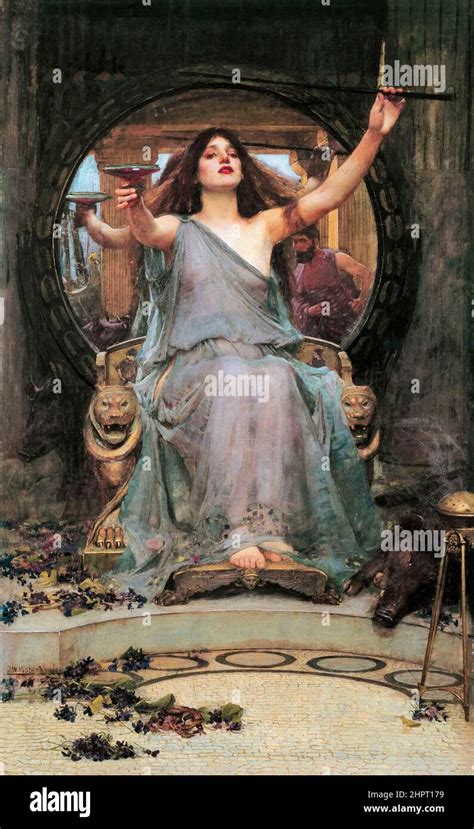
Circe Offering the Cup to Odysseus by John William Waterhouse
But witches were once a much more terrifying prospect. We wanted to delve deeper into the history of witchcraft and the occult. Painting by John William Waterhouse, courtesy of Gallery Oldham, Oldham, UK.’ Circe brandishes a large wand while offering a cup to Odysseus (pictured in the mirror), in a scene from Homer’s Odyssey. Circe uses her want to turn Odysseus’ men into animals.
The Origins of Magic
When you think of magic, you probably imagine witches. Many believe that witches were the invention of Christianity, providing a convenient way for communities to rid themselves of troublesome people by claiming they consorted with the devil. In Ancient Egyptian Magic by Christina Riggs, we see the influence of magic on daily life. Moving to ancient Greece and Rome, we see sparks of magic in religion and mythology, with many of the classical stories referencing supernatural feats.
Notably in ancient society, magic wasn’t something to be feared. It was considered complementary to faith and daily life, with practitioners enjoying respect for their wisdom. Polytheistic religions, as described in Pagans: The Visual Culture of Pagan Myths, Legends and Rituals, embraced magic. As we move into the Middle Ages, which are defined as the period between 500AD to 1500AD, magic continued to infiltrate religion, daily life and even culture. For example, many medieval monarchs were fascinated by the legend of King Arthur and one of the central figures of his court, Merlin.
Read also: A Journey Through Witchcraft
In The Occult, Witchcraft and Magic: An Illustrated History, Dell traces Merlin’s origins to the Welsh legend of the prophet Myrddin, before he appeared in Geoffrey of Monmouth’s work Historia regum Britanniae, written around 1136. Magic and alchemy became closely linked during this period. What is clear in this period is that magic became more associated with darker creatures and intent.
For example, in A History of Witchcraft: Sorcerers, Heretics, Pagans, they tell the tale of The Wild Hunt, a procession of evil spirits who roam medieval forests revelling and destroying. Eventually, the characteristics of the wild huntresses would serve as the inspiration for witches. By the end of the medieval period, the witch-craze and surrounding hysteria were beginning to take hold.
The Renaissance and the Rise of Witch Trials
The Renaissance period may be hailed as a revolution for art, architecture and literature, but it also heralded a new fascination with magic and the occult - and not always a good one. In an attempt to avoid accusations of witchcraft, many practitioners of alchemy formed secret societies to continue their work, which would form the basis of modern chemistry, physics and mathematics. Interestingly, alchemy shares many of its symbols with astrology, which was another popular pseudoscience with links to magic. But ultimately, magic during the Renaissance period was a fatal pursuit.
As well as the infamous witch trials that took place across Europe and in the American colonies, high-profile figures within Christianity would fall victim to harsh heresy and witchcraft laws. For example, Forshaw presents the scandal of Giordano Bruno, a notable Renaissance figure known for being a mathematician, philosopher and occultist. Witchcraft and the occult also began to take centre stage in literature.
Shakespeare’s work features several famous witches including Prospero, from The Tempest, and the three witches of Macbeth who predict the rise and fall of the Scottish general. Christopher Marlowe, Shakespeare’s peer, also references the occult in his play Doctor Faustus, inspired by the real-life figure of Johann Georg Faust.
Read also: Understanding Witchcraft in Scripture
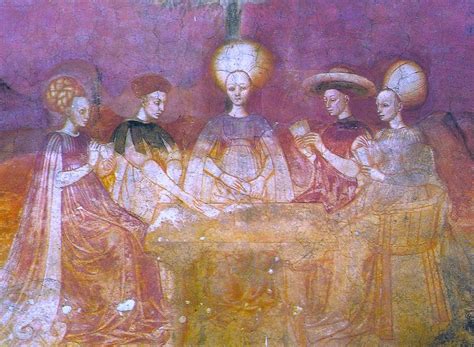
The Tarocchi Players by Maestro dei Giochi Borromeo
Elements of the occult can be found in the rise of spiritualists and spiritualism in the 19th century, which according to Occult by Peter Forshaw, first appeared in New York when two sisters claimed to hear ‘rapping’ sounds in their house, allegedly from a poltergeist. This fascination with life after death, and the desire for forbidden knowledge, also led to the rise of tarot, fortune-telling, and a new kind of occultist who became more entertainer than true occultist.
Modern Interpretations of Magic
So, where does that leave magic in the modern world? Given that magic ultimately shaped the modern disciplines of science, maths, philosophy and more, it could be argued that magic is an intrinsic part of modern society. We also see a gentler, everyday sort of magic live on in modern society through the practice of Wicca, which Christopher Dell describes as ‘a modern, pagan, duotheistic religion that exalts nature but also incorporates elements of ceremonial high magic’.
This article is about traditional views of witchcraft. For an overview of Neopagan witchcraft, see Neopagan witchcraft. For the modern pagan religion, see Wicca. Witchcraft is the use of magic by a person called a witch. Traditionally, "witchcraft" means the use of magic to inflict supernatural harm or misfortune on others, and this remains the most common and widespread meaning. The most common meaning of "witchcraft" worldwide is the use of harmful magic.
Belief in malevolent magic and the concept of witchcraft has lasted throughout recorded history and has been found in cultures worldwide, regardless of development. Most societies have feared an ability by some individuals to cause supernatural harm and misfortune to others. A common belief worldwide is that witches use objects, words, and gestures to cause supernatural harm, or that they simply have an innate power to do so.
Read also: Urdu Article: Understanding Witchcraft
One of the most influential works on witchcraft and concepts of magic was E. E. Evans-Pritchard's Witchcraft, Oracles and Magic Among the Azande, a study of Azande witchcraft beliefs published in 1937. [Malevolent magic] is, however, only one current usage of the word. In fact, Anglo-American senses of it now take at least four different forms, although the one discussed above seems still to be the most widespread and frequent.
The others define the witch figure as any person who uses magic ... or as the practitioner of nature-based Pagan religion; or as a symbol of independent female authority and resistance to male domination. According to the Oxford English Dictionary, wicce and wicca were probably derived from the Old English verb wiccian, meaning 'to practice witchcraft'.
Wiccian has a cognate in Middle Low German wicken (attested from the 13th century). The further etymology of this word is problematic. Another Old English word for 'witch' was hægtes or hægtesse, which became the modern English word "hag" and is linked to the word "hex". In colloquial modern English, the word witch is particularly used for women. A male practitioner of magic or witchcraft is more commonly called a 'wizard', or sometimes, 'warlock'.
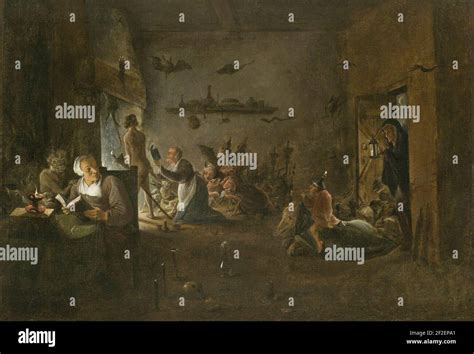
Preparation for the Witches' Sabbath by David Teniers the Younger
Witches are commonly believed to cast curses; a spell or set of magical words and gestures intended to inflict supernatural harm. Cursing could also involve inscribing runes or sigils on an object to give that object magical powers; burning or binding a wax or clay image (a poppet) of a person to affect them magically; or using herbs, animal parts and other substances to make potions or poisons.
Witchcraft has been blamed for many kinds of misfortune. In Europe, by far the most common kind of harm attributed to witchcraft was illness or death suffered by adults, their children, or their animals. "Certain ailments, like impotence in men, infertility in women, and lack of milk in cows, were particularly associated with witchcraft". Illnesses that were poorly understood were more likely to be blamed on witchcraft. In some cultures, witches are believed to use human body parts in magic, and they are commonly believed to murder children for this purpose.
Witches are believed to work in secret, sometimes alone and sometimes with other witches. Necromancy is the practice of conjuring the spirits of the dead for divination or prophecy, although the term has also been applied to raising the dead for other purposes. J.D. Krige argues that belief in witchcraft also serves various functions. One such function, he notes, is psychological: it enables people to account for failures not as a result of any fault of their own but due to the doings of others or other external malevolent forces.
The Role of Cunning Folk
Such helpful magic-workers "were normally contrasted with the witch who practiced maleficium-that is, magic used for harmful ends". In the early years of the European witch hunts "the cunning folk were widely tolerated by church, state and general populace". Some of the more hostile churchmen and secular authorities tried to smear folk-healers and magic-workers by falsely branding them 'witches' and associating them with harmful 'witchcraft', but generally the masses did not accept this and continued to make use of their services.
The English MP and skeptic Reginald Scot sought to disprove magic and witchcraft altogether, writing in The Discoverie of Witchcraft (1584), "At this day, it is indifferent to say in the English tongue, 'she is a witch' or 'she is a wise woman'". Historian Keith Thomas adds "Nevertheless, it is possible to isolate that kind of 'witchcraft' which involved the employment (or presumed employment) of some occult means of doing harm to other people in a way which was generally disapproved of.
Emma Wilby says folk magicians in Europe were viewed ambivalently by communities, and were considered as capable of harming as of healing, which could lead to their being accused as malevolent witches. Hutton says that magical healers "were sometimes denounced as witches, but seem to have made up a minority of the accused in any area studied". Likewise, Davies says "relatively few cunning-folk were prosecuted under secular statutes for witchcraft" and were dealt with more leniently than alleged witches.
Counteracting Witchcraft
Societies that believe (or believed) in witchcraft may also believe that it can be thwarted in various ways. One common way is to use protective magic or counter-magic, often with the help of magical healers such as cunning folk or witch-doctors. This includes performing rituals, reciting charms, or the use of talismans, amulets, anti-witch marks, witch bottles, witch balls, and burying objects such as horse skulls inside the walls of buildings.
Another believed cure for bewitchment is to persuade or force the alleged witch to lift their spell. Often, people have attempted to thwart the witchcraft by physically punishing the alleged witch, such as by banishing, wounding, torturing or killing them. Throughout the world, accusations of witchcraft are often linked to social and economic tensions.
Éva Pócs writes that reasons for accusations of witchcraft fall into four general categories. Apart from extrajudicial violence, state-sanctioned execution also occurs in some jurisdictions. In ancient Mesopotamia, a witch (m. kaššāpu, f. kaššāptu, from kašāpu ['to bewitch']) was "usually regarded as an anti-social and illegitimate practitioner of destructive magic ... The Code of Hammurabi (18th century BCE) allowed someone accused of harmful magic-practice to undergo trial by ordeal-by jumping into a holy river. If they drowned, they were deemed guilty, and the accuser inherited the guilty person's estate.
The historical development of witchcraft in the Middle East shows a multi-stage process shaped by culture, spirituality, and societal norms. Ancient witchcraft in the Middle East intertwined mysticism with nature through rituals and incantations aligned with local beliefs. Jewish attitudes toward witchcraft were rooted in its association with idolatry and necromancy, and some rabbis even practiced forms of magic themselves. References to witchcraft in the Hebrew Bible highlighted strong condemnations rooted in the "abomination" of magical practices.
Christian and Islamic Views on Witchcraft
Historically, the Christian concept of witchcraft derives from Old Testament laws against it. In medieval and early-modern Europe, many Christians believed in magic. As opposed to the helpful magic of the cunning folk, witchcraft was seen as evil and associated with Satan and devil worship. This often resulted in deaths, torture and scapegoating (casting blame for misfortune), and many years of large-scale witch trials and witch hunts, especially in Protestant Europe, before largely ending during the Age of Enlightenment.
Christian views are diverse, ranging from intense belief and opposition (especially by Christian fundamentalists) to non-belief. During the Age of Colonialism, many cultures were exposed to the Western world via colonialism, usually accompanied by intensive Christian missionary activity (see Christianization). In Christianity, sorcery came to be associated with heresy and apostasy and was viewed as evil. Among Catholics, Protestants, and the secular leadership of late-medieval/early-modern Europe, fears about witchcraft rose to a fever pitch and sometimes led to large-scale witch hunts.
The fifteenth century saw a dramatic rise in awareness and terror of witchcraft. Tens of thousands of people were executed, and others were imprisoned, tortured, banished, and had lands and possessions confiscated. The Malleus Maleficarum (Hammer of the Witches) was a witch-hunting manual written in 1486 by German monk-inquisitors Heinrich Kramer and Jacob Sprenger. It was used by both Catholics and Protestants for several hundred years, outlining how to identify a witch, what makes a woman more likely than a man to be a witch, how to put a witch on trial, and how to punish a witch. The book defines a witch as evil and typically female.
Islamic perspectives on magic encompass a wide range of practices, with belief in black magic and the evil eye coexisting alongside strict prohibitions against its practice. The Quran acknowledges the existence of magic and seeks protection from its harm.
Modern Witchcraft and Contemporary Beliefs
During the 20th century, interest in witchcraft rose in English-speaking and European countries. From the 1920s, Margaret Murray popularized the 'witch-cult hypothesis': the idea that those persecuted as 'witches' in early modern Europe were followers of a benevolent pagan religion that had survived the Christianization of Europe. From the 1930s, occult neopagan groups began to emerge who called their religion a kind of 'witchcraft'.
They were initiatory secret societies inspired by Murray's 'witch cult' theory, ceremonial magic, Aleister Crowley's Thelema, and historical paganism. The biggest religious movement to emerge from this is Wicca. A 2022 study found that belief in witchcraft, as in the use of malevolent magic or powers, is still widespread in some parts of the world. It found that belief in witchcraft varied from 9% of people in some countries to 90% in others, and was linked to cultural and socioeconomic factors.
Witchcraft in Africa and Latin America
African witchcraft encompasses various beliefs and practices. These beliefs often play a significant role in shaping social dynamics and can influence how communities address challenges and seek spiritual assistance. Much of what "witchcraft" represents in Africa has been susceptible to misunderstandings and confusion, due to a tendency among western scholars to approach the subject through a comparative lens vis-a-vis European witchcraft.
For example, the Maka people of Cameroon believe in an occult force known as djambe, that dwells inside a person. While some 19th-20th century European colonialists tried to stamp out witch-hunting in Africa by introducing laws banning accusations of witchcraft, some former African colonies introduced laws banning witchcraft after they gained independence.
In parts of Africa, beliefs about illness being caused by witchcraft continue to fuel suspicion of modern medicine, with serious healthcare consequences. HIV/AIDS and Ebola are two examples of often-lethal infectious disease epidemics whose medical care and containment has been severely hampered by regional beliefs in witchcraft.
The term "witchcraft" arrived with European colonists, along with European views on witchcraft. This term would be adopted by many Indigenous communities for their own beliefs about harmful magic and harmful supernatural powers. Witch hunts took place among Christian European settlers in colonial America and the United States, most infamously the Salem witch trials in Massachusetts. These trials led to the execution of numerous individuals accused of practicing witchcraft.
Despite changes in laws and perspectives over time, accusations of witchcraft persisted into the 19th century in some regions, such as Tennessee, where prosecutions occurred as late as 1833. Witchcraft beliefs in Latin America are influenced by Spanish Catholic, Indigenous, and African beliefs. In Colonial Mexico, the Mexican Inquisition showed little concern for witchcraft; the Spanish Inquisitors treated witchcraft accusations as a "religious problem that could be resolved through confession and absolution".
Brujería, often called a Latin American form of witchcraft, is a syncretic Afro-Caribbean tradition that combines Indigenous religious and magical practices from the Caribbean, together with Catholicism, and European witchcraft. The tradition and terminology is considered to encompass both helpful and harmful practices. A male practitioner is called a brujo, a female practitioner, a bruja. Healers may be further distinguished by the terms kurioso or kuradó, a man or woman who performs trabou chikí ("little works") and trabou grandi ("large treatments") to promote or restore health, bring fortune or misfortune, deal with unrequited love, and more serious concerns.
One of the oldest traditions is that of Witchcraft. Many people love to dress up as witches for Halloween, because of all the fantastic tales of witches over the years. There has been a long history of real witches throughout history the world over. According to History, It’s unclear exactly when witches came on the historical scene, but one of the earliest records of a witch is in the Bible in the book of 1 Samuel, thought be written between 931 B.C. and 721 B.C. It tells the story of when King Saul sought the Witch of Endor to summon the dead prophet Samuel’s spirit to help him defeat the Philistine army. Witchcraft has long been condemned in mainstream society. People are afraid of witches and their supposed mystical powers.
Witchcraft has long been condemned in mainstream society. People are afraid of witches and their supposed mystical powers.
| Period | Beliefs and Practices | Cultural Significance |
|---|---|---|
| Ancient Times | Magic intertwined with daily life, religion, and mythology. | Practitioners respected for their wisdom. |
| Middle Ages | Magic associated with darker creatures and intent. | Emergence of witch-craze and surrounding hysteria. |
| Renaissance | Fascination with magic and the occult. | Witch trials and persecution of alchemists and occultists. |
| 19th Century | Rise of spiritualism and interest in the afterlife. | Development of tarot, fortune-telling, and new forms of occultism. |
| Modern Era | Magic shapes modern disciplines like science and philosophy. | Emergence of Wicca and contemporary pagan religions. |
The Salem Witch Trials: A Dark Chapter in American History 🧙♀️📜
tags: #witchcraft #and #magic