In current media and pop culture, we are constantly exposed to a barrage of imagery both glorifying and stereotyping the practice of witchcraft. This guide is created to demystify witchcraft and create a context for the craft. A person could write entire books on the subject.
When you decide to start on your own witchcraft journey, it can be very overwhelming because there’s so much to learn and so many different paths you can take. This article serves as a gentle on-ramp to modern witchcraft, focusing on lived experience rather than "must-have" tools, helping you build a unique, soul-centered spiritual practice at your own pace.
For this article, witchcraft is defined as a magical and metaphysical practice used to influence the world around us in conjunction with or beyond accepted scientific explanations with results. Witchcraft is a term that has many meanings, which depend heavily on cultural context and situation.
WITCHCRAFT BASICS || Where to start out on your beginner witchcraft journey
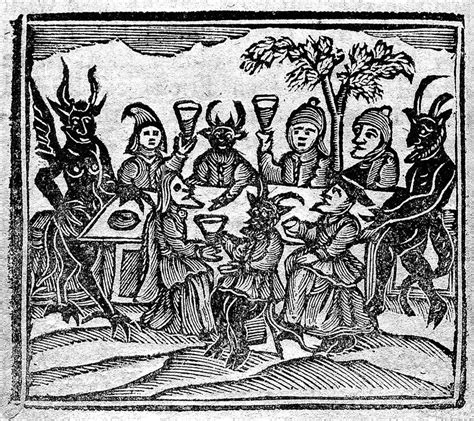
The Spirit of Witchcraft
Witchcraft is an ancient conversation with life itself-one that asks you to listen deeply, to observe, and to return to rhythm. It’s less about memorizing spells and more about remembering how to be in relationship-with yourself, with nature, and with Spirit.
Read also: A Journey Through Witchcraft
This is the heart of witchcraft for beginners: learning to slow down and feel the world again. You begin to notice the quiet intelligence in the wind, the way the Earth breathes beneath your feet, and how your own energy mirrors the Moon’s phases. These are your first teachers-the natural world, your intuition, and the stillness within.
Many witches feel called to learn magick because something inside them recognizes this rhythm-it’s the pulse of the Earth, the whisper of Spirit guiding you home. Whether you feel drawn to folk magic, herbal medicine, or ritual baths, you’re already in relationship with the unseen. The only real first step is to slow down and listen.
What It Means to Be a Witch
To be a witch is not simply to cast a spell-it’s to live awake. It’s to see energy as alive, to move with the elements, and to honor the cycles that govern all things. Historically, witches were folk healers, herbalists, in some cases midwives, and keepers of deep animistic knowledge.
Over centuries, fear and misunderstanding turned that wisdom into something dangerous. But modern witchcraft reclaims what was lost. It’s not about rebellion for rebellion’s sake-it’s about remembrance.
A practicing witch today continues that lineage through conscious living: tending the Earth, protecting community, and listening to Spirit in daily life. Many beginner witches start this journey by lighting a candle or pulling a tarot card. These small rituals aren’t about control-they’re about connection.
Read also: Understanding Witchcraft in Scripture
To practice witchcraft is to step into co-creation with Spirit. It’s about weaving intention into action, infusing love into healing, and using your power responsibly. Real magick always circles back to service-helping others, honoring the land, and living in alignment with your values.
Understanding Magick
Before we speak of spells, let’s remember what magick truly is. The “k” is more than a letter-it’s a key. It distinguishes illusion from intention, sleight of hand from the sacred art of co-creation.
Magick with a “k” points to something universal-the living current of energy that flows through all things. It doesn’t belong to any one religion or belief system. It’s the pulse of the Earth, the heartbeat of creation itself.
Magick is what happens when your heart, mind, and Spirit align-when your energy harmonizes with what you wish to create. You might call it prayer, intention, manifestation, or simply flow. Different words, same current. Every person touches this energy, whether they name it or not. It’s the quiet power behind intuition, healing, synchronicity, and transformation.
But here’s the secret: magick isn’t something you control-it’s something you allow. It lives in openness, in trust, in surrender. When you cling too tightly, you block the current. When you soften, you align with it.
Read also: Urdu Article: Understanding Witchcraft
Every spell, every ritual, every moment of deep intention is simply a way of attuning yourself to that resonance-to the unseen harmony beneath the noise. Whether you light a candle, whisper a prayer, or breathe with awareness, you are already participating in magick. It’s not something you perform-it’s something you become.
Tenets for Living a Spiritual Life
Magick isn’t only a practice-it’s a way of living. When you begin walking this path, you’ll notice certain truths that quietly echo through every spell, every prayer, every breath.
- Energy follows intention.
- Life moves in cycles.
- The world mirrors your inner landscape.
These aren’t laws written in stone; they’re the rhythm by which Spirit moves through form-the current that carries all things back to balance.
Living by these tenets transforms witchcraft from something you do into something you are. It becomes a dialogue with the universe-a way of walking through the world with reverence, curiosity, and heart. When your life itself becomes the ritual, you no longer have to search for magick; you simply remember that you are it.
Grounding & Meditation
Before you work with energy, you must learn to hold it. That’s the purpose of grounding. Many witches skip this step because it feels simple, but it’s what keeps your focus clear and your Spirit protected.
When you practice witchcraft for beginners, you open your sensitivity. Without grounding, that sensitivity can spiral into anxiety, exhaustion, or confusion. For beginner witches, grounding is your energetic hygiene-like washing your hands before handling sacred tools.
Grounding connects your Spirit to the Earth, reminding you that magick isn’t “out there.” It’s in the soil, in your breath, in your heartbeat. Meditation then centers your awareness so you can sense where your own energy ends and unwanted energy begins.
Grounding doesn’t mean shutting your energy off-it means holding your center while the world moves around you. When you’re rooted, your sensitivity becomes your strength, not your undoing.
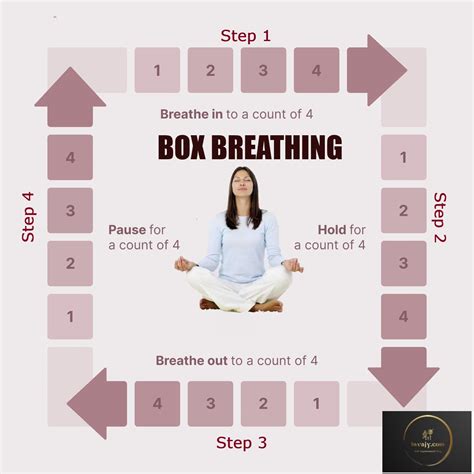
Box Breathing Technique
When your energy feels scattered or heavy, grounding doesn’t need to be complicated. Try Box Breathing-a simple yet powerful technique for centering energy:
- Inhale for four counts
- Hold for four counts
- Exhale for four counts
- Hold for four counts
- Do this for one minute.
You’ll feel your breath slow, your awareness return, and your energy settle into the present moment. Pair it with a mantra if you wish: “I am safe. I am here. I am rooted.” Or craft your own phrase that helps you return home to yourself.
Exploring Different Types of Magic
Because “witchcraft” is a rather open ended catch-all term, it’s important to identify different types of magical focus, or “craft.” Below are listed a number of focal points that many witches spend years refining, learning, and applying to their craft. Some even become professional practitioners, respected and paid within their communities. In fact it’s not unheard of for a “holistic” practitioner to consider themselves a witch.
Herbal Magic and Plant Allies
Working together with plants is an incredibly old concept. In some ways the root of “mystery” when it comes to witchcraft. The basis of herbal magic is similar to herbal medicine. Having a complex understanding of the relationship between plants, their properties, how they grow, when they are best harvested, and the best uses for them.
Where it branches off from medicine is also the understanding that plants can be worked with as allies in achieving results, without actively using them within our modern understanding of “medicine.” For example, understanding a blend of herbs and their associations to intention, so one can utilize them for incense in ceremony.
Ancestor Work
Ancestor work is one of the most important aspects of witchcraft as spirituality. Of course, many traditions practice “ancestral veneration,” ritually honoring ancestors. Equally important is ancestral healing and unpacking ancestral debt. It is much nicer to love an ancestor we admire or an ancestor who existed hundreds of years ago outside our ability to contextualize their lived experience. It is a valid and important work.
Dream Magic
Dream magic is another very popular type of magical expression. The basic concept is utilizing dreams to travel worlds, connect with spirits, prophesize, or gain knowledge. If a witch would like to deepen their dream work practice, I recommend starting as such: keep a detailed journal of your dreams and dream life experiences. Do so for a number of months, a minimum of three.
Verse and Spoken Magic
Verse and spoken magic is a very intriguing study that gets very little notice in pop witchcraft culture. We tend to take for granted the importance of words, meanings, and qualities of tone or vocalization. Deepening one’s understanding of poetry, language, and verse is a great start if they want to begin to work with language heavily in their magic.
Crystal Magic
What to say about crystals - they cannot be avoided when talking about modern witchcraft, or ancient witchcraft for that matter. There is a plethora of information on working with crystals. However, be aware of your sources. Most of the crystal industry is based on slave labor. I personally struggle with the contradiction of healing magic coming from an object wrought with suffering.
Kitchen Magic
Kitchen magic is exactly what it sounds like - using cooking and baking as a means of casting spells. Kitchen magic is amazing as a practice because it also acts as such a strong metaphor for other types of spellwork. If you can cook, you can spell. If you can’t cook, you can also spell.
Animal Magic
Animal magic is working animals into your spell to enhance intention and achieve results. In the past in some cultures this happened through animal sacrifice. When I use animal magic, I work with living animals and I work with them as allies. Animal magic is an easily understood concept, because humans have an incredibly stone and deeply ingrained relationship with animals.
Traditional Spellwork and Folk Magic
Traditional spellwork and folk magic include many of the concepts already mentioned, and do so in a more complex way. Candle magic and material magic is the concept of utilizing consecrated materials to achieve spellwork. You could use wax, candles, types of earth, water, fire, a shoe, weaving, metals. Most of what we consider to be “spells” is a type of material folk magic, including jar spells, candlework, charm bags, and other traditional practices.
Working with Deities
Cultural deities are represented in pop culture to such a degree that they cannot truly be avoided. Many witches new to their craft are under the misconception that they must align themselves with some kind of deity to properly practice their craft. This is not true, and many witches or magic practitioners from traditions passed down to them through family or culture do not work directly with deities at all. Personally, I only work with deities when it is relevant. I find much more depth in focusing on an ancestral practice. If you choose to work with deities, avoid those from indigenous closed traditions.
Initiatory and Closed Traditions
There are also many initiatory practices when it comes to witchcraft. An initiatory practice has been passed down from practitioner to student. It requires an acknowledgment of knowledge learned before one can step into the title and role. Typically initiatory practices require an “initiation” through a teacher or spirit and cannot be done simply as a solo practice.
Finally, closed traditions, what are they? Well, a closed tradition is one so inherent to a community and practice that you are not welcome to approach and ask to be included. The community or teacher must approach you. Practicing aspects of that tradition without that acknowledgment is profane to the sacred tradition it stems from. Many indigenous cultures have closed practices, and there is an inheritance aspect to the tools and rituals. This can intersect with initiatory traditions, but they are not exactly the same.
Starting Your Witchcraft Journey
So, you decide you want to be a witch. Honestly, it’s as simple as that. Witchcraft is a lifestyle and a journey. It’s not a competition or a race. You don’t have to be a guru, oracle, priestess or leader in the first few years of your path. Or ever, for that matter.
Here are some essential steps to get started:
- Keep a magical record. This is a journal of everything you do, from practice to results. It seems mundane, but it is very important. A Book of Shadows is a journal in which you record all your research and learnings. Everything you learn that has to do with spiritualism or witchcraft goes into this book. A Grimoire can be the same, but use the Grimoire as a place to record your rituals and spells.
- Practice, practice, practice - the only way to really witchcraft is to practice as you would with any other craft. Start small, find a focus that speaks to you, and track your results. The difference between pure fantasy and magic is results. When you did a spell, did you get results that align with the intention that you placed on the ritual?
- Find a teacher or support network. Truly, it will enhance your practice significantly. Like any craft, it is challenging to grow in a vacuum.
- Look towards a tradition. Most cultures have root traditions and folk magics, and those have systems in place for navigating the world. It is also essential to reach out to folks who are immersed in that community already.
- Connect with nature. A connection with nature is essential. Connect with the Earth: plant a garden, walk barefoot, go for nature walks, pick up litter, support animal rescues. Commune with Air: feel the breeze in your hair, visit the top of a mountain, practice deep breathing, open the windows, collect feathers, watch the birds. Connect with Fire: have a bonfire, light a candle each day, follow your passions in life, eat spicy and hot foods, sunbathe. Connect with Water: go for a swim, take an herbal bath, put a small water fountain in your home, keep a dream journal, learn how to scry with a mirror or water source, make moon water.
- Learn about energy. Everything is made of energy and energy never stops moving. Visualization and meditation will teach you to focus your mental and emotional energy on an intention. Practice energy manipulation - there’s wonderful videos on YouTube and resources online on this topic. Work with crystals and simply try to tune into their unique energies, etc. Learn the various ways to raise energy for a spell: dancing, drumming, chanting, singing, visualization, praying, etc. For a spell to manifest, it must be sent into the ether.
- Connect with your ancestors. Your ancestors are important in the craft because their blood pumps through you. Thousands upon thousands of people came together to make you. Your ancestors provide powerful magic and protection. All you have to do is reach out to them. They’ve been here for you your whole life and will continue to be. Every witch has his or her own assigned ancestral guides that will be particularly active in your practice. Connect with your ancestors by using ancestry.com. Ask your family members about your ancestors (grandparents, great grandparents, etc. - their names, dates they lived, where they lived, etc.) Set up an altar for your ancestors and invite them to join your practice, as well as protect your home. Connect by reading their history, folklore, and mythology (i.e.
Working with Moon Magic
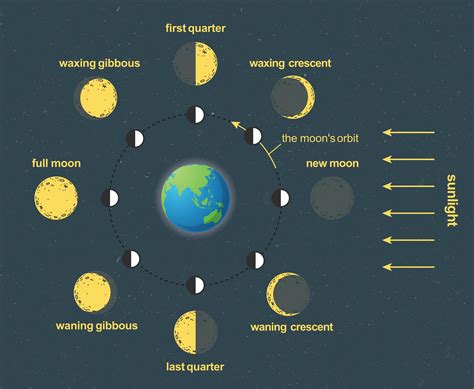
The Moon is more than a symbol-it’s the Earth’s heartbeat. Her gravitational pull moves the oceans, shapes the tides, and stirs something ancient within us. Of course she moves us too. Learning to work with her rhythm helps you practice witchcraft in harmony with cosmic tides rather than against them.
Each lunar phase mirrors the passages of life-the beginnings, the building, the fullness, the release. The Moon becomes a living teacher, reminding us that growth isn’t constant, that rest is sacred, and that every ending contains the seed.
Creating a Protection Spell Jar
Here is one of my favorite spell jars to start with. A projection jar can be kept in your own home, gifted to a loved one, kept in your car or workspace. It is important to remember that variations of spells come and go as you begin to work with your own practices and learn about what resonates best with you.
These are some of my favorite herbs and things I like to put in my protection jars, but work with what you have in your kitchen or backyard. It doesn’t have to be fancy as long you put your intentions clearly into your practice.
Items Needed:
- A jar
- Incense
- A black candle
- Small pieces of white quartz or obsidian
- Any of the following herbs: Rosemary, eggshells, pink salt, bay leaf, star anise, cloves, echinacea, mugwort, dandelion root, lavender, rose bud, chamomile.
Instructions:
- Start by cleansing your space with incense or other tools.
- Cleanse the jar you have chosen with the incense and set your intention before you begin.
- Add items such as small pieces of clear quartz or obsidian to strengthen the herbal energy.
- Add your herbs. There is no correct amount you need to add, and you don’t need every single item listed. If you have a bay leaf, you can further your intention by writing it down, writing the person’s name you wish to protect, or simply just writing something like “protection” further encapsulates your energy into the spell.
- Once you have added all the components to the jar, you need to seal the energy inside. Sealing a spell is very important, as it binds the spell and protects it from being altered without your permission.
- Take a black candle and light it. Once the wax starts to melt, let it melt and drip down over the top and sides of your candle. You can carve an initial or sigil in the top of the wax for added protection and intention.
- Place the spell in your home or area you wish to protect. Spell jars can also be worn to take the intention and energy with you.
Spell Variation: If you don’t have any of these tools, don’t stress! For a more simple protection spell, take a black or white candle and carve a name or your intention into the side of the candle. Light the candle, and let it melt, giving energy to your intentions of protection.