In England, witch trials were conducted from the 15th century until the 18th century. They are estimated to have resulted in the death of perhaps 500 people, 90 percent of whom were women. Witch trials are known to have occurred in England during the Middle Ages. It was, however, not until the second half of the 16th century that a widescale witch hunt took place in England.
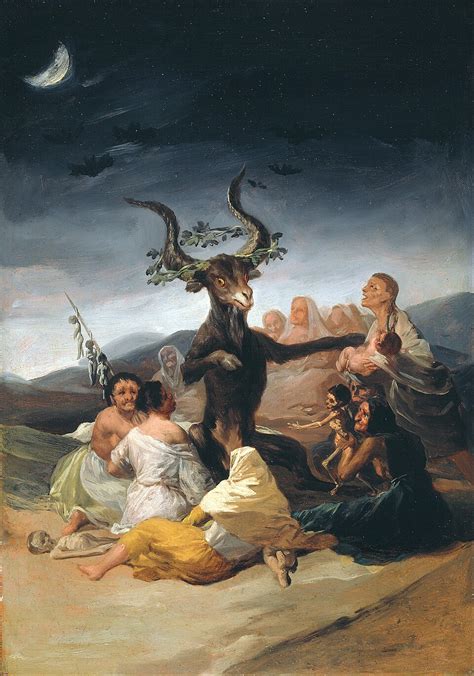
A Sabbath of Witches, by Luis Ricardo Falero (1878)
During the 16th and 17th centuries, a widespread belief in witches permeated all levels of English society. The cases became more common in the end of the 16th century and the early 17th century, particularly since the succession of James VI and I to the throne. King James had shown a great interest in witch trials since the Copenhagen witch trials in 1589, which had inspired the North Berwick witch trials in Scotland in 1590.
Witchcraft was first made a capital offence in 1542 under a statute of Henry VIII but was repealed five years later. Witch fever reached new heights when witchcraft was again classed as a felony in 1562 under a statute of Elizabeth I. The Witchcraft Act 1541 was enacted in England; but was repealed in 1547. The Witchcraft Act 1563 introduced the death penalty for any sorcery used to cause someone's death.
The Peak of Witch Trials
Witch trials were most frequent in England in the first half of the 17th century. They reached their most intense phase during the English Civil War of the 1640s and the Puritan era of the 1650s.
Read also: A Journey Through Witchcraft
The first major English witchcraft trial took place at Chelmsford in Essex in 1566. The three accused women shared possession of a cat called (somewhat inadvisably) Satan which was said to speak in a hollow voice and be able to shape-shift into a toad or black dog. Having reputedly killed a man who refused one of the women’s advances, the feline procured her an alternative husband, then allegedly helped to drown a neighbour’s cows and bewitched another man to death. Elizabeth Francis was imprisoned for a year, Joan Waterhouse was released, but her mother Agnes Waterhouse was hanged.
Records from Pendle and other trials, many rigged, make clear that charges of witchcraft were quite often a way of settling personal scores or scapegoating vulnerable folk; acts of misogyny or, in some cases, a proxy for religious and political persecution.
Key Figures and Cases
Self-proclaimed Witchfinder General, Matthew Hopkins, was the most notorious witch-hunter in the 1640s. In Essex alone, around 1,000 people were accused of witchcraft from the 1500s to 1800s. Hopkins and his aides had witch identification techniques down to a fine art: a small pet could be deemed a witch’s familiar (a spirit disguised as an animal allocated by the Devil); skin blemishes, moles or warts were the Devil’s mark, and hidden marks could be detected by pricking with a sharp spike - the skin “being insensible ... will not bleede” (trickery like the use of retractable spikes was sometimes used to guarantee proof).Suspects could be kept awake for days until confessions came; or they could be ‘swum’: hands tied to feet before being dropped into a river or pond; if they floated, they were guilty and if they sank they were innocent - though they possibly drowned. We look at the story of the Witchfinder General here.
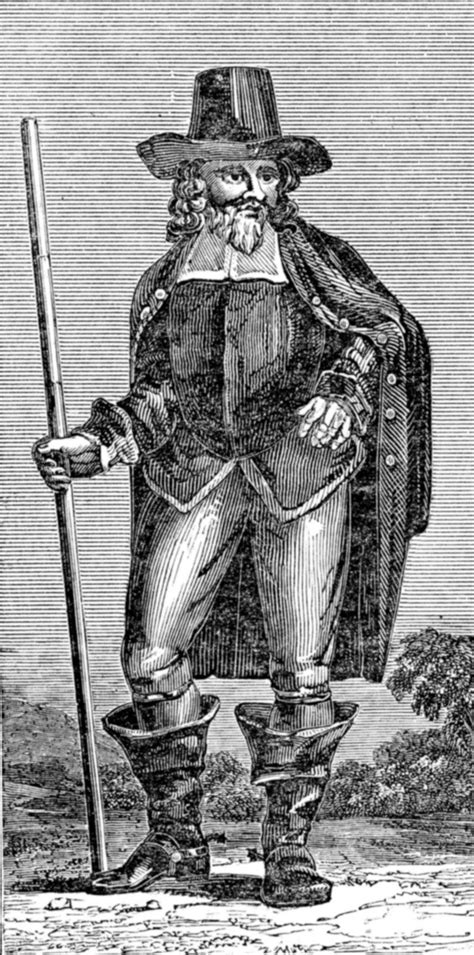
Matthew Hopkins, Witch Finder General
The 1612 trials of the Pendle Witches of Lancashire in the first decade of James’ reign in England, recorded for posterity by clerk of the court Thomas Potts in The Wonderfull Discoverie of Witches in the Countie of Lancaster, was the most notorious of a new rash of cases. The witches in Shakespeare’s Macbeth may have been inspired by the Pendle Witch Trials. The Pendle Witch Trials occurred after every justice of the peace in the English county of Lancashire was required to compile a list of anyone refusing to attend church and take communion. Emboldened to seek out religious nonconformists, the local magistrate for Pendle, Roger Nowell, investigated a complaint from John Law, a peddler from West Yorkshire. Law claimed that Alizon Device had passed him on the road and asked him for some pins; when he refused, she cursed him, and he later suffered a stroke.
Read also: Understanding Witchcraft in Scripture
The trials took place on 17-19 August 1612. Nowell was influenced by the Daemonologie quote and called Jennet Device as his key witness. The nine-year-old gave damning evidence against her mother and siblings. The irony is that while James had remained sceptical of much of the evidence used in previous witch trials, he had nevertheless passed a law within a year of being crowned king of England that said the death penalty could be imposed in any cases where it was proved that magic was used to cause harm. As such, the lengthy trial resulted in nine suspects being hung the following day. It was a gruesome end to a trial, which one can learn more about at the Pendle Heritage Centre, where you can also discover the story of George Fox, whose vision on nearby Pendle Hill inspired the international Quaker movement.
Another trial, of Isobel Gowdie of Auldearn in 1662, is remarkable for the vivid confessions that the so-called Queen of Scottish Witches made, apparently without torture. Illiterate but a talented storyteller, she revealed how she had met the Devil and been marked by him on her shoulder; and for good measure she added tales of sexual rites, covens, shape-shifting into a jackdaw, casting spells, flying on a horse (few witches used broomsticks), and her part in the attempted murder of the sons of a local laird. It has been suggested Gowdie suffered hallucinations brought on by ergotism (poisoning from ingesting ergot, a fungus that grows on rye). Her fate is not recorded but it is unlikely she escaped death.
Executions and Punishments
Normally, people sentenced for witchcraft in England were executed by hanging. An exception was made when the person had committed another crime for which people were executed by burning at the stake. For example, when Mary Lakeland was burned at the stake in Ipswich on 9 September 1645 after having been judged for witchcraft, she was not burned for the crime of witchcraft, but because she had used witchcraft to murder her husband: this latter crime constituted petty treason, for which the punishment was burning.
Another example is Ursula Kemp who went through many accusations and ended up being hanged. She was known to reside in "the cage" during her trial. In medieval times, "the cage" which is a type of prison, was often a form of public humiliation and confinement used to punish criminals. The structure was typically a small, barred enclosure, sometimes suspended in public places like market squares or outside castles, where individuals were left exposed to the elements.
Witch Trials in English Colonies
Witch trials occurred also in the English colonies, where English law was applied. This was particularly the case in the Thirteen Colonies in North America. Examples of these were the Connecticut Witch Trials from 1647 to 1663. The most famous of these trials were the Salem witch trials in 1692.
Read also: Urdu Article: Understanding Witchcraft
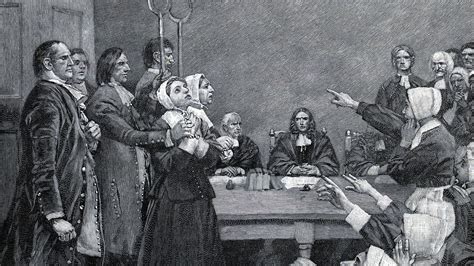
An idealized depiction of the Salem witch trials
From 1692 to 1693, a pandemic swept through Salem Massachusettes. The Salem Witch Trials may have only lasted 15 months, but over 200 people were accused of practising witchcraft in that short time. As she was only nine years old, Jennet paved the way for children to give testimony in court which would later be used in the infamous Salem witch trials in 1693.
Decline of Witch Trials
Fortunately, growing reactions to the horrors of witch-hunts, combined with the promotion of the rational and scientific in the Enlightenment, saw people weary of the rabid persecution of alleged witches. Earlier acts against witchcraft in England and Scotland were repealed in 1736, although fraudulent practices involving magic could still be punished by fines and prison. The last documented execution for witchcraft in England was in 1682. While Jane Wenhamw was sentenced to hang in 1712, she was pardoned by Queen Anne.
Here's a summary table of key Witchcraft Acts in England:
| Act | Year | Description |
|---|---|---|
| Witchcraft Act | 1541 | Enacted in England, but repealed in 1547. |
| Witchcraft Act | 1563 | Introduced the death penalty for any sorcery used to cause someone's death. |
| Repeal of Witchcraft Acts | 1736 | Earlier acts against witchcraft in England and Scotland were repealed. |
The Salem Witch Trials (1692) Cartoon
tags: #witchcraft #trials #in #england