Symbols of Odin
Odin, the Allfather, was a central figure in Norse mythology, associated with wisdom, magic, death, and war. Several symbols are closely tied to him, representing different facets of his power and influence.
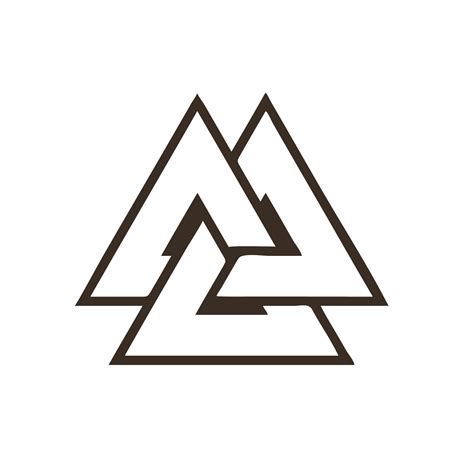
The Valknut
One of the most recognisable Odin Viking symbols, the Valknut, consists of three interlocking triangles. It’s commonly found on Viking burial sites, runestones, and artefacts, reinforcing its association with death, courage, and the power of Odin himself. The Valknut is strongly linked to warriors who died in battle. It’s thought to represent those who were chosen by Odin to enter Valhalla, his great hall for fallen warriors.
Gungnir
Gungnir, the mighty spear of Odin, was said to be unbreakable and always strike its target. Odin used Gungnir to lead warriors into battle and maintain cosmic order.
Huginn and Muninn
These birds flew across the world each day, collecting information and bringing it back to Odin.
According to Norse legend, Odin drank from these three magical horns to gain wisdom and poetic inspiration.
Read also: Symbols of Strength and Love: A detailed analysis
Symbols of Thor
Thor, the god of thunder, was another prominent figure in Norse mythology, known for his strength and protection of gods and humans.
Mjolnir - The Creation of Thor's Hammer. Norse Mythology
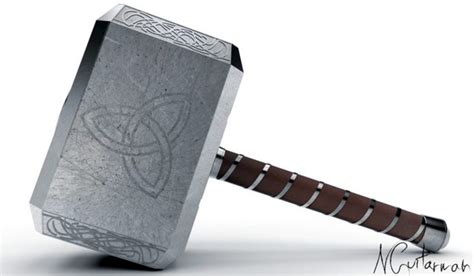
Mjölnir
In Norse mythology, Thor, the god of thunder, used Mjölnir to defend gods and humans from chaotic and destructive forces. Vikings often wore Mjölnir pendants for protection in battle and everyday life. It was believed to ward off evil and bring Thor’s blessing to those who carried it.
The oak tree was associated with Thor, who was believed to dwell within its mighty branches.
Protection Symbols
Vikings often used symbols for protection, believing they could ward off evil and bring good fortune.
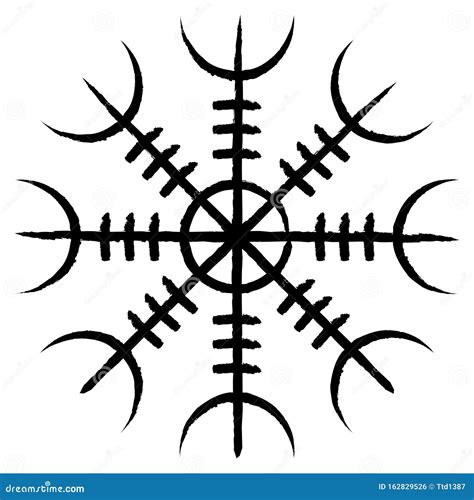
Aegishjalmur (Helm of Awe)
The Aegishjalmur, also known as the Helm of Awe, is one of the most well-known Norse protection symbols. Vikings believed that the Aegishjalmur granted invincibility in battle.
Read also: Valkyrie Meanings
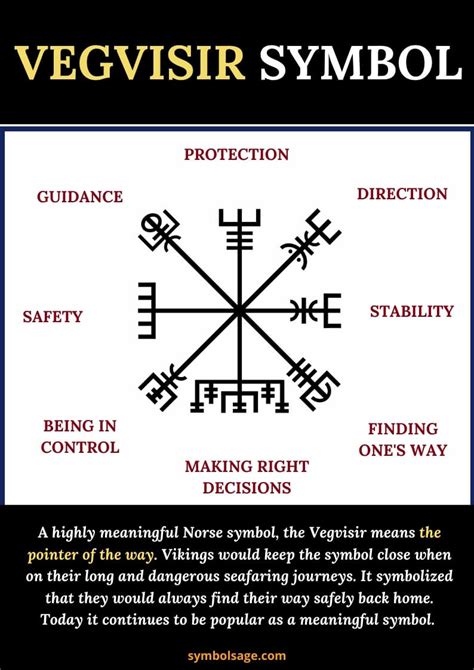
Vegvisir
Its name translates to “That Which Shows the Way”, and it was believed to help travellers navigate safely through rough seas, bad weather, and uncertain paths. Today, the Vegvisir remains one of the most popular Nordic runes and symbols, often seen in tattoos, jewellery, and art.
Other Significant Symbols
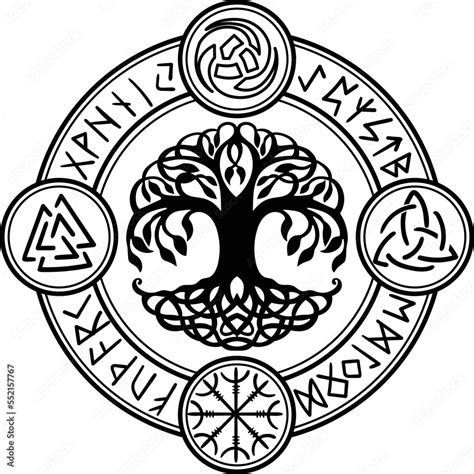
Yggdrasil (The World Tree)
The World Tree, Yggdrasil, is a massive ash tree that connects the nine realms of Norse mythology. Yggdrasil is considered sacred and is said to hold the universe together. It symbolises growth, knowledge, and the eternal cycle of existence.
Wolves
Wolves play a key role in Norse mythology, often representing both destruction and protection. The most famous of these wolves is Fenrir, the monstrous son of Loki. Fenrir was foretold to bring about Ragnarok, the end of the world, by breaking free from his chains and devouring Odin. However, wolves were not only feared-they were also worshipped. Odin himself was accompanied by two loyal wolves, Geri and Freki, who symbolised fierceness, loyalty, and companionship.
Jörmungandr (Midgard Serpent)
Jörmungandr, also known as the Midgard Serpent, was a giant sea serpent and the son of Loki. According to Norse mythology, Jörmungandr was so massive that it encircled the entire world, biting its own tail. During Ragnarok, the final battle of the gods, Jörmungandr and Thor were destined to fight to the death, representing the end of one era and the start of another.
Sleipnir
Sleipnir was Odin’s legendary eight-legged horse, capable of travelling between realms at unmatched speed. This Viking symbol for transformation represents the ability to travel between worlds, whether physically or spiritually.
Read also: Protection with Archangel Michael
Skoll and Hati
According to Norse legend, Skoll and Hati were two celestial wolves that chased the sun and moon across the sky. Because of this, Skoll and Hati represent the passage of time, fate, and the inescapable nature of destiny.
Heidrun
In Norse mythology, the goat Heidrun lived on the roof of Valhalla, producing an endless supply of mead for the fallen warriors. Thor’s chariot was also pulled by two magical goats, which he could kill and resurrect each day, symbolising eternal life and regeneration.
Longships
Longships allowed the Vikings to conquer new lands, raid distant shores, and expand their influence. Because of this, the Viking ship became a symbol of courage, ambition, and the fearless pursuit of destiny.
Battle Axe
Few weapons are more closely associated with the Vikings than the battle axe. Axes were symbols of strength, honour, and self-reliance. Some believed that a protection Viking symbol carved onto an axe would bless the warrior who wielded it, ensuring their victory in battle.
Hand of Tyr
Tyr was the Norse god of war, justice, and self-sacrifice. When the gods sought to bind Fenrir to prevent Ragnarok, the wolf would only allow himself to be chained if one of the gods placed their hand in his mouth as a sign of trust. Because of this, the Hand of Tyr became a Norse rune for warriors, justice, and self-sacrifice.
Boar
Viking warriors often decorated their helmets with boar symbols, believing these animals carried unstoppable energy and bravery.
Runes
Each rune carried a specific meaning, often linked to fate, protection, power, or communication.
It’s believed that past, present, and future are all woven together, much like the threads of a great tapestry.