From the earliest formations of our seemingly infinite universe, amidst all the complexities of how we came to be, one idea has emerged as the bedrock for our understanding of how we relate to the natural world: evolution. This unifying theory, which simultaneously explains the immense diversity of disparate species as well as the interconnectedness of all living things, has utterly transformed our view of life into this view of life, explaining the existence and persistence of everything from the microscopic prokaryote to the human experience of love.
While physics and chemistry illuminate the fundamental laws and processes governing the universe, it is only through the lens of evolution that we truly come to appreciate ourselves and our place within this verdant world. It traces life's journey from the simplest single-celled organisms to the complex bipedal beings that populate our planet today. Central to this narrative is Darwin’s elegantly simple theory of natural selection that explains how species adapt to their environments over time: the traits that enhance survival and reproduction are passed on, sculpting the vast array of life forms we see today.
Darwin's theory not only explains the physical traits we observe in Nature-why fish have gills or why giraffes have long necks-but also touches on deeper, more spiritual dimensions. In the closing lines of On the Origin of Species, Darwin reflected on the "grandeur" of this view of life, envisioning a world where all forms of life are part of a shared evolutionary journey on Earth: “from so simple a beginning endless forms most beautiful and most wonderful have been, and are being, evolved.”
What sets evolution apart from other scientific theories is its ability to explain not only the physical aspects of life but also our spiritual connections to each other and all living things. Through evolution, we understand that we are not isolated entities in an ostensibly meaningless world, but rather interconnected branches of the same evolutionary tree, sharing a common ancestry and a shared destiny with all life on Earth.
Evolutionary theory highlights the unity of life, emphasizing our shared heritage and the kinship we share with all living beings. It invites us to recognize the sacredness of life in all its forms and to cultivate compassion, empathy, and stewardship for the natural world. In this way, evolution acts as a bridge between science and spirituality, resonating deeply with how we evolved to live in connection with the land.
Read also: The Connection Between Buddhism and Spirituality
Darwin’s insights also challenge our modern orientation to the natural world. Before Darwin, it was commonplace for most Westerners and theists to view themselves as separate from the natural world-divinely created, superior, and distinct from other species. This anthropocentric perspective fostered a sense of entitlement over Nature, leading to exploitation and environmental degradation at monumental scales (i.e., instrumentalism). However, Darwin’s theory shattered this worldview, revealing that humans are not separate from Nature but are deeply connected to it, sharing a common ancestry with all life on Earth.
Moreover, Darwin’s theory offers a powerful alternative to religious understandings of our origins and “creations”. It suggests that humans are not fashioned in the image of some anthropomorphic God, as most monotheistic doctrines suppose, but rather in the image of Nature itself. Nature, through the process of natural selection, acts as the grand designer, shaping us and all other life forms into the disparate yet interconnected web of species that we are today. This perspective shifts our understanding of "God" from a traditional religious figure to the invisible hand of the natural world, inviting us to develop a new spiritual pathway centered around repairing and rebuilding our relationship with Nature (i.e., ecospirituality).
In this way, Darwin’s legacy transcends science, offering us a profound view of life that bridges the ostensible gap between science and spirituality. It reminds us that we are not isolated entities but integral parts of a larger, more interconnected whole.
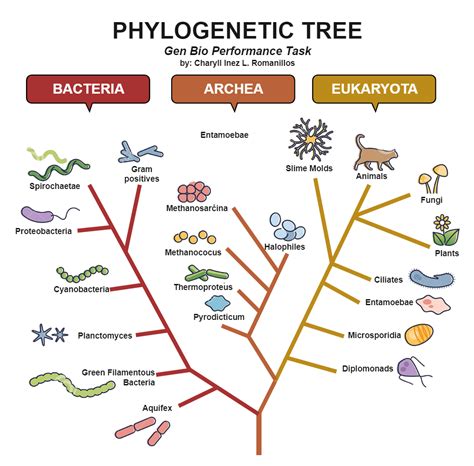
Darwin's concept of the tree of life, illustrating the interconnectedness of species.
Spiritual Evolution
Spiritual evolution, also called higher evolution, is the idea that the mind or spirit, in analogy to biological evolution, collectively evolves from a simple form dominated by nature, to a higher form dominated by the spiritual or divine. The term 'Higher' here refers to the mind - the basis of spiritual evolution.
Read also: Defining Nature-Based Spirituality
Broadly speaking, the concept of evolution fit the spiritualist thought of the progressive development of humanity. At the same time, however, a belief in the animal origins of man threatened the foundation of the immortality of the spirit, for if man had not been created, it was scarcely plausible that he would be specially endowed with a spirit. Spiritualism taught that after death, spirits progressed to new spheres of existence.
The Anglo-American position recalls (and is presumably inspired by) 18th century concepts regarding the temporalization of The Great Chain of Being. Spiritual evolution, rather than being a physical (or physico-spiritual) process is based on the idea of realms or stages through which the soul or spirit passes in a non-temporal, qualitative way.
The concept of the Great Chain of Being was developed by Plato and Aristotle whose ideas were taken up and synthesised by Plotinus. Plotinus in turn heavily influenced Augustine's theology, and from there Aquinas and the Scholastics. The Great Chain of Being was an important theme in Renaissance and Elizabethan thought, had an under-acknowledged influence on the shaping of the ideas of the Age of Enlightenment and played a large part in the worldview of 18th century Europe.
The Great Chain of Being in Elizabethan Times
Key Figures and Their Contributions
Several key figures have contributed to the discourse on spirituality and evolution, offering unique perspectives on the relationship between the two.
Alfred Russel Wallace
The biologist and spiritualist Alfred Russel Wallace (1823-1913) believed that qualitative novelties could arise through the process of spiritual evolution, in particular, the phenomena of life and mind. Wallace attributed these novelties to a supernatural agency. Later in his life, Wallace was an advocate of spiritualism and believed in an immaterial origin for the higher mental faculties of humans. He believed that evolution suggested the universe had a purpose, and that certain aspects of living organisms are not explainable in terms of purely materialistic processes.
Read also: The Significance of Spiritual Birthdays
In his 1911 book World of life Wallace argued for a spiritual approach to evolution and described evolution as “creative power, directive mind and ultimate purpose”. Wallace believed natural selection could not explain intelligence or morality in the human being so suggested that non-material spiritual forces accounted for these.
Robert Broom
Robert Broom in his book The Coming of Man: Was it Accident or Design? (1933) claimed that "spiritual agencies" had guided evolution as animals and plants were too complex to have arisen by chance. According to Broom there were at least two different kinds of spiritual forces, and psychics are capable of seeing them. Broom claimed there was a plan and purpose in evolution and that the origin of Homo sapiens is the ultimate purpose behind evolution.
H.P. Blavatsky and Theosophy
Theosophy presents a more sophisticated and complex cosmology than Spiritualism, although coming out of the same general milieu. H. P. Blavatsky developed a highly original cosmology, according to which the human race (both collectively and through the succession of individual reincarnation and spiritual evolution) passes through a number of Root Races, beginning with the huge ethereal and mindless Polarian or First Root Race, through the Lemurian (3rd), Atlantean (4th) and our present "Aryan" 5th Race.
Blavatsky's ideas were further developed by her successors, such as C.W. Leadbeater, Rudolf Steiner, Alice Bailey, Benjamin Creme, and Victor Skumin each of whom went into huge detail in constructing baroque cycles of rounds, races, and sub-races. Skumin elaborated on the theosophical conceptions of spiritual evolution and proposed (1990) a classification of Homo spiritalis (Latin: spiritual man), the sixth root race, consisting of eight subraces: HS0 Anabiosis spiritalis, HS1 Scientella spiritalis, HS2 Aurora spiritalis, HS3 Ascensus spiritalis, HS4 Vocatus spiritalis, HS5 Illuminatio spiritalis, НS6 Creatio spiritalis, and HS7 Servitus spiritalis.
Although including elements of the science of her day as well as both eastern and western esoteric thought, Blavatsky rejected the Darwinian idea that man evolved from apes, and most subsequent esotericists followed this lead.
Sri Aurobindo and Pierre Teilhard de Chardin
Sri Aurobindo and Pierre Teilhard de Chardin both describe a progression from inanimate matter to a future state of Divine consciousness. Teilhard, who was a Jesuit Paleontologist who played an important role in the discovery of Peking Man, presented a teleological view of planetary and cosmic evolution, according to which the formation of atoms, molecules and inanimate matter is followed by the development of the biosphere and organic evolution, then the appearance of man and the noosphere as the total envelope of human thought.
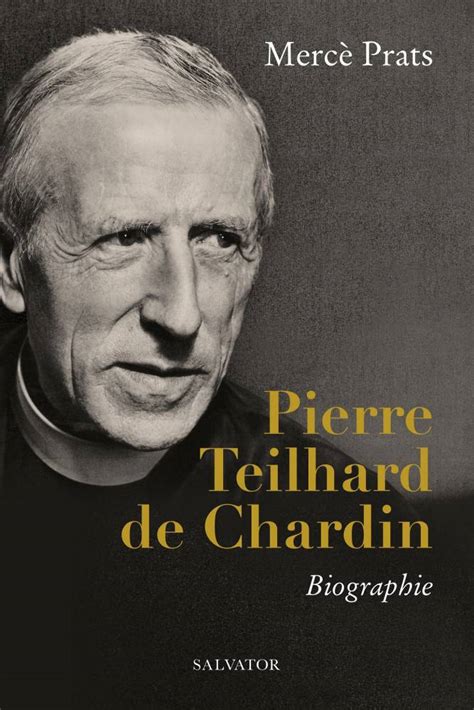
Pierre Teilhard de Chardin.
Following the insights of physics, he said that matter has a withinness and withoutness so that matter and mind are two aspects of the same reality. Whereas Darwin had no role for mind in evolution, Teilhard saw evolution as the rise of mind or consciousness. Every tiny bit of matter has interiority. From the Big Bang onwards, life unfolds towards a deepening of mind and complexity of matter. It is the withinness of matter that impelled Teilhard to locate religion as an essential component of evolution. Religion is larger than humanity alone and integral to earth’s future.
Teilhard emphasized that religion primarily operates “on the level of consciousness and human action, rather than on the level of institutions or belief systems, except insofar as these systems manifest and give direction to the former.” This perspective suggests that religion should never be limited by institutional formulas or abstract doctrines.
Teilhard was clear that humanity is moving into a new environment, into a world that is being born instead of a world that is, with a new relationship between matter and spirit, a new humanism, and a new understanding of God-complementary movements which mark the beginning of a new era for humankind.
In his book The Future of Man, Teilhard emphasized the critical role of forward-thinking faith. He wrote: “The whole future of the Earth, as of religion, seems to me to depend on the awakening of our faith in the future.” Faith in the future requires faith in the world, coupled with a belief in humanity’s continued evolution and the potential for greater global unity and collaboration. He envisioned humanity entering a new phase of existence - a world in the process of becoming rather than a static reality. These complementary shifts, in his view, herald the dawn of a new era for humankind.
As Ursula King notes, this concept of ongoing development towards greater unity is central to Teilhard’s evolutionary theory. This perspective presents evolution not just as a biological process, but as a comprehensive phenomenon encompassing spiritual, social, and material dimensions. It suggests that human progress is intrinsically linked to our capacity to envision and work towards a more unified and evolved future for all of humanity.
Ken Wilber and Integral Theory
More recently the concept of spiritual evolution has been given a sort of respectability it has not had since the early 19th century through the work of the integral theorist Ken Wilber, in whose writings both the cosmological and the personal dimensions are described. In this integral philosophy reality is said to consist of several realms or stages, including more than one of the following: the physical, the vital, the psychic, the causal, and the ultimate (or non-dual), through which the individual progressively evolves.
Described simplistically, Wilber sees humans developing through several stages, including magic, mythic, pluralistic, and holistic mentalities. But he also sees cultures as developing through these stages. And, much like Hegel, he sees this development of individuals and cultures as the evolution of existence itself.
Other Perspectives
Several other perspectives contribute to the rich tapestry of ideas surrounding spirituality and evolution.
New Age Thought
New Age thought is strongly syncretic. A common theme is the evolution or the transcendence of the human or collective planetary consciousness in a higher state or higher "vibratory".
Spiral Dynamics
The idea of a spiritual evolution finds contemporary expression in a number of stage theories, inspired by Sri Aurobindo, Jean Gebser, and Piaget, among others. An interpretation of social and psychological development that could also be considered a theory of spiritual evolution is spiral dynamics, based on the work of Clare W. Graves. Spiral Dynamics posits a series of stages through which human's cultural development progresses - from a survival-based hunter-gatherer stage to a magical-tribal-agrarian stage to a city-building-invading stage to a mythic-religious-empire stage to a rational-scientific-capitalist stage to a green-holistic-inclusive stage and then ascending to a second tier where all the previous stages are contemplated and integrated and a third transpersonal tier where a spiritual unity or Omega point is eventually reached, which all the other stages are struggling to embody.
Rosicrucians
Rosicrucians view the world as a training school, which posits that while mistakes are made in life, humans often learn more from mistakes than successes. Suffering is considered as merely the result of error, and the impact of suffering on the consciousness causes humans to be active along other lines which are found to be good, in harmony with nature.
Esoteric Spirituality
In esoteric spirituality epigenesis it is the idea that since the mind was given to the human being, it is the original creative impulse which has been the cause of all of mankind's development. According to this approach, humans build upon that which has already been created, but add new elements because of the activity of the spirit. Humans have the capacity, therefore, to become creative intelligences-creators. For a human to fulfill this promise, his training should allow for the exercise of originality, which distinguishes creation from imitation.
Samkhya
Samkhya is one of the six systems of Hindu philosophy; proto-Samkhya ideas can be found in the Upanishads, Jainism, and Buddhism. Samkhya posits two ontological entities, Purusha (witness-consciousness) and prakriti ('nature'), which includes mind, congnition, and the perceived objects). According to Samkhya, when purusha comes into proximity with prakriti it disturbs the equilibrium of prakriti. As a result, a number of successive essences called tattvas evolve from prakriti.
Evolution and Human Nature
Social justice is enfolded into the process of evolution. Life must continue to develop into a higher form of life. The problem of the future is paramount for the present. Will humanity survive or will it be annihilated? Will it progress or stagnate? Teilhard thought we have no decisive evidence for either hope or despair, but one thing is certain: we need to find the right road, make the right choices and put our will into effective action to create the right world for humanity today.
We have lost our sense of place in the universe because we have failed to realize our human lives in the flow of evolution. By shutting off the valve of religion from the impulse of evolution, we have basically smothered the vital impulse of wholeness that Teilhard named as “Omega-God.” This is why he adamantly stated: “Religion and evolution . . .are destined to form one single continuous organism, in which their respective lives prolong, are dependent on and complete one another.” He suggests a fundamental reimagining of both our worldview and our spiritual practices.
In our rapidly advancing technological world, debating whether to pay attention to science is no longer a luxury we can afford. Our understanding should have progressed beyond this point. Many religious institutions continue to emphasize scripture and tradition while marginalizing scientific insights. However, reducing religion to simplistic notions like “What Would Jesus Do?” or believing we can change religious doctrines on issues such as women’s ordination or gender inclusion by arguing over ancient philosophical concepts of matter and form is short-sighted at best. Teilhard de Chardin, nearly a century ago, presented us with a stark choice: evolve or face annihilation.
The prophetic stance today cannot be limited to social justice alone. It must be a wider and deeper stance of the mystic who stands on the edge of evolution and sees a new future on the horizon. One who sees is willing to challenge the status quo on every level. The prophet cries out for a new world because the prophet sees a new future dawning on the horizon.
While scientists have extensively analyzed the physical-biological and mental-psychic aspects of human beings, we now require novel methods to perceive the world as an emergent, complex whole. The time has come to adhere to the process of evolution on every level of existence. This perspective calls for a radical shift in our approach to life and, in particular, our adherence to religion, urging us to transcend our current limitations and actively participate in shaping a more integrated, conscious future.
The Role of Religion
Teilhard viewed religion as a universal dimension of human experience, the depth dimension of all reality, and the search for ultimate meaning. Paul Tillich described religion as the state of being grasped by an ultimate concern that influences all other concerns.
He argued that science’s true purpose is to extend and complete the ongoing process of human evolution, imbuing it with a sacred, future-oriented duty. However, he claimed that science had failed this noble purpose by seeking to control nature rather than advance its wholeness. He observed that scientific progress had fallen into an intellectual and moral crisis - the crisis of scientism.
Ultimately, he asserted that science requires religion to animate it. He claimed, “religion is the soul biologically necessary for the future of science,” emphasizing the interdependence of scientific and spiritual progress in human evolution. His insights on the interconnectedness of religion and science means that each area is dependent on the other for meaningful existence.
Failure to recognize religion at the heart of evolution and identifying it as a special act of revelation has stripped the earth of its vital impulse. The contemporary notion of being “spiritual but not religious” points to the loss of religion as the creative vitality undergirding evolution’s ongoing development.
Challanges and Conflicts
Darwinism, with its explanation of evolution through material factors like natural selection and random mutation, does not sit well with many spiritual evolutionists, for whom evolution is initiated or guided by metaphysical principles or is tending towards a final spiritual or divine state. Despite this, recent Theosophists and Anthroposophists have tried to incorporate the facts of geology and paleontology into their cosmology and spiritual evolution (in Anthroposophy Hermann Poppelbaum is a particularly creative thinker in this regard). Some have attempted to equate Lemuria with Gondwanaland, for example.
Today all these ideas have little influence outside their specialised followings, but for a time Theosophical concepts were immensely influential.
Conclusion
tags: #spirituality #and #evolution