Witchcraft movies have long captivated audiences with their exploration of the supernatural, historical settings, and complex characters. Among these, Robert Eggers' "The Witch" (2015) stands out for its profound and often disturbing themes, particularly its examination of misogyny within Christianity, the oppression of women, and the radical implications of religious extremism.
This article delves into the intricate layers of "The Witch," analyzing its portrayal of Puritan society, the character of Thomasin, and the broader commentary on the historical and societal forces that shaped perceptions of witchcraft.
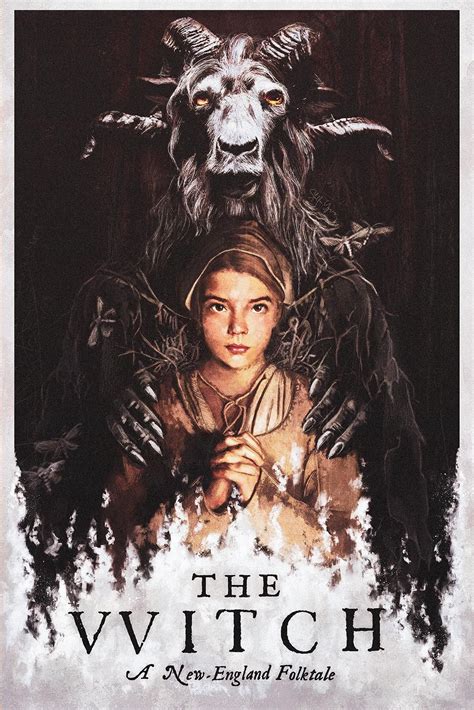
Misogyny and Religious Oppression in "The Witch"
One of the most palpable threads in "The Witch" is its exposure of the deep misogyny inherent in Christianity. While the film specifically focuses on Puritanism, its commentary resonates with broader Christian themes of sexism and the subjugation of women. Director Robert Eggers establishes early on that Thomasin (Anya Taylor-Joy) is not a typical, passive Puritan girl.
From the opening scene, where she hesitates before leaving the space where her father has been banished, Thomasin's independent spirit is evident. The closing gates symbolize a lost opportunity for her to self-determine within the Puritan community. Eggers emphasizes Thomasin's singularity within her family, coding her as both self-aware of her oppressed existence and indomitable.
We get other such moments, as when Eggers strikingly focuses on her praying, her confession seeming to suggest both normalcy - human beings are forever fallible and will “sin,” e.g., exhibit natural human failings - and, in the context of becoming a good Puritan woman, hints of her growing resistance to such an oppressive way of being. In her prayer, she says, “I here confess I’ve lived in sin. And broken every one of thy commandments in thought. Followed the desires of mine own will and not the Holy Spirit. I know I deserve more shame and misery in this life and everlasting hellfire.”
Read also: A Journey Through Witchcraft
Later, the mother, Katherine, accuses Thomasin of being a "proud slut," suggesting she tempts her brother Caleb and father William. This accusation is particularly jarring because Thomasin displays no overt sexual desire throughout the film. Instead, the sexual desire stems from Caleb, highlighting the family's disconnection from the congregation and the resulting internal conflicts. The mother's irrational diatribe stems from her Christian indoctrination, projecting onto Thomasin the belief that women are symbols of sin and temptation.
The Bleak Reality and Limited Choices
The film's bleakness stems from the disturbing fall of the family and the limited options available to Thomasin. She is caught between the temptation of embracing witchcraft and a life of oppression within her Puritan family, where she can never self-determine or self-actualize. The film boldly suggests that Puritanism, in its extreme form, is an "evil" way of being, robbing women of a natural and healthy existence.
Even today, women indoctrinated into toxic Christian belief systems face severe limitations in self-determination.
The Burning Times | The History of Witches Part 1

The Question of Divine Benevolence
One of the most mind-blowing possibilities of The Witch is something that is rarely addressed in mainstream film. In the world of the film, the Devil and the witch are real, suggesting that God is not a benevolent entity. This aligns with the biblical story of Job, where God allows Satan to inflict suffering on a pious man to test his faith.
In the film, it doesn't matter if the Devil itself and/or the Devil’s emissary, the witch, have the power to destroy this family, the death of the family (and the failure of the crop and prospect of starvation) is not the point for God anyway or any Puritan, it is instead whether they stay devout throughout their suffering.
Read also: Understanding Witchcraft in Scripture
Caleb's temptation and struggle with original sin further highlight the cruel and sadistic nature of certain facets of Christianity. The film touches on how traumatic the concept of original sin can be for children, who struggle with natural desires and choices.
The Power of Interpretation
Eggers does a fantastic job with this, being straightforward in interviews that the film is open for interpretation refusing to give one concrete answer but allowing many. There’s no worry whether there is a witch or not because he chooses to reveal her right away in the film, thus allowing the audience to feel her presence throughout. Now you can then see the consequences in the film as the result of witchcraft. With the goat being the devil that dwelt with the family waiting for her to sign that contract. The witches feeling intruded upon their land, seeking out to take Thomasin as their own by the end. Going out and disguising themselves as animals, seducing, and picking apart the family one by one. And for those who want that, you get it 100%.
John Carpenter once said, “There are two different stories in horror: internal and external. In external horror films, the evil comes from the outside, the other tribe, this thing in the darkness that we don't understand. So, what or who is the witch?Well, it’s what we fear the most. In the film, we saw it be God or the lack of faith to God. We saw the family suffer from pride, lust, and the fears of growing up.
In those times, the witch embodied men’s fears and fantasies about women which ironically, to some extent, are still around today.We also see that the witch feeds off of despair and that the witch can be anyone of us.In the most ingenious viral marketing for a horror film, they let you put yourself in the place of the witch to exemplify that -“Evil takes many forms”
So, The Witch, it strives to bring out our internal terrors, our guilt, the things we can’t control, the things we can’t explain, and ultimately may give a false interpretation to.That’s what makes The Witch so scary. Like The Graduate, the film Rosemary's Baby calls for explanation as a phenomenon of the times. Both movies are polished, professional products of the film-maker's art; both are stories of highly educated, urbanized persons who face the problem of making it in modern America. And, strangely, the message of both is the same: The only way to make it is to give up your soul.
Read also: Urdu Article: Understanding Witchcraft
"Witchcraft" (1988): A Cult Horror Series
While "The Witch" offers a nuanced and thought-provoking exploration of witchcraft, other films in the genre take a more campy and fantastical approach. The "Witchcraft" series (1988) stands as a cult horror franchise known for its low-budget charm and recurring storylines.
The series revolves around a good warlock, William Spanner, who battles evil warlocks attempting to seduce him to the dark side. Despite its longevity, the series has received poor reviews, with critics noting its repetitive plots and low production quality.
| Aspect | Description |
|---|---|
| Main Character | William Spanner, a good warlock |
| Plot | Spanner resists his heritage and battles evil forces |
| Critical Reception | Poor, noted for repetitive plots and low budget |
| Themes | Good vs. evil, temptation, and the struggle for identity |
tags: #witchcraft #movie #list