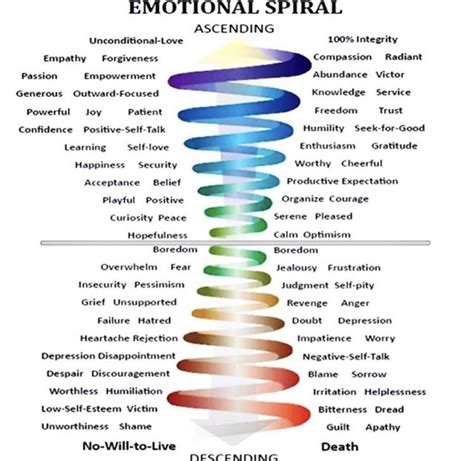
Our emotions are a great gift. Often, seemingly out of nowhere, we are hit with wave after wave of emotion. It may be boredom and listlessness one minute, or longing and passion the next. Anger, sadness, loneliness, joy, love, elation, and disappointment all break upon the shores of our spirit sometimes relentlessly.
But I imagine there are times when we all wish we didn’t feel the way we do, or when it is simply difficult to balance the energy coursing through us. It is easy to understand wanting relief from painful emotions, but even the more desirable ones can be strong and overwhelming.
So, how can we use our emotions positively on our spiritual path? Here's how.
Devotional Practices and Emotions
We can start by looking at the practice of what is called devotional yoga, or Bhakti Yoga, as it’s called in Hinduism. For example, if your relationship is to Christ, you could take a picture of Jesus and then think about all the qualities of his life, of his compassion, of his beauty of being, and the ways that he reminded people about God. You could look at that being and allow your own emotional responses to bubble up.
Read also: The Connection Between Buddhism and Spirituality
These emotional responses are relational; they are warm, human responses of love, of caring, of tenderness. Then if you stay with that picture of Jesus and keep being with Jesus, you will go beyond those emotions into a deeper way of being with him - of just being with him in the present sense.
And that presence includes more and more of the essence of love. But you go through that doorway by using your emotional heart as a vehicle to getting into that deeper way of being with God. That's one way.

Cultivating Awareness and Spaciousness
Then there are other kinds of emotions that are generated; emotions like anger, sadness, joy, that whole range of emotions. What one cultivates is spaciousness or awareness that allows you to acknowledge the feelings, and then come back to appreciate them again. Acknowledge the feelings and allow them and see them as part of the human condition.
They are like subtle thought-forms. Emotions are really subtle thought-forms, and they all arise in response to something. They are reactions that arise. If somebody goes like that, you have a certain emotional response. If they go like that, you have a different response. And you can feel how reactive your emotions are to situations.
Read also: Defining Nature-Based Spirituality
So you cultivate a quietness in yourself that just watches these things coming and going and arising and passing away. And you learn not to act out your emotions, but just to appreciate and allow them. That's part of the way in which you use them spiritually. Spiritually, you don't act out your emotions. You just acknowledge them.
You don't deny them though. You don't push them down. You acknowledge that I'm angry, but you don't have to say, "Hey, I'm angry." That's different. But you acknowledge it, you don't deny it. That's the key.
So the way you would use emotions like love and caring is through devotional practices where you aim them towards God. And for the other kinds of emotional realms, you witness them and you sit with them and you watch them change and come and go but you don't deny them. You allow them to be burnt in the light of awareness. Because that's part of your human condition.
Service, Suffering, and Equanimity
When we talk about service, you will see how we deal with suffering. And you will see that it awakens intense emotions. And your heart is breaking. And you have to let your heart break. But you've cultivated another plane of reality which is The One that notices and allows it and behind it all is the quality of equanimity.
Read also: Exploring Spirituality and Evolution
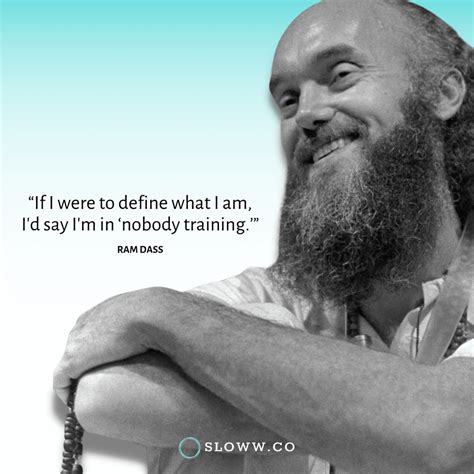
So, emotions work best when you also have another plane that is not emotional, running simultaneously alongside it. Because getting lost in your emotional reactivity just digs a deeper karmic hole. Allowing your humanity, that's really a part of it. Simply allowing your humanity. -Ram Dass
Kinetic Moments - Tools for Emotional Alchemy
Transforming Emotions into Energy for Love
The physicists have taught us that all matter is simply energy condensed into form. A baby is a beautiful example of the energy of desire becoming life and breath. Although we know physiologically how the process works, it all begins with energetic presence. We are learning there is “an energetic continuum running through all creation.” (Cynthia Bourgeault, The Wisdom Way of Knowing, p. 45)
French Jesuit philosopher and biologist Pierre Teilhard de Chardin wrote that our suffering is actually potential energy that can be consciously offered to God as a gift. The energy of our pain becomes part of the “ascending force of the world,” fuel for the transformation of fear to love. I wonder if this wise Jesuit’s insight might provide a path of peaceful partnership with all our unwieldy emotions.
Might we see our emotional waves as energy that once liberated from our fear, grasping, and attempts at control, can be offered for a higher purpose?
There are situations that can and should be changed, but when change is not possible or is slow in coming, we are left with our strong feelings and very little idea how to live with them. Sometimes our resulting actions come from a simple desire for relief.
Unlike the shoreline, we are not powerless victims to the waves of emotion that crash through us. We can receive what comes, adding the power of our own consciousness, our willing surrender and the beauty of our own spirit, thereby offering our emotions as gifts of energy for Love’s purposes.
The Problem with Emotions in Western Society
“The environment is not an “other” to us. It is not a collection of things that we encounter. Rather, it is part of our being. It is the locus of our existence and identity.
Humanity has a real problem with our emotions. We don’t know what they are, and we don’t know how to access them. We are often numb and disconnected from this essential part of our humanness. This is an epidemic in the West.
We as humans have not received a sound education in how to experience or understand emotions and our emotional lives. Instead, we have been taught that feeling our emotions, expressing them, or even talking about them is inappropriate. We live in a society that values the intellect and the mind. Science and knowledge are revered. We may think our rational mind is our greatest strength, but it is also dangerous.
The intellect is often the source of our troubles as it traps us into believing a lot of information that simply isn’t true. (Scientists have proven that information and experiences can be processed more easily and viewed more positively. Thus, we avoid difficult facts. Many of us were told to hide or suppress our emotions. From a young age, we were taught that certain emotions were not okay - anger, frustration, fear, or sadness. How many times have we heard, “Don’t cry or I will give you something to cry about?”, or, “Boys don’t cry”, or “Be nice and don’t be angry.”
To make matters worse, when we did express our emotions, we were often called dramatic, intense, and overly sensitive. Thus, we are set in a vicious cycle and a no-win situation. When we tap into our lost emotions, we encounter the shame attached to them. This then triggers the denial and suppression reaction because the shame is painful to feel, which in turn creates more shame.
Emotional Intelligence and Resilience
Emotional literacy is at the very core of resilience. Our emotional lives are a fundamental aspect of our lives and our humanity. They are an important component of our information feedback system. Our emotions are a guidance system for life. They tell us about what we are experiencing and help us know how to react.
Emotional connection is the ability to recognize an emotion and feel it. As Psychologist and author Daniel Goldman detailed in his book Emotional Intelligence, emotional intelligence is the ability to understand and manage emotions.
Key Components of Emotional Intelligence
Knowing oneself is essential to understanding one’s emotional life. To master this component, we must know our emotions, our strengths and weaknesses, what motivates our actions, and our values. People with a high degree of emotional intelligence can manage and redirect disruptive emotions and impulses into appropriate forms. At this level, we are not prisoners of our feelings. We become internally motivated to achieve things that are important to us. We can recognize how other people feel and consider their feelings when making decisions.
| Component | Description |
|---|---|
| Self-awareness | Knowing your emotions, strengths, weaknesses, and values. |
| Self-regulation | Managing and redirecting disruptive emotions. |
| Motivation | Being internally driven to achieve important goals. |
| Empathy | Recognizing and considering the feelings of others. |
tags: #emotions #and #spirituality